- English
- French
- German
- Portuguese
- Spanish
- Russian
- Japanese
- Korean
- Arabic
- Irish
- Greek
- Turkish
- Italian
- Danish
- Romanian
- Indonesian
- Czech
- Afrikaans
- Swedish
- Polish
- Basque
- Catalan
- Esperanto
- Hindi
- Lao
- Albanian
- Amharic
- Armenian
- Azerbaijani
- Belarusian
- Bengali
- Bosnian
- Bulgarian
- Cebuano
- Chichewa
- Corsican
- Croatian
- Dutch
- Estonian
- Filipino
- Finnish
- Frisian
- Galician
- Georgian
- Gujarati
- Haitian
- Hausa
- Hawaiian
- Hebrew
- Hmong
- Hungarian
- Icelandic
- Igbo
- Javanese
- Kannada
- Kazakh
- Khmer
- Kurdish
- Kyrgyz
- Latin
- Latvian
- Lithuanian
- Luxembou..
- Macedonian
- Malagasy
- Malay
- Malayalam
- Maltese
- Maori
- Marathi
- Mongolian
- Burmese
- Nepali
- Norwegian
- Pashto
- Persian
- Punjabi
- Serbian
- Sesotho
- Sinhala
- Slovak
- Slovenian
- Somali
- Samoan
- Scots Gaelic
- Shona
- Sindhi
- Sundanese
- Swahili
- Tajik
- Tamil
- Telugu
- Thai
- Ukrainian
- Urdu
- Uzbek
- Vietnamese
- Welsh
- Xhosa
- Yiddish
- Yoruba
- Zulu
Annealing Furnace Steel
Operating Temperature: 100-1300℃
Power: 5-3000KW
Dimensions: 500-50000mm
Application: Heat treatment of metal parts
Minimum Order Quantity: 1 unit
Customization: Supports on-demand customization, ODM/OEM customization
Packaging: Standard export container, customization supported
Annealing Furnace Steel: Professional Heat Treatment Solutions for Industrial Applications
When you need reliable heat treatment equipment for steel processing, Annealing Furnace Steel operations demand precision and consistency. Our industrial annealing furnaces are specifically engineered to process steel through controlled thermal cycles, delivering materials with reduced residual stress, improved ductility, and optimized microstructure. These systems heat steel to critical transformation temperatures between 100-1300℃, maintain stable holding periods, and execute regulated cooling cycles—all within a protective atmosphere environment. With power configurations ranging from 5-3000KW and chamber dimensions from 500-50000mm, your facility gains the thermal processing capacity to handle everything from small precision components to large structural parts. The product processing eliminates brittleness from cold working, enables complex forming operations, and ensures dimensional stability across your production batches.
What Makes Our Steel Annealing Furnaces Different?
Advanced Energy-Saving Structure
Our furnaces utilize a national standard energy-saving periodic design. The construction combines three critical insulation layers: composite fiber insulation cotton for thermal retention, ultra-lightweight high-strength microsphere vacuum ball bricks for structural integrity, and heavy-duty high-alumina bricks for long-term durability. This multi-layer approach reduces heat loss by up to 40% compared to conventional designs.
You'll notice lower operational costs immediately. The thermal efficiency directly translates to reduced electricity consumption per cycle.
Precise Temperature Control Systems
Temperature uniformity determines your final product quality. Our industrial automation equipment maintains temperature stability within ±5℃ across the entire working chamber. The automatic control system monitors real-time thermal distribution through multiple sensor points.
This precision matters when you're processing high-silicon electrical steel or transformer core materials. Grain structure development requires exact thermal profiles—any deviation affects magnetic properties and increases core losses.
Flexible Configuration Options
Every production environment has unique requirements. Our furnaces support multiple formats:
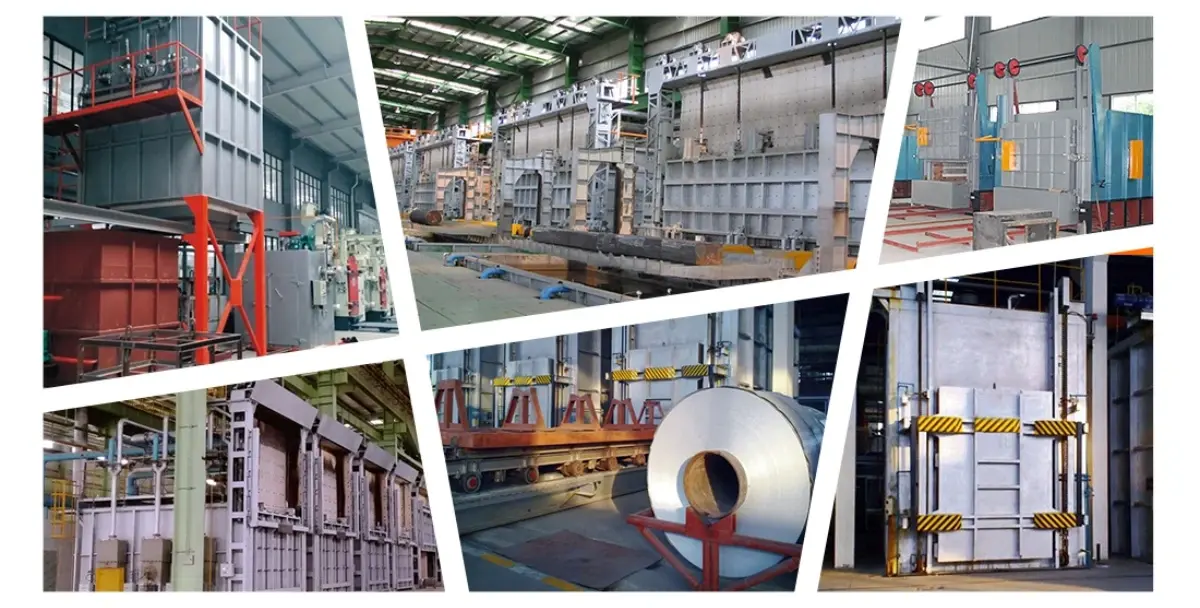
· Pit furnaces with integrated quenching tanks for through-hardening applications
· Box furnaces with front-loading systems for batch operations
· Roller hearth furnaces for continuous processing of long stock materials
· Bell furnace configurations for coil annealing under protective atmospheres
Chamber dimensions adapt to your workpiece geometry. Whether you're processing small fasteners or large automotive body panels, the furnace interior accommodates your dimensional requirements.
Technical Specifications
|
Parameter
|
Specification
|
Application Benefit
|
|
Operating Temperature Range
|
100-1300℃
|
Covers full recrystallization to austenite transformation temperatures
|
|
Power Capacity
|
5-3000KW
|
Scalable heating capacity for diverse load sizes
|
|
Chamber Dimensions
|
500-50000mm
|
Accommodates components from precision tools to structural frames
|
|
Heating Rate
|
Adjustable 5-20℃/min
|
Controls grain growth for desired mechanical properties
|
|
Atmosphere Control
|
Nitrogen/Hydrogen/Protective Gas
|
Prevents surface oxidation and decarburization
|
|
Temperature Uniformity
|
±5℃
|
Ensures consistent microstructure across batch
|
|
Insulation System
|
Triple-layer composite
|
Reduces energy consumption by 40%
|
|
Control Interface
|
PLC with HMI touchscreen
|
Stores 200+ thermal cycle recipes
|
How Steel Annealing Furnaces Work?
The warm preparing cycle takes after three particular stages that decide your last fabric properties.
Heating Stage: Your steel components enter the chamber at encompassing temperature. The warming components bring the fabric up to the target temperature continuously. Controlled slope rates avoid warm stun and guarantee uniform warm entrance through thick cross-sections.
Soaking Stage: Once at temperature, the heater holds the steel for a calculated length. This holding time permits total microstructural change. Carbon particles diffuse through the cross section, grain boundaries relocate, and leftover stresses unwind through atomic-level rearrangement.
Cooling Stage: The controlled cooling decides your last hardness and ductility. Moderate heater cooling produces delicate, machinable structures. Quicker discuss cooling holds direct quality levels. Your chosen cooling rate specifically controls the carbide dispersion and ferrite grain size.
Throughout all stages, defensive airs avoid surface corruption. Nitrogen climates give temperate assurance for most carbon steels. Hydrogen climates convey shinning, oxide-free surfaces for strength applications like electrical steel laminations.
Industrial Applications You Can Support
Annealing Furnace Steel processing serves critical manufacturing sectors where material performance cannot be compromised.
Automotive Manufacturing: Deep-drawn body panels require extreme formability. Cold-rolled steel arrives hard and brittle from the mill. Your annealing cycle recrystallizes the grain structure, enabling 40-50% elongation values necessary for complex stamping dies. Door panels, fenders, and structural reinforcements all depend on this controlled softening process.
Electrical Engineering: Grain-oriented electrical steel for transformer cores demands precise thermal processing. The annealing cycle develops the sharp Goss texture that aligns magnetic domains along the rolling direction. This crystallographic orientation reduces core losses by 20-30% in high-frequency power distribution equipment.
Precision Tooling: Fastener manufacturers process high-carbon steel wire through spheroidize annealing cycles. The treatment converts lamellar cementite into spherical carbides dispersed in a ferrite matrix. This microstructure enables cold heading operations without cracking, essential for producing millions of bolts and screws economically.
Why Manufacturing Partners Choose Hebei Bolin?
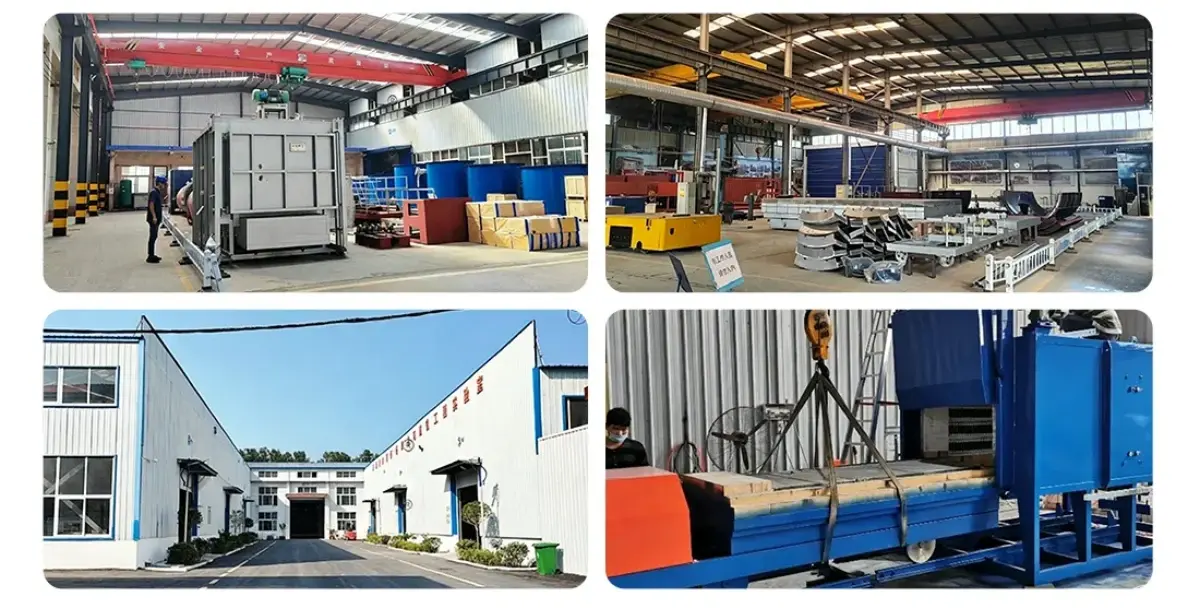
Since 2022, we've centered solely on mechanical warm treatment gear improvement. Found in Zhenggang Mechanical Stop, our office coordinating plan designing, component manufacture, and framework get together beneath one roof.
Technical Building Back: Our building group gives warm cycle improvement help. You get archived preparing parameters approved for your particular steel grades and component geometries.
Customization Capabilities: Standard catalog hardware doesn't continuously fit specialized necessities. We offer ODM and OEM administrations, adjusting heater plans concurring to your drawings and determinations. Chamber arrangements, climate frameworks, and stacking components adjust to your workflow integration needs.
Reliable Conveyance: Generation lead times extend from 10 to 40 days depending on framework complexity. We keep up component stock levels that empower fast reaction to your venture timelines.
Comprehensive Benefit: Establishment and commissioning bolster guarantees your framework comes to indicated execution measurements. Specialized direction proceeds through your startup stage. Each heater incorporates a 1-year guarantee covering both components and workmanship. On-site upkeep and future gear updates keep your generation capabilities current.
Frequently Asked Questions
Q: What's the contrast between full tempering and stress-relief annealing?
Full tempering warms steel over its upper basic temperature (ordinarily 850-900℃ for carbon steels), totally changing the structure to austenite some time recently moderate cooling. This produces the gentlest conceivable condition. Stress-relief strengthening works underneath the change temperature (500-650℃), unwinding remaining stresses without changing the existing microstructure. Your application decides which cycle you need.
Q: How do you avoid surface decarburization amid high-temperature processing?
Protective environments anticipate carbon misfortune from the steel surface. Endothermic gas generators or nitrogen-methanol mixes keep up a unbiased carbon potential environment. For basic applications, we screen carbon potential utilizing oxygen sensors and alter climate composition in real-time.
Q: Can one heater handle distinctive steel grades?
Yes. The PLC control framework stores different warm cycle formulas. You can prepare low-carbon drawing steel one day and high-carbon spring steel the following by selecting the suitable program. Each formula characterizes warming rates, douse temperatures, holding times, and cooling profiles particular to that fabric grade.
Q: What support does the heater require?
Routine upkeep incorporates month to month review of warming components, quarterly calibration of temperature sensors, and yearly substitution of heater seals. The hard-headed lining ordinarily endures 3-5 a long time depending on working temperature and cycle recurrence. We give point by point support plans with each system.
Q: How rapidly can the heater cool expansive loads?
Cooling rate depends on stack mass and wanted last properties. Normal heater cooling regularly accomplishes 20-40℃/hour for expansive clusters. Water-cooled or forced-air cooling coats quicken this to 50-100℃/hour when speedier turnaround is essential. We'll calculate cooling bends amid your framework plan stage.
Contact Us
Ready to optimize your steel processing capabilities with Annealing Furnace Steel? Contact our technical team to discuss your specific heat treatment requirements. We'll help you select the right furnace configuration and thermal cycle parameters for your application.
Email: 15720259172@163.com
Learn about our latest products and discounts through SMS or email