- English
- French
- German
- Portuguese
- Spanish
- Russian
- Japanese
- Korean
- Arabic
- Irish
- Greek
- Turkish
- Italian
- Danish
- Romanian
- Indonesian
- Czech
- Afrikaans
- Swedish
- Polish
- Basque
- Catalan
- Esperanto
- Hindi
- Lao
- Albanian
- Amharic
- Armenian
- Azerbaijani
- Belarusian
- Bengali
- Bosnian
- Bulgarian
- Cebuano
- Chichewa
- Corsican
- Croatian
- Dutch
- Estonian
- Filipino
- Finnish
- Frisian
- Galician
- Georgian
- Gujarati
- Haitian
- Hausa
- Hawaiian
- Hebrew
- Hmong
- Hungarian
- Icelandic
- Igbo
- Javanese
- Kannada
- Kazakh
- Khmer
- Kurdish
- Kyrgyz
- Latin
- Latvian
- Lithuanian
- Luxembou..
- Macedonian
- Malagasy
- Malay
- Malayalam
- Maltese
- Maori
- Marathi
- Mongolian
- Burmese
- Nepali
- Norwegian
- Pashto
- Persian
- Punjabi
- Serbian
- Sesotho
- Sinhala
- Slovak
- Slovenian
- Somali
- Samoan
- Scots Gaelic
- Shona
- Sindhi
- Sundanese
- Swahili
- Tajik
- Tamil
- Telugu
- Thai
- Ukrainian
- Urdu
- Uzbek
- Vietnamese
- Welsh
- Xhosa
- Yiddish
- Yoruba
- Zulu
Bell Furnace Annealing
Operating Temperature: 100-1300℃
Power: 5-3000KW
Dimensions: 500-50000mm
Application: Heat treatment of metal parts
Minimum Order Quantity: 1 unit
Customization: Supports on-demand customization, ODM/OEM customization
Packaging: Standard export container, customization supported
Bell Furnace Annealing: Precision Heat Treatment for Superior Metal Processing
When you're looking for reliable heat treatment solutions for coiled steel and wire products, Bell Furnace Annealing offers a proven batch annealing method that combines controlled atmosphere technology with efficient thermal processing. This system operates within a temperature range of 100-1300°C and delivers consistent metallurgical results through its multi-layered insulation structure. Our product equipment features composite fiber insulation and ultra-lightweight microsphere vacuum bricks, achieving energy savings of up to 30% compared to conventional designs. With power configurations from 5-3000KW and chamber dimensions ranging from 500-50000mm, you can process various load sizes while maintaining precise temperature uniformity within ±5°C across the heating zone.
How Bell Furnace Heat Treatment Works?
The framework comprises of three primary components: a settled warming base, a defensive inward cover, and an outside cooling hood. Here's how your fabric gets processed:
Your coiled steel sits on the base whereas the inward cover makes a fixed chamber. The warming components in the base raise the temperature steadily to your indicated strengthening point. Amid this stage, a controlled atmosphere—typically hydrogen, nitrogen, or a defensive gas mix—circulates around your material.
This climate avoids oxidation and guarantees a shinning, scale-free surface wrap up. The fabric holds at target temperature for a foreordained drenching period, permitting total stretch help and grain structure adjustment. After drenching, the outside cooling hood replaces the warming cover, empowering controlled cooling rates that decide last mechanical properties.
Technical Specifications
|
Parameter
|
Value Range
|
|
Operating Temperature
|
100-1300°C
|
|
Power Rating
|
5-3000 KW
|
|
Chamber Dimensions
|
500-50000 mm
|
|
Temperature Uniformity
|
±5°C
|
|
Heating Rate
|
50-150°C/hr (adjustable)
|
|
Cooling Rate
|
30-50°C/hr (controlled)
|
|
Atmosphere Options
|
Hydrogen, Nitrogen, N₂-H₂ mix
|
|
Production Lead Time
|
10-40 days
|
|
Minimum Order
|
1 unit
|
Key Performance Advantages
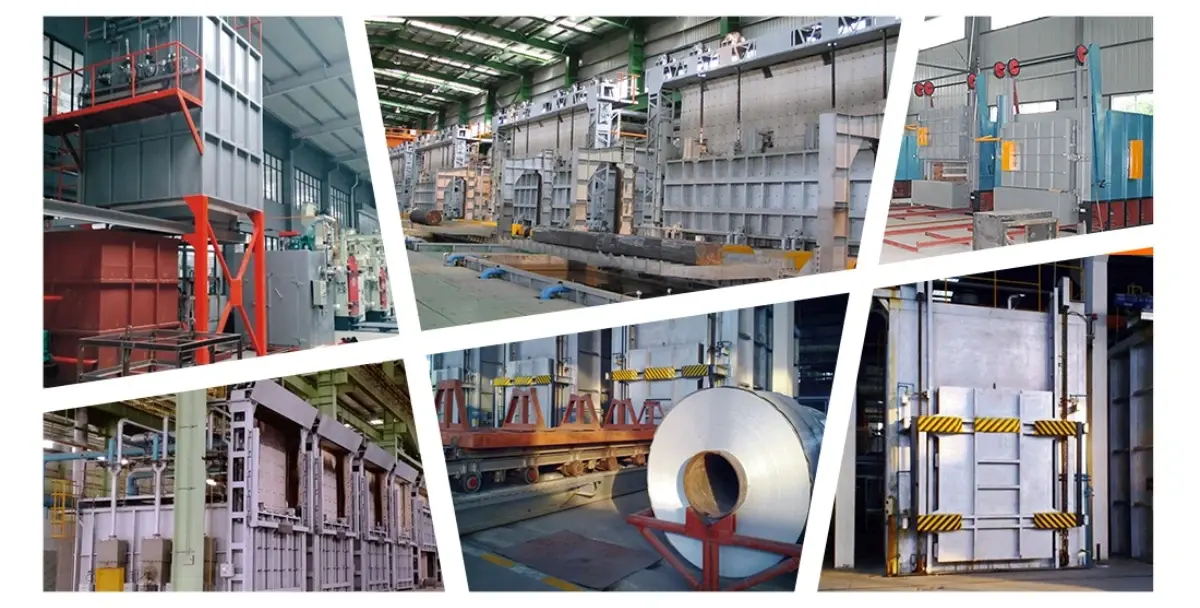
Energy-Efficient Insulation System
Our furnaces use a three-layer insulation approach. The innermost layer employs composite fiber cotton that withstands direct thermal exposure. The middle layer incorporates microsphere vacuum bricks—extremely lightweight yet thermally resistant. The outer layer uses heavy-duty high-alumina bricks for structural integrity. This combination reduces heat loss by 35-40% compared to single-layer designs, cutting your operational costs significantly.
Controlled Atmosphere Precision
You get tight control over the internal atmosphere composition. This matters because even trace oxygen levels (>5ppm) can cause surface discoloration or scaling. Our sealing system maintains atmosphere purity throughout the cycle, giving you consistently bright finishes without secondary cleaning operations.
Flexible Processing Capacity
Whether you're Bell Furnace Annealing small wire coils or large steel sheets, the modular design adapts to your requirements. Chamber sizes scale from 500mm for laboratory applications up to 50,000mm for industrial production lines. This flexibility means you don't pay for excess capacity you won't use.
Metallurgical Benefits You'll Notice
The gradual heating and controlled cooling cycles allow complete stress relief in your material. Internal stresses from cold working dissipate as the metal reaches recrystallization temperature. New, strain-free grains form, improving ductility by 25-40% depending on material grade. Your material becomes easier to form in subsequent operations—stamping, deep drawing, or bending—without cracking or springback issues.
Practical Applications
This warm treatment strategy suits a few mechanical scenarios:
· Cold-rolled steel coils: Reestablish ductility after decrease rolling
· Stainless steel wire: Accomplish particular hardness levels for spring or latch production
· Electrical steel: Optimize attractive properties for transformer cores
· Copper and brass coils: Push alleviation for electrical conductor manufacturing
· Precision amalgams: Control grain measure for aviation component preparation
Why Choose Hebei Bolin Electric Furnace Manufacturing?
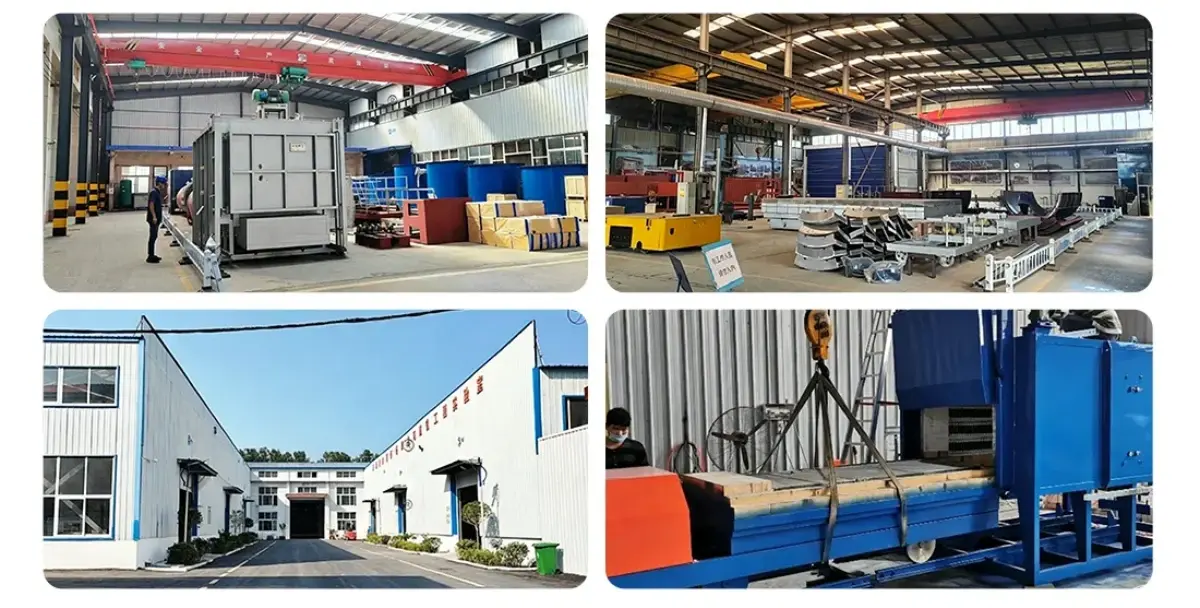
We've specialized in mechanical heater plan and fabricating since our foundation in 2022. Found in Zhenggang Mechanical Stop, Yanshan Financial Advancement Zone, our office coordinating inquire about, plan, generation, and designing support.
Customization Support
Your generation prerequisites frequently vary from standard determinations. We offer both ODM and OEM administrations, adjusting hardware to your particular needs. Send us your drawings or execution prerequisites, and our building group will create a custom-made arrangement. We've designed frameworks for clients over distinctive nations, pleasing different voltage measures and security regulations.
Delivery and Service
Production lead times run from 10 to 40 days depending on framework complexity. We keep up component stock to react rapidly to your planning needs. After conveyance, our group provides:
· Local establishment and commissioning support
· Technical direction for ideal operation
· 1-year guarantee coverage
· On-site upkeep when needed
· Equipment updates as your prerequisites advance
Frequently Asked Questions
Q: Why do a few applications require 100% hydrogen environment instep of nitrogen-hydrogen mixtures?
A: Immaculate hydrogen gives predominant warm exchange effectiveness and makes a more grounded diminishing environment. This abbreviates your cycle times by 15-20% and produces cleaner, brighter surface wraps up. In any case, it requires extra security frameworks due to hydrogen's combustibility. For numerous applications, a 5-10% hydrogen blend in nitrogen gives satisfactory assurance at lower taken a toll and complexity.
Q: How do you avoid coil layers from staying together amid annealing?
A: Staying happens when surface oxides weld adjoining layers together at tall temperature. We anticipate this through exact temperature control—avoiding over the top top temperatures—and appropriate coil tensioning amid winding. A few materials advantage from anti-sticking operator application some time recently preparing. Post-annealing assessment through metallurgical cross-sectioning confirms the viability of these controls.
Q: What cooling rate ought to I anticipate, and why does it matter?
A: Normal controlled cooling rates extend from 30-50°C per hour, in spite of the fact that this changes with stack mass. Cooling rate specifically influences your last microstructure. Slower cooling produces coarser pearlite dispersing in carbon steels, coming about in gentler fabric. Speedier cooling refines the structure, expanding quality. Our water-cooled and air-cooled hood alternatives let you select the fitting rate for your target properties.
Q: How regularly ought to I assess heater seals?
A: Base seals and O-rings require review some time recently each charge agreeing to warm treatment quality measures. Indeed little spills permit oxygen entrance, compromising environment virtue and surface quality. We prescribe weight testing the fixed chamber some time recently each warming cycle. This basic check anticipates imperfect clumps and exorbitant rework.
Q: What causes blue discoloration on the metal surface after processing?
A: Surface blueing shows oxygen presentation amid cooling underneath 200°C, as a rule from climate spills or intemperate dew point. This shows up when indeed little sums of dampness respond with the hot metal surface. Real-time climate observing and follow oxygen examination offer assistance analyze the source. Appropriate seal upkeep and environment drying frameworks dispose of this issue.
Get Started With Your Heat Treatment Solution
Whether you're establishing a new production line or upgrading existing equipment, Bell Furnace Annealing technology provides the metallurgical control and efficiency your operations demand. Our engineering team at Hebei Bolin Electric Furnace Manufacturing stands ready to discuss your specific requirements.
Contact us at 15720259172@163.com to discuss your application parameters, production volumes, and customization needs. We'll provide technical recommendations and quotations based on your operational requirements.
Learn about our latest products and discounts through SMS or email