- English
- French
- German
- Portuguese
- Spanish
- Russian
- Japanese
- Korean
- Arabic
- Irish
- Greek
- Turkish
- Italian
- Danish
- Romanian
- Indonesian
- Czech
- Afrikaans
- Swedish
- Polish
- Basque
- Catalan
- Esperanto
- Hindi
- Lao
- Albanian
- Amharic
- Armenian
- Azerbaijani
- Belarusian
- Bengali
- Bosnian
- Bulgarian
- Cebuano
- Chichewa
- Corsican
- Croatian
- Dutch
- Estonian
- Filipino
- Finnish
- Frisian
- Galician
- Georgian
- Gujarati
- Haitian
- Hausa
- Hawaiian
- Hebrew
- Hmong
- Hungarian
- Icelandic
- Igbo
- Javanese
- Kannada
- Kazakh
- Khmer
- Kurdish
- Kyrgyz
- Latin
- Latvian
- Lithuanian
- Luxembou..
- Macedonian
- Malagasy
- Malay
- Malayalam
- Maltese
- Maori
- Marathi
- Mongolian
- Burmese
- Nepali
- Norwegian
- Pashto
- Persian
- Punjabi
- Serbian
- Sesotho
- Sinhala
- Slovak
- Slovenian
- Somali
- Samoan
- Scots Gaelic
- Shona
- Sindhi
- Sundanese
- Swahili
- Tajik
- Tamil
- Telugu
- Thai
- Ukrainian
- Urdu
- Uzbek
- Vietnamese
- Welsh
- Xhosa
- Yiddish
- Yoruba
- Zulu
Continuous Belt Furnace
Operating Temperature: 100-1300℃
Power: 5-3000KW
Dimensions: 500-50000mm
Application: Heat treatment of metal parts
Minimum Order Quantity: 1 unit
Customization: Supports on-demand customization, ODM/OEM customization
Packaging: Standard export container, customization supported
Continuous Belt Furnace: High-Efficiency Thermal Processing for Mass Production
When your production line demands consistent heat treatment results across thousands of parts daily, a Continuous Belt Furnace becomes indispensable. Our belt furnace system operates continuously at temperatures from 100°C to 1300°C with power configurations ranging from 5kW to 3000kW, ensuring uniform thermal profiles for every component. Built with ultra-energy-saving composite fiber insulation and high-alumina refractory materials, this equipment reduces energy consumption by up to 30% compared to conventional batch furnaces. The conveyor belt design eliminates manual handling and achieves throughput rates exceeding 500kg/hour, making it ideal for automotive fasteners, powder metallurgy parts, and brazing applications where batch-to-batch consistency is critical.
What Makes Our Belt Furnace System Different?
Energy-Efficient Construction
We utilize a multi-layer cover approach. The inward chamber highlights composite fiber cotton with warm conductivity underneath 0.08 W/m·K. This minimizes warm misfortune through heater walls.
High-alumina bricks give basic bolster in high-temperature zones. Ultra-lightweight microsphere vacuum bricks decrease the by and large warm mass. This combination cuts preheating time by 40% and brings down your power costs significantly.
Precise Temperature Control
Each warming zone works freely with PID controllers. Temperature consistency remains inside ±5°C over the working chamber. Thermocouples situated each 500mm screen real-time conditions.
You can program custom warm bends. The framework consequently alters control yield to keep up your indicated warming and cooling rates. This exactness anticipates warm stun and guarantees repeatable mechanical properties.
Flexible Atmosphere Management
The fixed chamber bolsters dormant, lessening, or oxidizing climates. Gas stream control keeps up oxygen levels underneath 10ppm when required. This ensures your parts from surface oxidation amid carburizing or brazing.
Endothermic gas, nitrogen, or hydrogen-nitrogen blends coordinated consistently. Climate sensors give ceaseless observing. Programmed valves alter gas proportions based on your handle formula.
Technical Specifications
|
Parameter
|
Value Range
|
|
Operating Temperature
|
100°C – 1300°C
|
|
Power Rating
|
5kW – 3000kW
|
|
Working Zone Length
|
500mm – 50,000mm
|
|
Temperature Uniformity
|
±5°C
|
|
Belt Speed
|
10mm/min – 500mm/min (adjustable)
|
|
Heating Element
|
Ni-Cr or Fe-Cr-Al alloy
|
|
Insulation Material
|
Composite fiber + vacuum microsphere brick
|
|
Atmosphere Control
|
Inert, reducing, or oxidizing
|
|
Production Capacity
|
Up to 1000kg/hour (depending on configuration)
|
How It Works in Your Production Line?
Material Loading
Parts enter the furnace through an automated feeding system. The mesh belt or solid belt configuration depends on your component geometry. Small fasteners use mesh belts for even gas circulation. Flat components benefit from solid belts that prevent marking.
Multi-Zone Processing
The furnace divides into distinct zones: preheating, soaking, and cooling. Each zone maintains its target temperature independently.
In the preheating zone, parts gradually warm to prevent cracking. The soaking zone ensures complete thermal penetration. The cooling section controls descent rates to achieve desired microstructures.
Continuous Discharge
Treated parts exit into a collection bin or directly onto your next processing station. The continuous flow eliminates waiting periods between batches. Your operators spend less time loading and unloading.
Practical Applications
Powder Metallurgy Sintering
Sintering automotive gears requires precise temperature control and reducing atmospheres. Our Continuous Belt Furnace maintains hydrogen or dissociated ammonia atmospheres while parts travel through 1100°C soak zones. This achieves target density and hardness without surface oxidation.
Fastener Heat Treatment
High-tensile bolts meeting ISO 898-1 standards need consistent quenching and tempering. The belt system processes millions of pieces weekly. Every bolt experiences identical thermal history, ensuring uniform tensile strength across production runs.
Brazing Operations
Aluminum heat exchangers for HVAC systems join at 590°C in nitrogen atmospheres. Oxygen levels below 5ppm prevent flux degradation. The controlled cooling rate after brazing minimizes residual stress and prevents joint cracking.
Metal Part Tempering
After extinguishing, components require exact treating between 200°C and 600°C. The belt heater gives steady hold times. This stretch help prepare progresses sturdiness without relinquishing hardness picks up from earlier treatments.
Why Choose Hebei Bolin?
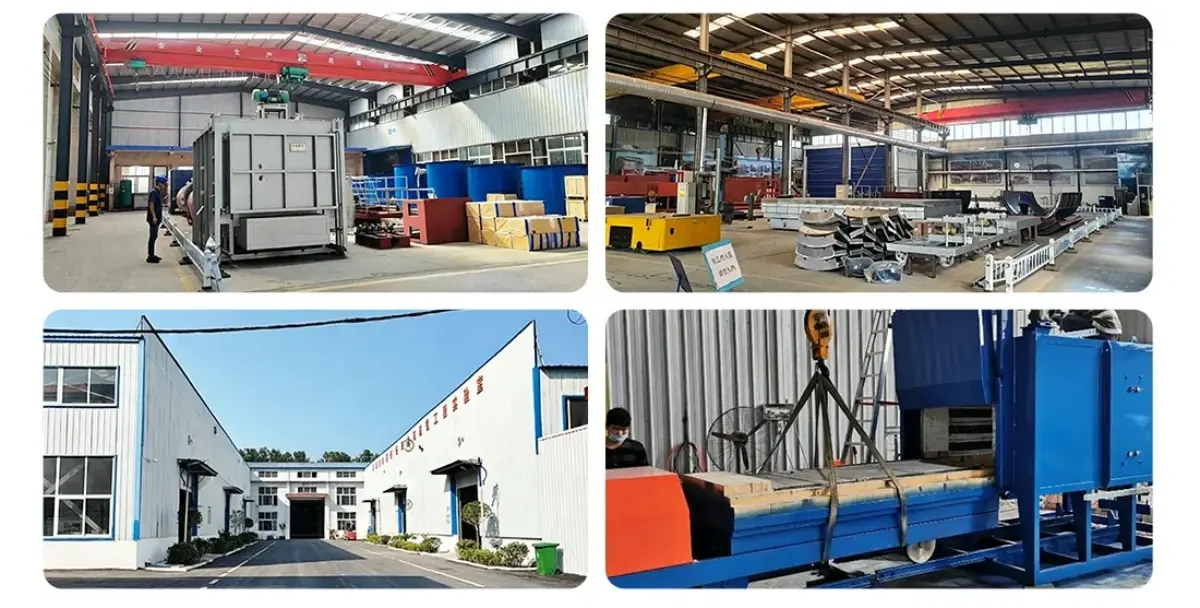
We make all components in-house at our office in Zhengbin Mechanical Stop, Hebei Territory. Since 2022, we've centered only on warm handling equipment.
Our designing group customizes each heater to your details. Whether you require ODM or OEM administrations, we adjust measurements, control frameworks, and environment controls to coordinate your handle requirements.
Production lead time ranges from 10 to 40 days depending on setup complexity. We keep up component stock to quicken conveyance when you confront pressing deadlines.
After-Sales Support
Each establishment incorporates on-site commissioning by our specialists. We give administrator preparing and prepare optimization direction. The standard guarantee covers 12 months from startup.
Technical back proceeds all through your furnace's operational life. We supply substitution warming components, thermocouples, and control components. When you require upgrades—such as including modern environment control modules—our group handles establishment and integration.
Frequently Asked Questions
What belt fabric ought to I utilize for my parts?
Mesh belts work best for little components requiring gas circulation. Heat-resistant stainless steel amalgams (310S or 314) handle temperatures up to 1150°C. For higher temperatures or forceful environments, we prescribe nickel-based super alloys.
Can I prepare distinctive portion sorts simultaneously?
Yes, but all parts must require the same warm cycle. Blending distinctive warm treatment formulas diminishes proficiency. Consider running comparable portion families together and planning changeovers amid upkeep windows.
How do I keep up steady air quality?
Install oxygen sensors at heater section and exit focuses. Screen dew point in real-time. Supplant gas filtration channels agreeing to producer plans. Seal judgment assessments each 500 working hours anticipate discuss ingress.
What's the normal vitality consumption?
A 100kW framework handling 300kg/hour devours roughly 0.33kWh per kilogram of treated fabric. Your real utilization depends on working temperature, throughput rate, and surrounding conditions. Legitimate cover support keeps utilization close plan specifications.
How do I scale generation capacity?
Extend the working zone length or increment belt speed. Longer zones suit higher throughput without decreasing drench time. Speedier belt speeds work when your parts reach temperature rapidly. We'll calculate the ideal arrangement based on your component warm mass and generation targets.
Get Started with Your Custom Solution
Every production environment has unique requirements for Continuous Belt Furnace. We'll work with you to specify the right belt furnace configuration. Our engineers analyze your part geometry, production volume, and quality standards.
Contact us at 15720259172@163.com with your technical requirements.
Learn about our latest products and discounts through SMS or email