- English
- French
- German
- Portuguese
- Spanish
- Russian
- Japanese
- Korean
- Arabic
- Irish
- Greek
- Turkish
- Italian
- Danish
- Romanian
- Indonesian
- Czech
- Afrikaans
- Swedish
- Polish
- Basque
- Catalan
- Esperanto
- Hindi
- Lao
- Albanian
- Amharic
- Armenian
- Azerbaijani
- Belarusian
- Bengali
- Bosnian
- Bulgarian
- Cebuano
- Chichewa
- Corsican
- Croatian
- Dutch
- Estonian
- Filipino
- Finnish
- Frisian
- Galician
- Georgian
- Gujarati
- Haitian
- Hausa
- Hawaiian
- Hebrew
- Hmong
- Hungarian
- Icelandic
- Igbo
- Javanese
- Kannada
- Kazakh
- Khmer
- Kurdish
- Kyrgyz
- Latin
- Latvian
- Lithuanian
- Luxembou..
- Macedonian
- Malagasy
- Malay
- Malayalam
- Maltese
- Maori
- Marathi
- Mongolian
- Burmese
- Nepali
- Norwegian
- Pashto
- Persian
- Punjabi
- Serbian
- Sesotho
- Sinhala
- Slovak
- Slovenian
- Somali
- Samoan
- Scots Gaelic
- Shona
- Sindhi
- Sundanese
- Swahili
- Tajik
- Tamil
- Telugu
- Thai
- Ukrainian
- Urdu
- Uzbek
- Vietnamese
- Welsh
- Xhosa
- Yiddish
- Yoruba
- Zulu
Continuous Sintering Furnace
Operating Temperature: 100-1300℃
Power: 5-3000KW
Dimensions: 500-50000mm
Application: Heat treatment of metal parts
Minimum Order Quantity: 1 unit
Customization: Supports on-demand customization, ODM/OEM customization
Packaging: Standard export container, customization supported
Continuous Sintering Furnace for High-Volume Powder Metallurgy Production
Our Continuous Sintering Furnace delivers consistent thermal processing for powder metallurgy, ceramics, and metal injection molding applications where batch-to-batch uniformity is critical. Operating across a temperature range of 100-1300℃, this furnace system integrates preheating, sintering, and controlled cooling zones in a single production line. With power configurations from 5 to 3000KW and customizable chamber dimensions spanning 500-50000mm, you can process everything from compact automotive gears to large-scale industrial components. The ultra-energy-saving structure combines composite fiber insulation, lightweight microsphere vacuum bricks, and heavy-duty high-alumina refractory materials—reducing energy consumption per part by up to 40% compared to traditional batch furnaces while maintaining temperature uniformity within ±3℃ across all heating zones.
Why Choose Continuous Processing Over Batch Systems?
You're likely commonplace with the stop-start cycle of bunch heaters. Stack parts. Warm the chamber. Hold temperature. Cool down. Empty. Rehash. This prepare squanders noteworthy vitality warming the heater structure each cycle. It too makes quality varieties between batches.
Our nonstop sintering framework kills these wasteful aspects. Parts move through the heater on a work belt or pusher instrument at a controlled speed. The warming zones remain at steady-state temperature. You're as it were warming the parts—not over and over cycling the whole heater structure. This comes about in three prompt benefits for your operation:
Lower Vitality Costs: Steady-state operation devours 30-50% less vitality per kilogram of handled fabric. The heater keeps up warm harmony without the vitality spikes related with group warming cycles.
Predictable Yield: With steady transport speed and steady zone temperatures, you accomplish uniform microstructure advancement over each portion. No more first-batch versus last-batch property variations.
Higher Throughput: Generation runs ceaselessly amid your working shifts. There's no downtime holding up for warming or cooling cycles. For high-volume operations preparing thousands of parts day by day, this interprets straightforwardly to expanded capacity without including floor space.
Technical Specifications
|
Parameter
|
Specification
|
|
Operating Temperature Range
|
100-1300℃
|
|
Temperature Uniformity
|
±3-5℃ across heating zones
|
|
Power Rating
|
5-3000KW (customizable)
|
|
Chamber Dimensions
|
500-50000mm (length adjustable)
|
|
Heating Method
|
Electric resistance or gas-fired
|
|
Insulation System
|
Composite fiber + microsphere vacuum bricks + high-alumina refractory
|
|
Conveyor Options
|
Mesh belt, pusher, walking beam
|
|
Atmosphere Control
|
Nitrogen, hydrogen, endothermic gas compatible
|
|
Cooling Method
|
Integrated forced convection or water-jacketed zones
|
|
Control System
|
PLC with multi-zone temperature profiling
|
|
Minimum Order Quantity
|
1 unit
|
|
Production Lead Time
|
10-40 days depending on configuration
|
How the System Works?
The heater comprises of three essential useful zones organized in sequence:
Preheating Zone: Parts enter at surrounding temperature and steadily warm to around 600-800℃. This controlled incline avoids warm stun in compacted powder components, which are especially defenseless to splitting amid quick temperature changes.
Sintering Zone: The center handling range keeps up your target sintering temperature—typically 1100-1300℃ for most ferrous powder metallurgy applications. Home time in this zone decides the degree of molecule holding and last thickness. You alter belt speed to control this basic parameter.
Cooling Zone: Parts exit the hot zone and cool beneath controlled conditions. For numerous applications, you can coordinated constrained discuss or defensive air cooling to anticipate oxidation whereas decreasing cycle time. The cooling rate influences last grain structure and mechanical properties.
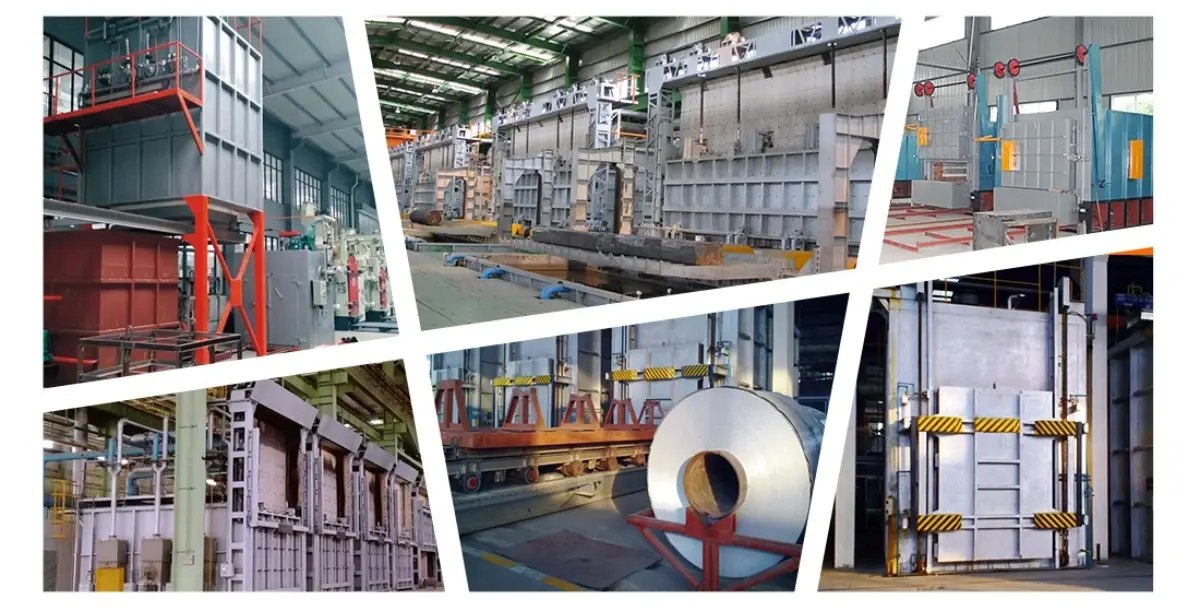
All zones work at the same time. Whereas modern parts enter preheating, already stacked parts are sintering, and wrapped up parts are cooling. This persistent stream is what conveys the throughput advantage.
Key Industrial Applications
Your specific application determines the optimal furnace configuration:
Automotive Powder Metallurgy: If you're producing transmission gears, connecting rods, or valve seat inserts, you need high-density parts with fatigue resistance. The continuous sintering process provides the consistent carbon potential control required for carburized PM parts. Production volumes in automotive often justify the capital investment in continuous systems.
Metal Injection Molding: MIM parts for medical instruments, firearms, or consumer electronics require both debinding and sintering. You can configure the Continuous Sintering Furnace with an extended low-temperature zone for binder removal before the sintering zone. This single-pass processing reduces handling and contamination risks.
Ceramic Components: Solid oxide fuel cell electrolytes, cutting tool inserts, and technical ceramics demand extremely precise temperature profiles. The multi-zone control system maintains the specific heating and cooling ramps required to prevent warping or delamination in these brittle materials.
What Makes Our Furnace Different?
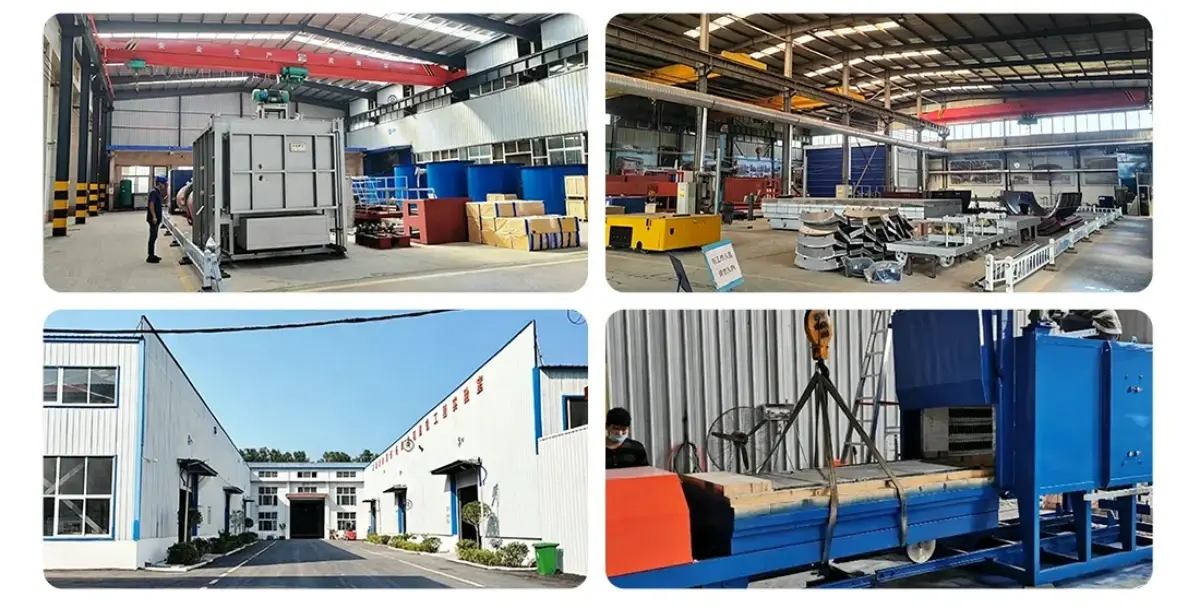
We make heaters at our office in Hebei Territory, where we've coordinates plan, generation, and commissioning capabilities since 2022. Here's what this implies for your project:
Customization Without Complexity: You give your portion details and generation volume prerequisites. We design the zone lengths, warming control, and transport framework to coordinate. Whether you require a compact 3-meter framework for a pilot line or a 30-meter generation heater, we alter the plan accordingly.
Energy-Saving Development: The separator bundle combines three layers—inner composite fiber for warm effectiveness, microsphere vacuum bricks for basic keenness, and external high-alumina hard-headed for strength. This decreases shell temperature to beneath 45℃ indeed when the inside chamber works at 1300℃.
Practical Mechanization: The PLC control framework stores your temperature profiles and consequently alters warming control to keep up setpoints. Thermocouples in each zone give criticism. You do not require specialized operators—the framework oversees warm solidness consequently.
Service and Support
When you arrange a heater, you're getting more than gear. Our specialized group provides:
· Installation supervision and commissioning at your facility
· Operator preparing on temperature profiling and upkeep procedures
· One-year guarantee covering warming components, control frameworks, and basic components
· Remote demonstrative back and on-site benefit for updates or repairs
We get it that heater downtime stops your generation line. That's why we keep up component stock and give specialized help to minimize any benefit interferences.
Frequently Asked Questions
How do I decide the right belt speed for my parts?
Belt speed controls home time in each zone. For most powder metal parts, you require 20-60 minutes add up to time in the sintering zone. We calculate the ideal speed based on your portion mass, fabric composition, and target thickness. Amid commissioning, we run test parts and alter speed to accomplish your specification.
Can I handle diverse portion geometries on the same furnace?
Yes, inside limits. The transport width and stature clearance characterize the most extreme portion envelope. You can run diverse portion families as long as they utilize comparable sintering temperatures and do not require essentially distinctive home times. For applications requiring visit changeovers between exceptionally distinctive forms, a bunch heater may be more practical.
What environment choices work with this system?
The heater acknowledges nitrogen, separated smelling salts, endothermic gas, or hydrogen climates. You indicate the climate sort amid plan, and we seal the chamber fittingly and coordinated the gas conveyance framework. For oxidation-sensitive materials like stainless steel or titanium powders, defensive air is essential.
How much floor space does establishment require?
Total length depends on your generation rate necessity. A normal 1000 kg/day car PM heater measures around 15-20 meters long, 2 meters wide, and 2.5 meters tall. You too require clearance for loading/unloading stations and support get to. We give format drawings amid the citation phase.
What continuous upkeep does the heater require?
Heating components ordinarily final 12-18 months beneath persistent operation. Thermocouples require yearly calibration confirmation. The transport belt or pusher component requires occasional review for wear. We give a point by point support plan with the framework documentation. Most clients plan major support amid yearly plant shutdowns.
Getting Started
We know selecting thermal processing equipment involves careful evaluation of your technical requirements, production goals, and budget constraints. If you're considering a Continuous Sintering Furnace for your operation, we're here to discuss your specific application.
Contact our engineering team at 15720259172@163.com with your part specifications, material type, and target production volume. We'll provide technical recommendations and a customized quotation based on your needs.
Learn about our latest products and discounts through SMS or email