- English
- French
- German
- Portuguese
- Spanish
- Russian
- Japanese
- Korean
- Arabic
- Irish
- Greek
- Turkish
- Italian
- Danish
- Romanian
- Indonesian
- Czech
- Afrikaans
- Swedish
- Polish
- Basque
- Catalan
- Esperanto
- Hindi
- Lao
- Albanian
- Amharic
- Armenian
- Azerbaijani
- Belarusian
- Bengali
- Bosnian
- Bulgarian
- Cebuano
- Chichewa
- Corsican
- Croatian
- Dutch
- Estonian
- Filipino
- Finnish
- Frisian
- Galician
- Georgian
- Gujarati
- Haitian
- Hausa
- Hawaiian
- Hebrew
- Hmong
- Hungarian
- Icelandic
- Igbo
- Javanese
- Kannada
- Kazakh
- Khmer
- Kurdish
- Kyrgyz
- Latin
- Latvian
- Lithuanian
- Luxembou..
- Macedonian
- Malagasy
- Malay
- Malayalam
- Maltese
- Maori
- Marathi
- Mongolian
- Burmese
- Nepali
- Norwegian
- Pashto
- Persian
- Punjabi
- Serbian
- Sesotho
- Sinhala
- Slovak
- Slovenian
- Somali
- Samoan
- Scots Gaelic
- Shona
- Sindhi
- Sundanese
- Swahili
- Tajik
- Tamil
- Telugu
- Thai
- Ukrainian
- Urdu
- Uzbek
- Vietnamese
- Welsh
- Xhosa
- Yiddish
- Yoruba
- Zulu
Continuous Tempering Furnace
Operating Temperature: 100-1300℃
Power: 5-3000KW
Dimensions: 500-50000mm
Application: Heat treatment of metal parts
Minimum Order Quantity: 1 unit
Customization: Supports on-demand customization, ODM/OEM customization
Packaging: Standard export container, customization supported
Continuous Tempering Furnace: Automated Heat Treatment Solution for High-Volume Production
When your production line demands consistent hardness profiles across thousands of components daily, our Continuous Tempering Furnace delivers precise thermal processing with minimal manual intervention. Operating across a temperature range of 100-1300℃ with power configurations from 5KW to 3000KW, this system utilizes a mesh belt or roller hearth conveyor mechanism to transport workpieces through multiple controlled heating zones. You benefit from approximately 30% energy savings compared to traditional batch furnaces, thanks to our composite fiber insulation and microsphere vacuum brick construction. With dimensions customizable from 500mm to 50,000mm, the furnace reaches operating temperature in just 20 minutes, ensuring your heat treatment process integrates seamlessly into continuous production workflows for fasteners, bearing components, and spring manufacturing.
What Is a Continuous Tempering System?
This gear performs the stress-relief stage after extinguishing in your warm treatment cycle. Not at all like batch-type heaters that prepare parts in stationary loads, the nonstop plan moves components through the warming chamber at a controlled speed.
You do not require stacking racks or wicker container. Each portion gets person warm introduction as it voyages through temperature zones. This approach dispenses with the warm mass related with fixturing, diminishing generally vitality consumption.
The transport system—whether work belt, pusher plate, or roller hearth—maintains reliable portion dividing. This guarantees uniform warming and permits for coordinates cooling segments at the chamber exit. Your generation stream remains continuous, tending to bottleneck issues common in high-volume operations.
Technical Specifications
|
Parameter
|
Value Range
|
|
Operating Temperature
|
100-1300℃
|
|
Power Rating
|
5-3000 KW
|
|
Furnace Dimensions
|
500-50,000 mm
|
|
Heat-Up Time
|
≤20 minutes to operating temperature
|
|
Insulation Type
|
Composite fiber + microsphere vacuum brick + high-alumina brick
|
|
Conveyor Options
|
Mesh belt / Roller hearth / Pusher tray
|
|
Energy Efficiency
|
30% improvement vs. conventional batch furnaces
|
|
Temperature Uniformity
|
±5℃ across working zone
|
|
Control System
|
PLC-based automatic temperature regulation
|
|
Minimum Order
|
1 unit
|
How the System Works?
Your parts enter the heater on the transport component at a controlled nourish rate. The framework comprises of three useful zones:
Heating Zone: Resistance warming components or gas burners raise component temperature to the indicated treating extend. Temperature sensors give real-time criticism to the PLC control framework, keeping up setpoint precision inside ±5℃.
Soaking Zone: Parts stay at target temperature for a foreordained length based on segment thickness and fabric review. This stage permits carbon dissemination and push alleviation to total uniformly.
Cooling Zone: Components exit the warming chamber and enter a controlled cooling area. Constrained discuss or defensive environment circulation brings parts to dealing with temperature without warm shock.
The transport speed decides home time in each zone. You alter this parameter based on your fabric determinations and required mechanical properties.
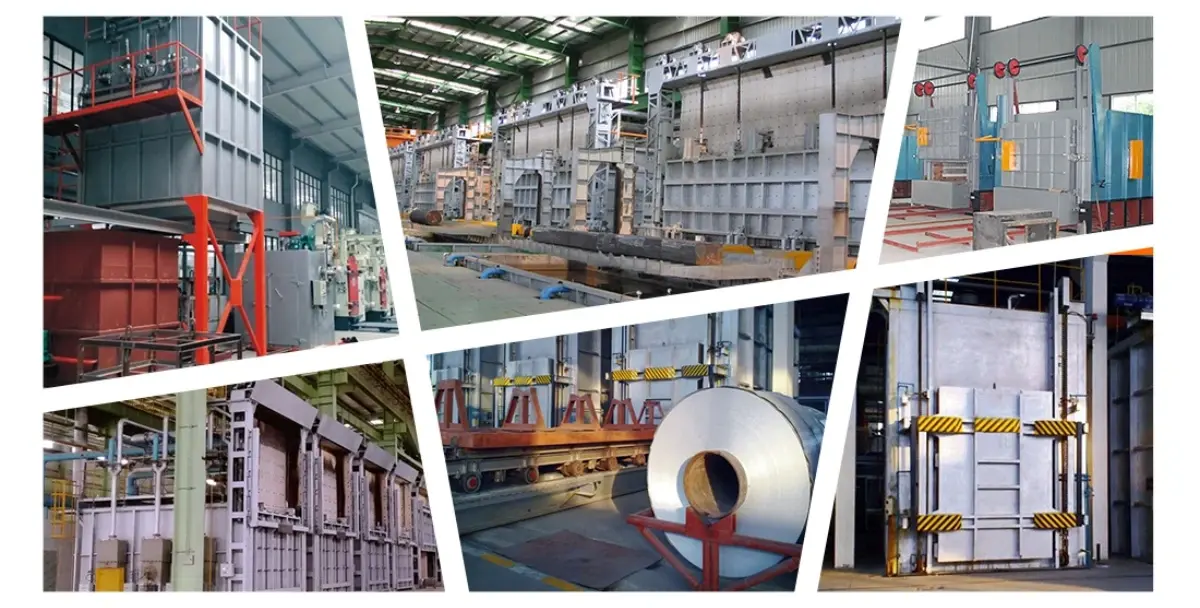
Key Performance Advantages
Vitality Productivity: The ultra-lightweight microsphere vacuum brick structure diminishes warm mass by around 40% compared to conventional hard-headed plans. Warm maintenance progresses, cutting fuel or power utilization. Your working costs diminish whereas generation yield remains constant.
Consistent Metallurgical Comes about: Robotized transport transport kills manual taking care of varieties. Each component encounters indistinguishable time-temperature presentation. This consistency is basic when you're handling Review 10.9 latches or exactness bearing races where hardness variety must remain inside HRC ±2.
High Throughput Capability: Ceaseless operation dispenses with the stacking, warming, and emptying cycles characteristic to group preparing. Your line forms parts without intrusion, maximizing gear utilization. This plan suits car providers and latch producers confronting day by day volumes surpassing 50,000 pieces.
Reduced Oxidation: Defensive environment capability (discretionary nitrogen or endothermic gas) avoids surface decarburization. Your components keep up dimensional exactness and surface wrap up, diminishing auxiliary crushing operations.
Rapid Startup: Coming to 1000℃ inside 20 minutes minimizes preheating delays amid move changes or generation switchovers. You keep up plan adaptability without relinquishing warm solidness.
Primary Industrial Applications
Automotive Fastener Heat Treatment: When you manufacture bolts to ASTM A574 or ISO 898-1 standards, tensile strength uniformity across production lots is non-negotiable. The Continuous Tempering Furnace tempers quenched fasteners (Grade 8.8, 10.9, 12.9) with consistent microstructure transformation, ensuring elongation and proof load values meet specification limits.
Bearing Component Processing: High-precision rollers and races require dimensional stability under cyclic loading. Tempering relieves residual stresses from quenching while maintaining surface hardness above HRC 58. Your bearing assemblies achieve target fatigue life without grinding distortion.
Spring Manufacturing: Coil springs and leaf springs for heavy-duty suspension systems undergo tempering to balance elastic properties with stress resistance. The controlled atmosphere prevents surface oxidation that would initiate fatigue cracks during service loading.
Why Choose Hebei Bolin Electric Furnace Manufacturing?
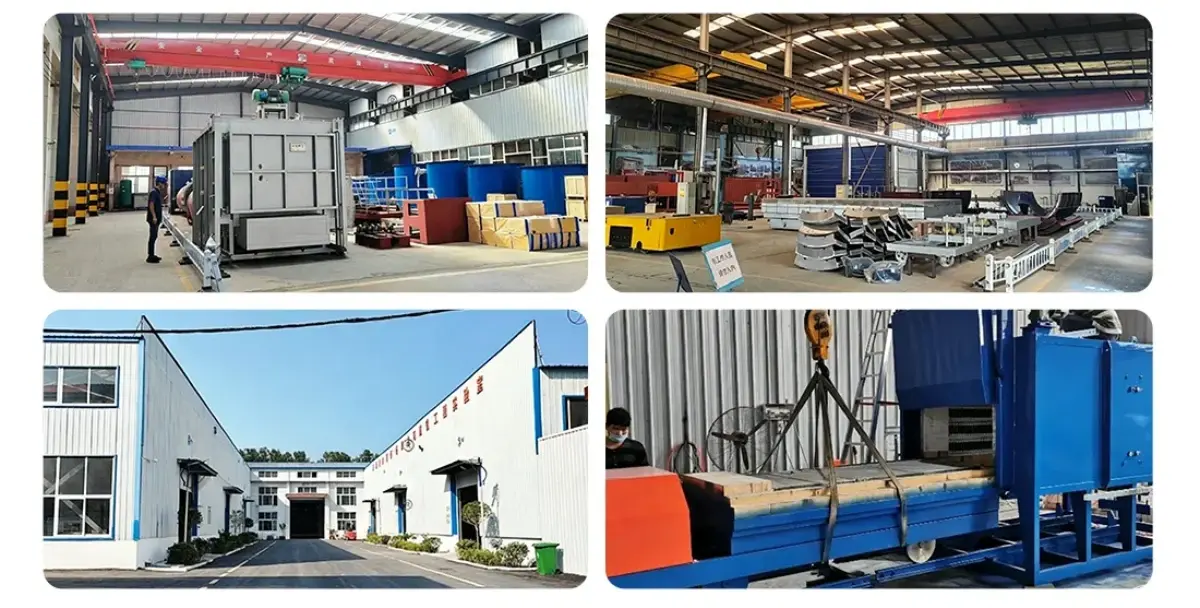
We design and manufacture heat treatment equipment at our facility in Yanshan Economic Development Zone. Our engineering team customizes furnace dimensions, conveyor configurations, and control systems to match your production requirements.
Custom Engineering: You provide part geometry, material grade, and throughput targets. We calculate heating zone length, burner placement, and conveyor speed accordingly. OEM and ODM arrangements accommodate specific voltage standards or atmosphere requirements for your region.
Installation Support: Our technicians assist with on-site commissioning, calibrating temperature sensors and verifying atmosphere composition. You receive documentation covering maintenance schedules and troubleshooting procedures.
Warranty Coverage: A 1-year warranty covers structural components and control systems. We provide technical support for equipment upgrades as your production needs evolve.
Delivery Schedule: Standard configurations ship within 10-40 days depending on furnace dimensions and optional features. We maintain component inventory to respond to urgent replacement part requests.
Frequently Asked Questions
What transport sort suits little latch parts?
Mesh belt transports handle components weighing less than 5kg per piece. The open work plan permits uniform gas circulation around each portion. For heavier components like equip spaces or bearing rings, roller hearth or pusher plate frameworks give superior support.
Can I coordinated this heater into an existing extinguish line?
Yes. We plan gulf and outlet interfacing to coordinate your transport tallness and belt speed. Defensive environment move zones avoid oxidation between extinguishing and treating stages.
How do I calculate required transport speed?
Tempering time depends on area thickness and fabric. For case, a 20mm breadth latch in 4140 steel requires roughly 45 minutes at 540℃. Separate warming zone length by required time to decide belt speed. Our engineers help with these calculations amid framework design.
What support interims do you recommend?
Inspect warming components quarterly. Check transport drive components month to month for wear. Calibrate temperature sensors each six months. We give point by point support checklists particular to your heater configuration.
Does the framework suit environment control?
Optional nitrogen or endothermic gas infusion frameworks keep up defensive environments underneath 50ppm oxygen. This anticipates decarburization on exactness components where surface hardness is basic.
Contact Us
For technical specifications or quotation requests, contact our engineering team at 15720259172@163.com.
Hebei Bolin Electric Furnace Manufacturing Co., Ltd. specializes in custom Continuous Tempering Furnace heat treatment solutions for high-volume production environments. Our engineering team applies decades of thermal processing experience to design systems that improve your metallurgical consistency while reducing operating costs.
Learn about our latest products and discounts through SMS or email