- English
- French
- German
- Portuguese
- Spanish
- Russian
- Japanese
- Korean
- Arabic
- Irish
- Greek
- Turkish
- Italian
- Danish
- Romanian
- Indonesian
- Czech
- Afrikaans
- Swedish
- Polish
- Basque
- Catalan
- Esperanto
- Hindi
- Lao
- Albanian
- Amharic
- Armenian
- Azerbaijani
- Belarusian
- Bengali
- Bosnian
- Bulgarian
- Cebuano
- Chichewa
- Corsican
- Croatian
- Dutch
- Estonian
- Filipino
- Finnish
- Frisian
- Galician
- Georgian
- Gujarati
- Haitian
- Hausa
- Hawaiian
- Hebrew
- Hmong
- Hungarian
- Icelandic
- Igbo
- Javanese
- Kannada
- Kazakh
- Khmer
- Kurdish
- Kyrgyz
- Latin
- Latvian
- Lithuanian
- Luxembou..
- Macedonian
- Malagasy
- Malay
- Malayalam
- Maltese
- Maori
- Marathi
- Mongolian
- Burmese
- Nepali
- Norwegian
- Pashto
- Persian
- Punjabi
- Serbian
- Sesotho
- Sinhala
- Slovak
- Slovenian
- Somali
- Samoan
- Scots Gaelic
- Shona
- Sindhi
- Sundanese
- Swahili
- Tajik
- Tamil
- Telugu
- Thai
- Ukrainian
- Urdu
- Uzbek
- Vietnamese
- Welsh
- Xhosa
- Yiddish
- Yoruba
- Zulu
Glass Bending Furnace
Operating Temperature: 100-1300℃
Power: 5-3000KW
Dimensions: 500-50000mm
Application: Heat treatment of metal parts
Minimum Order Quantity: 1 unit
Customization: Supports on-demand customization, ODM/OEM customization
Packaging: Standard export container, customization supported
Glass Bending Furnace: Precision Thermal Forming Equipment for Curved Glass Production
When you need to transform flat glass into precise curved shapes without compromising optical clarity, a Glass Bending Furnace becomes essential. This specialized thermal processing equipment heats glass panels to approximately 600°C–700°C, allowing controlled deformation through gravity or mechanical pressing. Operating with multi-zone temperature control (±2°C uniformity), our system achieves operating ranges from 100°C to 1300°C with power configurations spanning 5–3000 KW. Built with composite fiber insulation and high-alumina refractory materials, the furnace minimizes energy consumption while maintaining thermal stability across chamber dimensions from 500 mm to 50,000 mm. This advanced heating platform directly addresses your production challenges: eliminating optical distortion from uneven heating, preventing stress fractures during cooling cycles, and reducing scrap rates in complex geometry forming.
Core Technical Configuration
Our warming framework utilizes a multi-chamber structure that isolates warming, shaping, and toughening zones. This plan permits concurrent handling stages, altogether moving forward throughput compared to single-chamber units.
Temperature Control System
The PLC-based controller coordinating with a touchscreen HMI for real-time bend observing. You can program custom warming profiles to coordinate particular glass compositions and thickness prerequisites. Temperature sensors situated all through the chamber keep up consistency inside ±2°C over the whole working area.
Insulation Architecture
We build the heater shell utilizing three layers:
· Inward layer: High-alumina bricks for coordinate warm exposure
· Center layer: Ultra-lightweight microsphere vacuum bricks for warm retention
· External layer: Composite fiber separator cotton for negligible warm loss
This arrangement diminishes surface temperatures and brings down vitality costs by up to 30% compared to ordinary brick-lined furnaces.
Heating Component Design
Resistance warming components convey equally over sidewalls and roof areas. The zoned course of action permits free control of diverse chamber ranges, avoiding hot spots that cause visual surrenders in wrapped up glass.
Technical Specifications
|
Parameter
|
Value Range
|
|
Operating Temperature
|
100°C – 1300°C
|
|
Temperature Uniformity
|
±2°C
|
|
Power Rating
|
5 KW – 3000 KW
|
|
Chamber Dimensions
|
500 mm – 50,000 mm
|
|
Heating Rate
|
Adjustable, typically 5°C–15°C/min
|
|
Insulation Material
|
Composite fiber + alumina bricks
|
|
Control System
|
PLC with HMI touchscreen
|
|
Cooling Method
|
Controlled air circulation
|
|
Power Supply
|
220V–480V, customizable
|
Industrial Applications
Building Glazing
You'll discover this hardware basic for creating bended window ornament dividers and domed sky facing windows. The controlled warming avoids inside stretch that would compromise basic keenness in large-span establishments. The heater handles boards up to a few meters in length, keeping up optical quality all through the bowing process.
Automotive Glass Manufacturing
Windshield generation requires exact ebb and flow coordinating and zero visual twisting. Our temperature control keeps up the glass move point consistently over the whole board, guaranteeing reliable thickness dispersion after shaping. This exactness meets ASTM C1464-16 guidelines for bowed car glass.
Commercial Show Systems
High-end retail exhibits and refrigerated show units request sharp-angle twists without surface abandons. The furnace's multi-zone control permits localized warming for tight sweep bends whereas securing Low-E coatings and covered layers from warm debasement.
Performance Advantages
Vitality Efficiency
The triple-layer separator framework decreases warm misfortune by 40% compared to standard mechanical heaters. You'll see lower working costs and speedier temperature recuperation between generation cycles.
Process Repeatability
Automated temperature profiling dispenses with variety between bunches. Once you build up parameters for a particular item, the framework replicates indistinguishable warming bends, decreasing quality control rejections.
Maintenance Accessibility
Modular warming component plan permits speedy substitution without disassembling the whole chamber. Get to boards situated at key areas decrease downtime amid schedule reviews.
Customization and Service Support
We adapt each Glass Bending Furnace to your specific production requirements. Whether you process thin display glass or thick architectural panels, we adjust chamber dimensions, heating power, and control logic accordingly.
Engineering Support
Our technical team provides on-site installation and commissioning. We test temperature distribution across the chamber using calibrated sensors and adjust zone controllers to meet your uniformity requirements.
ODM/OEM Capabilities
If you need integration with existing production lines or specific automation features, we modify the standard design. We work from your technical drawings or collaborate on new system development.
After-Sales Coverage
All equipment includes a 1-year warranty covering heating elements, control systems, and structural components. We provide remote troubleshooting and dispatch technicians for on-site repairs when needed.
Production and Delivery
Standard lead time ranges from 10 to 40 days depending on customization complexity and current generation plan. We keep up component stock for common arrangements to quicken delivery.
Units dispatch in export-standard holders with defensive crating for warming components and control boards. We facilitate with cargo forwarders to handle documentation and traditions clearance.
Minimum arrange amount is one unit, making this hardware available whether you're building up modern generation capacity or supplanting maturing gear.
Frequently Asked Questions
What glass thickness can this furnace process?
Standard configurations handle 3 mm to 19 mm glass thickness. We adjust heating element spacing and power density for thicker architectural or specialty glass applications.
How long does the heating cycle take?
Cycle time depends on glass thickness and target temperature. Typical automotive windshield heating requires 15–25 minutes, while thicker architectural glass may need 45–60 minutes including controlled cooling phases.
Can the furnace process coated or laminated glass?
Yes, but temperature profiles require adjustment. Low-E coatings tolerate specific heating rates to prevent degradation. We program customized curves based on your glass specifications.
What maintenance schedule should I follow?
Inspect heating elements monthly for signs of oxidation or breakage. Clean temperature sensors quarterly and recalibrate annually. Replace insulation materials every 3–5 years depending on operating hours.
Do you provide operator training?
We include training during installation commissioning. Your operators learn control system operation, safety procedures, and basic troubleshooting. Additional training sessions are available upon request.
Why Choose Hebei Bolin Electric Furnace Manufacturing?
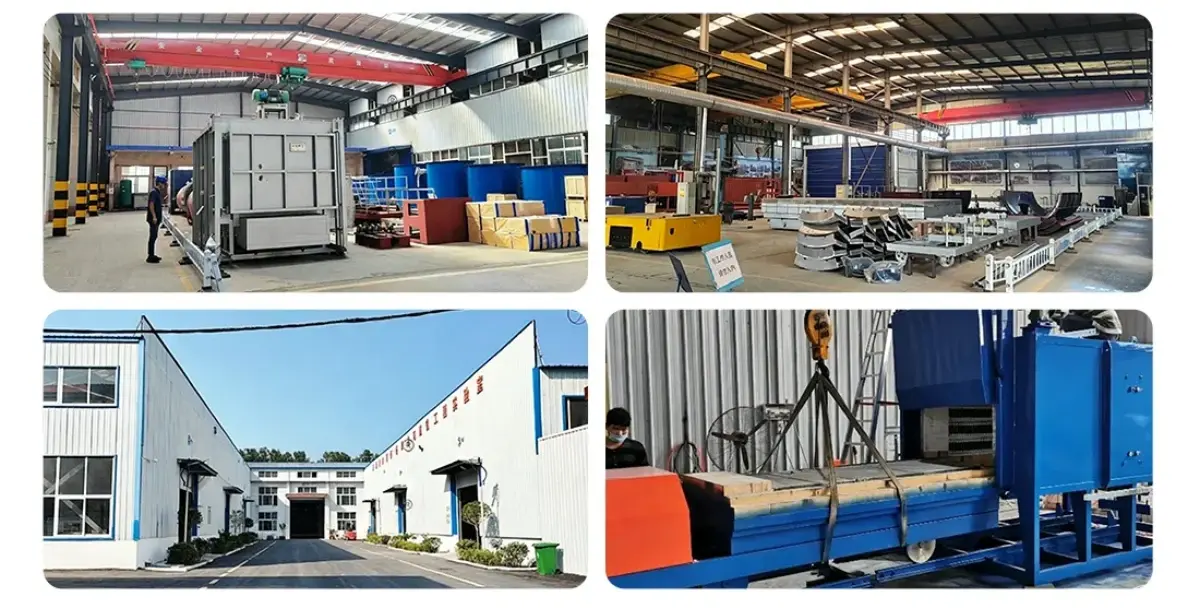
Since our foundation in 2022, we've centered only on warm handling gear improvement. Found in Zhenggang Industrial Park, Yanshan Financial Improvement Zone, our office coordinating plan, fabricating, and testing capabilities beneath one roof.
We keep up thorough quality benchmarks all through creation. Each heater experiences temperature consistency testing and warm effectiveness confirmation some time recently shipment. Our designing group incorporates pros in hard-headed materials, control frameworks, and warm dynamics.
Our client base ranges structural glass processors, car component producers, and strength glass fabricators. We've conveyed establishments over numerous nations, adjusting voltage guidelines and control interfacing to nearby prerequisites.
Contact Us
For technical inquiries or quotation requests, contact us at 15720259172@163.com. Our engineering team responds within 24 hours with preliminary Glass Bending Furnace specifications and feasibility assessments for your application.
Learn about our latest products and discounts through SMS or email