- English
- French
- German
- Portuguese
- Spanish
- Russian
- Japanese
- Korean
- Arabic
- Irish
- Greek
- Turkish
- Italian
- Danish
- Romanian
- Indonesian
- Czech
- Afrikaans
- Swedish
- Polish
- Basque
- Catalan
- Esperanto
- Hindi
- Lao
- Albanian
- Amharic
- Armenian
- Azerbaijani
- Belarusian
- Bengali
- Bosnian
- Bulgarian
- Cebuano
- Chichewa
- Corsican
- Croatian
- Dutch
- Estonian
- Filipino
- Finnish
- Frisian
- Galician
- Georgian
- Gujarati
- Haitian
- Hausa
- Hawaiian
- Hebrew
- Hmong
- Hungarian
- Icelandic
- Igbo
- Javanese
- Kannada
- Kazakh
- Khmer
- Kurdish
- Kyrgyz
- Latin
- Latvian
- Lithuanian
- Luxembou..
- Macedonian
- Malagasy
- Malay
- Malayalam
- Maltese
- Maori
- Marathi
- Mongolian
- Burmese
- Nepali
- Norwegian
- Pashto
- Persian
- Punjabi
- Serbian
- Sesotho
- Sinhala
- Slovak
- Slovenian
- Somali
- Samoan
- Scots Gaelic
- Shona
- Sindhi
- Sundanese
- Swahili
- Tajik
- Tamil
- Telugu
- Thai
- Ukrainian
- Urdu
- Uzbek
- Vietnamese
- Welsh
- Xhosa
- Yiddish
- Yoruba
- Zulu
Industrial Sintering Furnace
Operating Temperature: 100-1300℃
Power: 5-3000KW
Dimensions: 500-50000mm
Application: Heat treatment of metal parts
Minimum Order Quantity: 1 unit
Customization: Supports on-demand customization, ODM/OEM customization
Packaging: Standard export container, customization supported
Industrial Sintering Furnace: High-Precision Thermal Processing Equipment for Advanced Manufacturing
When you need to transform powder materials into dense, high-strength components, an Industrial Sintering Furnace becomes your essential production tool. Our systems deliver precise temperature control from 100°C to 1300°C with ±2°C accuracy, ensuring consistent metallurgical bonding without material liquefaction. Built with composite fiber insulation and ultra-lightweight microsphere vacuum bricks, these furnaces reduce energy consumption by up to 40% compared to conventional designs. With power ratings from 5 to 3000 KW and chamber dimensions ranging from 500 to 50,000 mm, you get customizable solutions for everything from small-batch prototyping to continuous production lines.
What Makes Our Sintering Furnace Different?
Energy-Efficient Structural Design
Our heaters utilize a national standard energy-saving intermittent structure. The cover framework combines three basic layers: composite fiber cotton for warm maintenance, ultra-lightweight high-strength microsphere vacuum balls for basic keenness, and heavy-duty high-alumina bricks for headstrong execution. This setup minimizes warm misfortune amid amplified sintering cycles. You'll take note diminished working costs immediately—lower control draw implies littler utility bills and speedier ROI.
Controlled Atmosphere Capability
Material oxidation annihilates component quality. That's why our frameworks bolster vacuum, hydrogen, nitrogen, and argon airs. The fixed chamber anticipates decarburization amid high-temperature preparing. This things when you're working with receptive metals or accuracy ceramics where surface defilement causes portion rejection.
Temperature Uniformity
Zone warming components keep up reliable temperatures over the whole work chamber. Warm angles make thickness varieties in sintered parts. Our heaters constrain temperature deviation to ±5°C all through the warming zone. This consistency guarantees each component—whether at the front, center, or back of the batch—achieves indistinguishable fabric properties.
Technical Specifications
|
Parameter
|
Value
|
|
Operating Temperature Range
|
100–1300°C
|
|
Temperature Control Accuracy
|
±2°C
|
|
Power Rating
|
5–3000 KW
|
|
Chamber Dimensions
|
500–50,000 mm (customizable)
|
|
Heating Rate
|
Adjustable, 1–20°C/min
|
|
Atmosphere Options
|
Air, vacuum, H₂, N₂, Ar
|
|
Insulation Type
|
Composite fiber + microsphere vacuum brick + high-alumina brick
|
|
Production Lead Time
|
10–40 days
|
|
Minimum Order Quantity
|
1 unit
|
|
Warranty Period
|
1 year
|
How Sintering Process Works?
Your powder compacts enter the heater in their green state—mechanically squeezed but not reinforced. As temperature rises, nuclear dissemination starts at molecule boundaries. Metal iotas relocate over contact focuses between powder grains. This solid-state holding makes crystalline structures without dissolving the bulk material.
The handle requires exact control. Warm as well rapidly, and warm stun splits your parts. Surpass the sintering temperature, and undesirable grain development debilitates the fabric. Remain as well moo, and deficiently dissemination takes off voids. Our programmable controllers execute multi-segment warming profiles naturally. You set the slope rates, hold times, and cooling curves—the heater handles the rest.
During the hold stage, proceeded warming advances densification. Pores between particles shrivel as particles improve into more tightly setups. Last thickness regularly comes to 95-99% of hypothetical most extreme. This compaction makes strides mechanical quality, hardness, and dimensional soundness in your wrapped up components.
Applications Across Industries
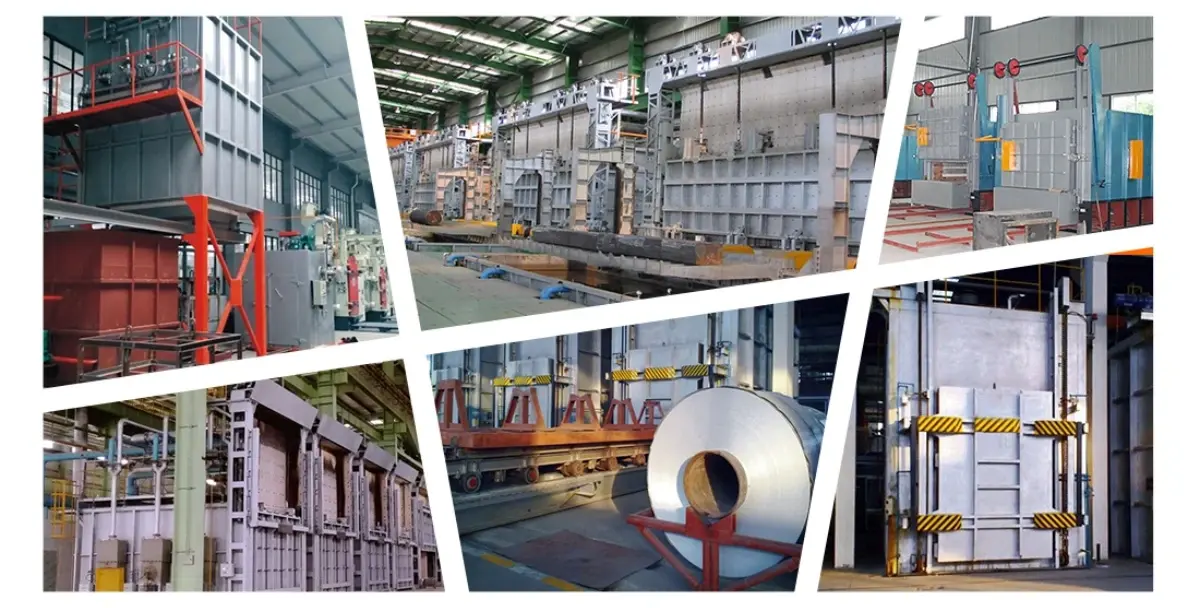
Powder Metallurgy: Gears, orientation, and auxiliary components for car and aviation applications require high-density sintering. Our heaters handle tungsten, nickel, press, and copper-based powders into exactness parts with complex geometries.
Advanced Ceramics: Alumina, zirconia, and silicon nitride ceramics require controlled sintering to accomplish craved porosity and quality. Therapeutic inserts, electronic substrates, and wear-resistant tooling all depend on appropriate warm processing.
Battery Fabricating: Solid-state electrolytes and cathode materials for lithium-ion and sodium-ion batteries require sintering to shape conductive pathways. Temperature consistency specifically influences battery execution and cycle life.
Metal Injection Molding (MIM): After debinding, MIM parts undergo sintering to achieve final density. Our Industrial Sintering Furnaces accommodate the shrinkage control needed for tight-tolerance components.
Customization for Your Requirements
No two production lines are identical. We offer ODM and OEM services based on your drawings and specifications. Need a specific chamber size? We'll design it. Require integration with your existing automation? Our engineers will configure compatible control interfaces.
Working voltage, atmosphere supply systems, and loading mechanisms adapt to your facility requirements. Whether you operate on 220V, 380V, or 440V power systems, we match your electrical infrastructure.
Service and Support
Establishment and Commissioning: Our specialized group gives on-site establishment direction. We confirm legitimate operation some time recently taking off your office. You get preparing on secure operation, upkeep methods, and troubleshooting.
Technical Help: Questions emerge amid generation. Mail us for bolster. We react with down to earth arrangements based on decades of heater designing experience.
Warranty Scope: One-year guarantee covers fabricating abandons and component disappointments beneath ordinary working conditions. We stock common substitution parts to minimize downtime.
Maintenance Administrations: On-site support and hardware updates expand heater benefit life. Warming component substitution, separator reestablishment, and control framework overhauls keep your gear running efficiently.
Why Choose Hebei Bolin?
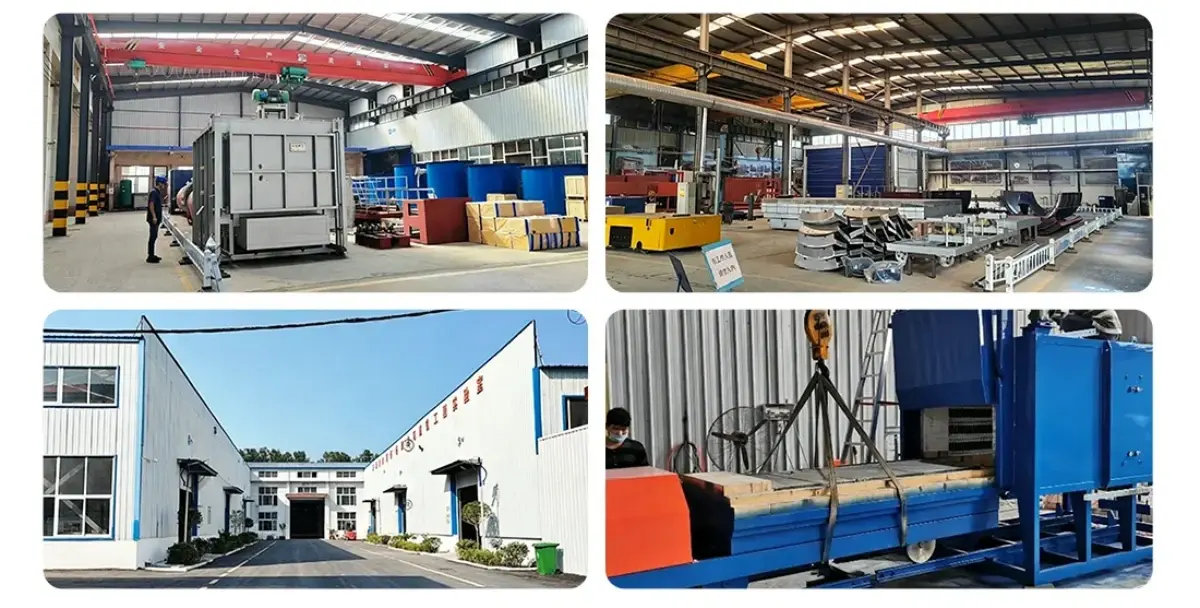
Since 2022, we've centered on conveying dependable warm treatment gear. Our fabricating office in Yanshan Financial Improvement Zone combines advanced generation capabilities with quality control benchmarks. We plan, make, and test all gear in-house—no outsourcing of basic components.
Our building group brings involvement from large-scale mechanical ventures. They get it the warm elements, fabric science, and handle control required for fruitful sintering operations. That information interprets into heaters that work accurately from day one.
Production lead times from 10 to 40 days cruel you won't hold up months for gear conveyance. We keep up stock levels and plan generation runs to meet your venture timelines.
Frequently Asked Questions
How long does a normal sintering cycle take?
Cycle time depends on fabric sort, portion thickness, and target thickness. Little ceramic components may total in 4-8 hours. Huge metal parts requiring moderate warming rates can take 24-48 hours. Our programmable controllers let you optimize cycles for your particular products.
Can I prepare distinctive materials in the same furnace?
Yes, with appropriate climate control and temperature programming. In any case, defilement between contradictory materials requires careful cleaning between runs. We prescribe committed heaters for high-purity applications.
What upkeep does the heater require?
Regular review of warming components, thermocouple calibration, and cover checks each 500 working hours. Total component substitution ordinarily happens after 2000-3000 hours, depending on working temperature and cycle frequency.
Do you give establishment exterior China?
We offer establishment direction and specialized documentation for universal establishments. For complex frameworks, we can orchestrate on-site commissioning through our benefit organize or by planning with your neighborhood specialized team.
How do I decide the right heater size?
Calculate based on most extreme bunch measure, portion measurements, and day by day throughput necessities. Contact us with your generation details—we'll prescribe the suitable chamber measurements and control rating.
Contact Us
Ready to improve your sintering process with Industrial Sintering Furnace? Contact Hebei Bolin Electric Furnace Manufacturing at 15720259172@163.com to discuss your specific requirements. We'll provide technical recommendations and quotations based on your application needs.
Learn about our latest products and discounts through SMS or email