- English
- French
- German
- Portuguese
- Spanish
- Russian
- Japanese
- Korean
- Arabic
- Irish
- Greek
- Turkish
- Italian
- Danish
- Romanian
- Indonesian
- Czech
- Afrikaans
- Swedish
- Polish
- Basque
- Catalan
- Esperanto
- Hindi
- Lao
- Albanian
- Amharic
- Armenian
- Azerbaijani
- Belarusian
- Bengali
- Bosnian
- Bulgarian
- Cebuano
- Chichewa
- Corsican
- Croatian
- Dutch
- Estonian
- Filipino
- Finnish
- Frisian
- Galician
- Georgian
- Gujarati
- Haitian
- Hausa
- Hawaiian
- Hebrew
- Hmong
- Hungarian
- Icelandic
- Igbo
- Javanese
- Kannada
- Kazakh
- Khmer
- Kurdish
- Kyrgyz
- Latin
- Latvian
- Lithuanian
- Luxembou..
- Macedonian
- Malagasy
- Malay
- Malayalam
- Maltese
- Maori
- Marathi
- Mongolian
- Burmese
- Nepali
- Norwegian
- Pashto
- Persian
- Punjabi
- Serbian
- Sesotho
- Sinhala
- Slovak
- Slovenian
- Somali
- Samoan
- Scots Gaelic
- Shona
- Sindhi
- Sundanese
- Swahili
- Tajik
- Tamil
- Telugu
- Thai
- Ukrainian
- Urdu
- Uzbek
- Vietnamese
- Welsh
- Xhosa
- Yiddish
- Yoruba
- Zulu
Metal Hardening Furnace
Operating Temperature: 100-1300℃
Power: 5-3000KW
Dimensions: 500-50000mm
Application: Heat treatment of metal parts
Minimum Order Quantity: 1 unit
Customization: Supports on-demand customization, ODM/OEM customization
Packaging: Standard export container, customization supported
Metal Hardening Furnace: Industrial Heat Treatment Equipment for Enhanced Wear Resistance
When your production demands consistent hardness and extended component life, a Metal Hardening Furnace from Hebei Bolin delivers precision thermal processing with measurable results. Our systems operate across a temperature range of 100-1300℃ with power configurations from 5-3000KW, designed specifically to increase tensile strength and wear resistance through controlled heating and quenching cycles. Built with ultra-energy-saving composite fiber insulation and lightweight high-strength microsphere vacuum ball bricks, each unit minimizes heat loss while maintaining temperature uniformity within ±5℃. The integrated atmosphere control system prevents surface oxidation and decarburization—common issues that increase your post-process machining costs. With chamber dimensions customizable from 500mm to 50,000mm, you can process everything from small tool batches to large automotive components in a single cycle.
What Makes Our Hardening Equipment Different?
Structure and Energy Efficiency
Our heater plan takes after national energy-saving benchmarks for intermittent heaters. The multi-layer cover framework combines three materials: composite fiber cotton for the internal layer, ultra-lightweight microsphere vacuum ball bricks for the center segment, and heavy-duty high-alumina bricks for auxiliary judgment. This arrangement diminishes outside shell temperature to underneath 50℃ indeed amid top operation at 1300℃.
The warming component format guarantees uniform warm dispersion over the whole working chamber. Temperature sensors situated at different focuses nourish real-time information to the PID control framework, keeping up your indicated solidifying temperature with negligible fluctuation.
Working Principle
The solidifying handle starts when your components enter the chamber and reach the austenitizing temperature—typically between 800-950℃ for carbon steels. At this point, the gem structure changes to austenite. The heater holds this temperature for a calculated drench time based on your workpiece cross-section.
Rapid cooling takes after promptly through the coordinates extinguishing framework. You can arrange oil extinguishing for complex geometries where mutilation control things, or water extinguishing when greatest hardness takes need. The cooling rate decides the last martensitic structure and coming about hardness values.
Atmosphere control runs all through the cycle. Idle gas or vacuum conditions avoid oxygen contact with hot metal surfaces, dispensing with scale arrangement that would require pounding or pickling.
Performance Advantages
Temperature Stability: The progressed cover structure keeps up your set temperature inside ±3℃, guaranteeing steady change over each component in the clump. This kills the hardness variety that causes dismissal rates in quality inspection.
Reduced Distortion: Programmable cooling bends let you coordinate the extinguishing rate to your material's basic cooling speed. This anticipates warm stun that leads to splitting in high-carbon steels or distorting in thin-walled parts.
Lower Working Cost: The energy-saving brick arrangement cuts control utilization by 30-40% compared to ordinary heater plans. Warm maintenance after shutdown comes to 85%, permitting you to continue operations rapidly without full warming cycles.
Surface Quality: Protected air handling conveys shinning, oxide-free surfaces specifically from the heater. You dispense with auxiliary cleaning operations and the related chemical squander transfer costs.
Technical Specifications
|
Parameter
|
Value
|
|
Operating Temperature Range
|
100-1300℃
|
|
Temperature Control Accuracy
|
±3-5℃
|
|
Power Configuration
|
5-3000KW
|
|
Chamber Dimensions
|
500-50,000mm (customizable)
|
|
Heating Rate
|
5-15℃/min (adjustable)
|
|
Atmosphere Options
|
Air, inert gas, vacuum
|
|
Insulation Type
|
Composite fiber + microsphere brick + alumina brick
|
|
Power Supply
|
380V/50Hz (customizable)
|
|
Control System
|
PID automatic temperature control
|
|
Minimum Order Quantity
|
1 unit
|
Industrial Applications
Car Powertrain Components: Your transmission gears, crankshafts, and differential parts require case hardness between 58-62 HRC with a pliable center. Our heaters coordinated into nonstop generation lines, handling clusters of 500+ components per cycle with repeatable profundity of hardness between 0.8-1.5mm.
Tool and Kick the bucket Manufacturing: D2 and H13 device steels request exact cooling bends to anticipate breaking amid solidifying. The programmable extinguishing framework suits complex geometries in stamping kicks the bucket and infusion shape centers, keeping up dimensional solidness inside 0.02mm after warm treatment.
Agricultural Apparatus Parts: Plow edges, cultivator tines, and gatherer components confront rough soil conditions. Through-hardening these medium-carbon steel parts to 45-50 HRC amplifies field benefit life by 200-300% compared to unhardened equivalents.
Construction Equipment: Excavator bucket teeth and bulldozer cutting edges require surface hardness over 55 HRC. Our large-capacity chambers suit curiously large components up to 6 meters in length, with zone warming control for particular solidifying of wear surfaces.
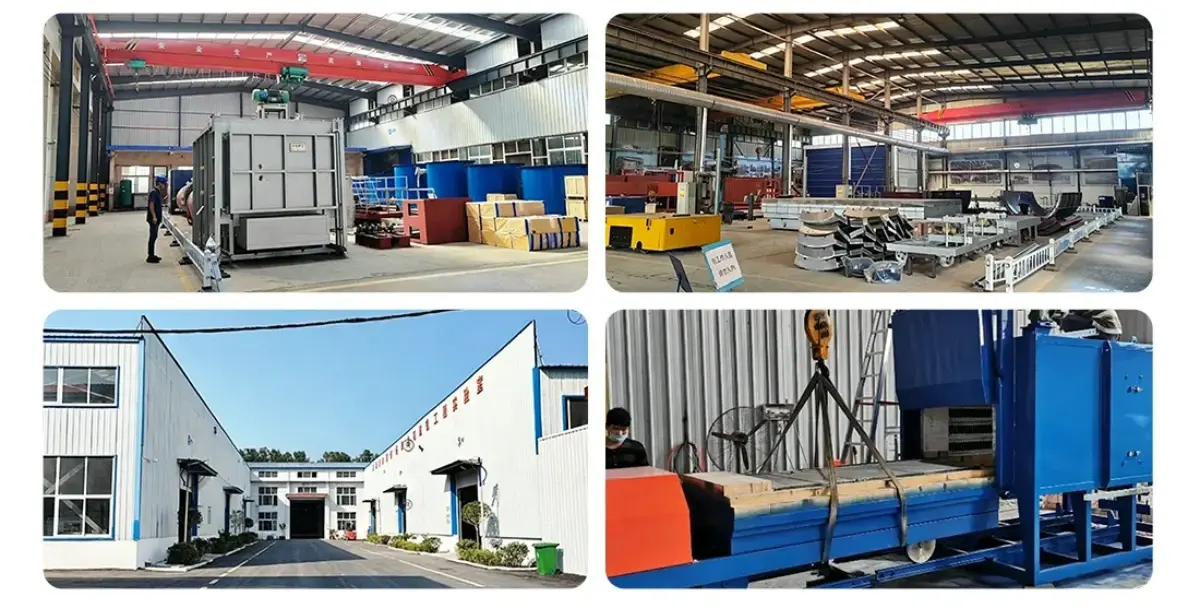
Customization and Support
We adapt each Metal Hardening Furnace to your facility requirements. Chamber dimensions, heating power, and quenching system configuration adjust based on your component size, production volume, and material specifications. Our engineering team reviews your technical drawings and recommends the optimal furnace layout.
ODM and OEM services accommodate voltage standards, control system language, and safety certifications for your target market. Production lead time ranges from 10-40 days depending on customization complexity.
Installation support includes on-site commissioning by our technical staff. We verify temperature uniformity, calibrate control systems, and run test batches using your actual components. The 1-year warranty covers all heating elements, control components, and structural elements. On-site maintenance and equipment upgrades remain available throughout the furnace service life.
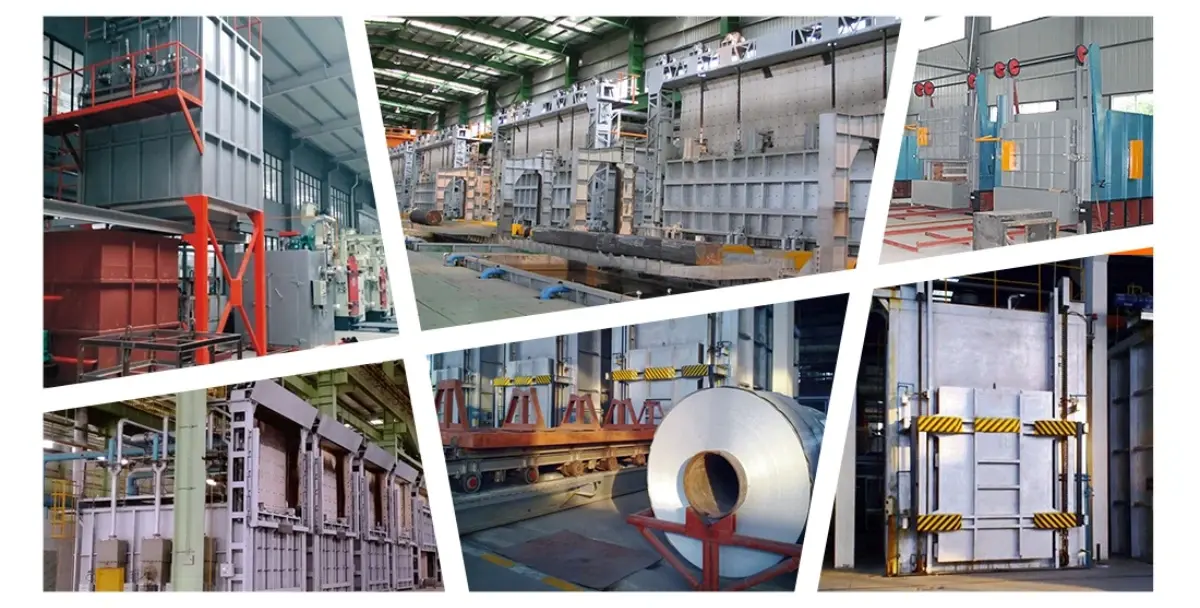
Frequently Asked Questions
What materials can you solidify in this furnace?
The gear forms carbon steels (1045, 1060), combination steels (4140, 4340), instrument steels (D2, H13, O1), and spring steels (SUP9, 65Mn). Most extreme carbon substance ought to remain underneath 1.2% for through-hardening applications. Stainless steels and non-ferrous metals require particular air configurations—contact us with your fabric specifications.
How do you anticipate mutilation in thin-walled parts?
Distortion control includes three components: warming rate, drench time, and cooling strategy. For parts with thickness underneath 3mm, we prescribe slower warming rates (3-5℃/min) and oil extinguishing instep of water. Fixturing frameworks can hold components amid the cycle. Our engineers calculate the ideal warm cycle based on your portion geometry.
Can one heater handle distinctive component sizes?
Yes, but effectiveness changes. A expansive chamber running little clumps squanders vitality. We ordinarily suggest chamber measurements that fill to 60-80% capacity amid typical generation. For offices handling changed component sizes, numerous littler heaters frequently demonstrate more conservative than one larger than usual unit.
What upkeep does the heater require?
Monthly assignments incorporate warming component review, thermocouple calibration confirmation, and entryway seal condition checks. Yearly upkeep includes supplanting worn thermocouples, checking electrical associations, and assessing cover for corruption. Anticipated warming component life expectancy ranges from 8,000-12,000 working hours depending on most extreme temperature usage.
How long does establishment take?
For standard arrangements, establishment requires 3-5 days counting electrical association, control framework setup, and starting test runs. Custom frameworks with specialized extinguishing gear may require 7-10 days. We arrange with your office plan to minimize generation disturbance.
Contact Us
Ready to improve your Metal Hardening Furnace component hardness consistency and reduce post-process costs? Contact our engineering team at 15720259172@163.com with your part specifications, production volume, and material requirements. We'll provide a detailed technical proposal including furnace configuration, estimated cycle time, and energy consumption projections specific to your application.
Learn about our latest products and discounts through SMS or email