- English
- French
- German
- Portuguese
- Spanish
- Russian
- Japanese
- Korean
- Arabic
- Irish
- Greek
- Turkish
- Italian
- Danish
- Romanian
- Indonesian
- Czech
- Afrikaans
- Swedish
- Polish
- Basque
- Catalan
- Esperanto
- Hindi
- Lao
- Albanian
- Amharic
- Armenian
- Azerbaijani
- Belarusian
- Bengali
- Bosnian
- Bulgarian
- Cebuano
- Chichewa
- Corsican
- Croatian
- Dutch
- Estonian
- Filipino
- Finnish
- Frisian
- Galician
- Georgian
- Gujarati
- Haitian
- Hausa
- Hawaiian
- Hebrew
- Hmong
- Hungarian
- Icelandic
- Igbo
- Javanese
- Kannada
- Kazakh
- Khmer
- Kurdish
- Kyrgyz
- Latin
- Latvian
- Lithuanian
- Luxembou..
- Macedonian
- Malagasy
- Malay
- Malayalam
- Maltese
- Maori
- Marathi
- Mongolian
- Burmese
- Nepali
- Norwegian
- Pashto
- Persian
- Punjabi
- Serbian
- Sesotho
- Sinhala
- Slovak
- Slovenian
- Somali
- Samoan
- Scots Gaelic
- Shona
- Sindhi
- Sundanese
- Swahili
- Tajik
- Tamil
- Telugu
- Thai
- Ukrainian
- Urdu
- Uzbek
- Vietnamese
- Welsh
- Xhosa
- Yiddish
- Yoruba
- Zulu
Sinter Hip Furnace
Operating Temperature: 100-1300℃
Power: 5-3000KW
Dimensions: 500-50000mm
Application: Heat treatment of metal parts
Minimum Order Quantity: 1 unit
Customization: Supports on-demand customization, ODM/OEM customization
Packaging: Standard export container, customization supported
Sinter Hip Furnace: High-Performance Integration of Vacuum Sintering and Hot Isostatic Pressing
When producing high-density cemented carbide cutting tools or advanced technical ceramics, residual porosity becomes your silent enemy. A Sinter Hip Furnace eliminates this challenge by integrating vacuum sintering and hot isostatic pressing into a single thermal cycle. This system applies 60 to 100 bar of Argon pressure during the final sintering stage, compressing internal voids and achieving near-theoretical material density. You get components with transverse rupture strength (TRS) improved by 15-30% compared to conventional vacuum sintering, while reducing cycle time and energy consumption. Operating temperatures range from 1200°C to 1550°C, with chamber volumes from 50 to 500 liters and heating power between 30 kW and 200 kW, depending on your production scale.
How Sinter Hip Technology Works?
The prepare starts with green compacts stacked into a graphite or molybdenum hot zone. The chamber evacuates to less than 0.1 Dad, expelling dampness and cover buildups amid the dewaxing phase.
Temperature inclines take after a exact profile. Your parts warm consistently at controlled rates—typically 5-15°C per minute—to anticipate warm stun in delicate green bodies.
At top sintering temperature, the heater moves from vacuum to pressurized climate. High-purity Argon surges the chamber and builds weight to 6-10 MPa. This isostatic drive acts similarly from all headings, collapsing micropores that vacuum alone cannot eliminate.
The combined impact of temperature and weight actuates nuclear dissemination over molecule boundaries. Fabric densifies without liquid-phase arrangement, protecting dimensional precision inside ±0.1% for basic geometries.
Cooling happens beneath controlled weight angles. This avoids break arrangement in fragile materials like silicon nitride or tungsten carbide grades.
Core Performance Advantages
Microstructural Integrity
Conventional vacuum sintering leaves residual porosity between 0.5% and 2%. Your Sinter Hip Furnace reduces this to below 0.02%, creating fully dense structures visible under electron microscopy. Grain boundaries show minimal voids, translating to predictable mechanical properties across production batches.
Mechanical Property Enhancement
Hot isostatic pressure during sintering increases hardness by 5-8% and fracture toughness by up to 20%. For cemented carbide inserts, this means extended tool life in interrupted cutting operations where internal defects typically initiate failure.
Process Efficiency
Combining two operations—sintering and HIP—into one cycle saves 40-60% of total processing time. You eliminate intermediate handling, reduce oxidation risk during transfer, and cut energy costs by avoiding furnace reheating.
Atmosphere Purity Control
The system maintains oxygen and moisture levels below 5 ppm throughout the cycle. This protects reactive materials like titanium alloys or rare-earth magnets from contamination that degrades magnetic or corrosion-resistant properties.
Technical Specifications
|
Parameter
|
Range
|
Unit
|
|
Operating Temperature
|
1200 - 1550
|
°C
|
|
Maximum Pressure
|
60 - 100
|
bar
|
|
Vacuum Level
|
< 0.1
|
Pa
|
|
Chamber Volume
|
50 - 500
|
liters
|
|
Heating Power
|
30 - 200
|
kW
|
|
Temperature Uniformity
|
±5
|
°C
|
|
Cooling Rate (controllable)
|
5 - 50
|
°C/min
|
|
Atmosphere Gas
|
Argon (99.999% purity)
|
—
|
Application Fields
Powder Metallurgy Components
You deliver gears, bushings, and basic parts with complex inside channels. The sinter-HIP prepare guarantees divider thickness consistency, basic for pressure driven components working at 300+ bar pressure.
Cutting Instrument Inserts
Cemented carbide and cermet grades advantage most. Decreased porosity anticipates chipping amid high-speed machining of solidified steels or aviation alloys.
Technical Ceramics
Silicon nitride heading for electric engines, zirconia dental inserts, and alumina wear parts accomplish prevalent strength-to-weight proportions. Inside absconds frequently cause disastrous disappointment in pivoting applications—sinter-HIP dispenses with this risk.
Hard Attractive Materials
NdFeB and SmCo magnets require full thickness to maximize attractive flux. Indeed 1% porosity diminishes coercivity by 8-12%. Your heater guarantees ideal attractive execution in servo engines and wind turbine generators.
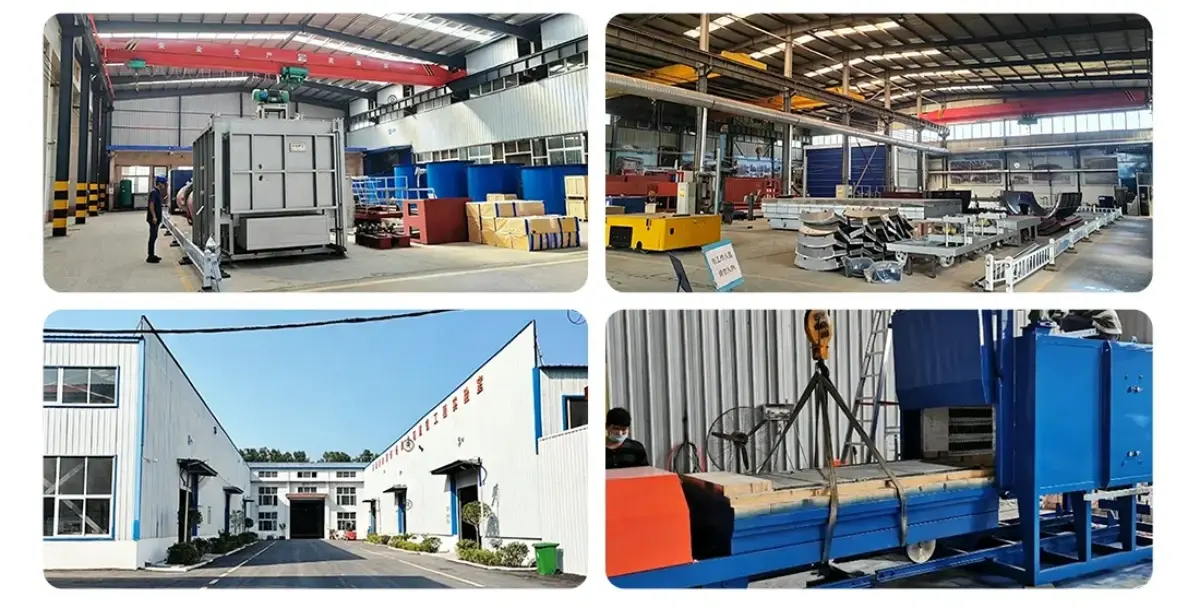
Why Choose Hebei Bolin's Sinter Hip Solutions?
Hebei Bolin Electric Heater Fabricating Co., Ltd. plans warm frameworks based on genuine generation challenges, not catalog details. Since 2022, we've centered on energy-efficient structures utilizing composite fiber separator and lightweight microsphere vacuum bricks that decrease warm misfortune by 35% compared to conventional hard-headed linings.
Customization Depth
We build hot zones to coordinate your material's warm development profile. Graphite components suit carbide sintering, whereas molybdenum frameworks handle receptive metals. Chamber measurements adjust to your group size—from R&D amounts (5-liter chambers) to generation volumes (300+ liters).
Control System Precision
Our PLC-based controllers log 50+ prepare parameters per moment. You get to total warm profiles for quality traceability, fundamental for AS9100 or IATF 16949 certification.
Service Infrastructure
Production lead time runs 25-40 days depending on arrangement complexity. We give on-site commissioning, administrator preparing, and first-year guarantee scope. Farther diagnostics capability settle 80% of operational questions without location visits.
Maintenance Considerations
Expect graphite hot zone substitution each 800-1200 cycles, depending on most extreme temperature utilization. Vacuum pumps require oil changes at 2000-hour intervals.
Pressure vessel certification takes after ASME Area VIII guidelines where appropriate. Yearly reviews confirm seal judgment and security valve calibration.
Argon utilization midpoints 2-5 m³ per cycle. Distribution frameworks diminish working costs by 60% in high-volume generation.
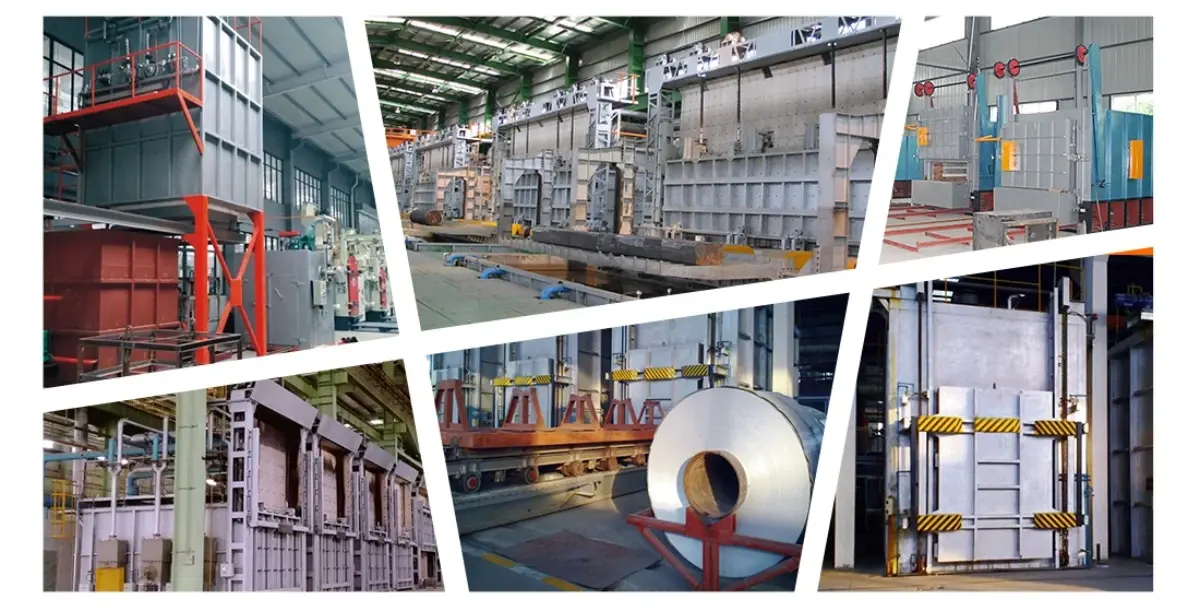
Frequently Asked Questions
What thickness change can I anticipate compared to pressureless sintering?
Typical thickness increments from 96-98% (vacuum sintering) to 99.5-99.9% (sinter-HIP). The correct pick up depends on powder molecule estimate dispersion and green thickness. Better powders with more extensive estimate ranges advantage most.
Can I handle diverse materials in the same furnace?
Yes, but climate and weight profiles require alteration. Carbide grades sinter at 1400-1450°C beneath 60 bar, whereas silicon nitride needs 1700-1750°C and 100 bar. Cross-contamination hazard exists if exchanging between responsive metals and ceramics without exhaustive cleaning.
How does sinter-HIP influence dimensional tolerances?
Shrinkage gets to be more unsurprising. Standard vacuum sintering appears ±0.3% variety; sinter-HIP fixes this to ±0.1%. You can diminish machining stipends, cutting post-processing costs.
What are vitality utilization contrasts versus isolated sintering additionally HIP?
Combined handling employments 55-65% of the vitality required for two partitioned cycles. You dispose of one heating/cooling cycle and maintain a strategic distance from middle of the road oxidation that requires defensive packaging.
Is the handle appropriate for near-net-shape production?
Absolutely. Reliable shrinkage permits coordinate sintering of highlights like inner strings or undermines in cemented carbide, lessening or killing pounding operations.
Contact Us
Ready to eliminate porosity challenges in your powder metallurgy production with Sinter Hip Furnace? Contact our engineering team at 15720259172@163.com to discuss your material specifications and production volume requirements. We'll configure a system that matches your exact process needs.
Learn about our latest products and discounts through SMS or email