- English
- French
- German
- Portuguese
- Spanish
- Russian
- Japanese
- Korean
- Arabic
- Irish
- Greek
- Turkish
- Italian
- Danish
- Romanian
- Indonesian
- Czech
- Afrikaans
- Swedish
- Polish
- Basque
- Catalan
- Esperanto
- Hindi
- Lao
- Albanian
- Amharic
- Armenian
- Azerbaijani
- Belarusian
- Bengali
- Bosnian
- Bulgarian
- Cebuano
- Chichewa
- Corsican
- Croatian
- Dutch
- Estonian
- Filipino
- Finnish
- Frisian
- Galician
- Georgian
- Gujarati
- Haitian
- Hausa
- Hawaiian
- Hebrew
- Hmong
- Hungarian
- Icelandic
- Igbo
- Javanese
- Kannada
- Kazakh
- Khmer
- Kurdish
- Kyrgyz
- Latin
- Latvian
- Lithuanian
- Luxembou..
- Macedonian
- Malagasy
- Malay
- Malayalam
- Maltese
- Maori
- Marathi
- Mongolian
- Burmese
- Nepali
- Norwegian
- Pashto
- Persian
- Punjabi
- Serbian
- Sesotho
- Sinhala
- Slovak
- Slovenian
- Somali
- Samoan
- Scots Gaelic
- Shona
- Sindhi
- Sundanese
- Swahili
- Tajik
- Tamil
- Telugu
- Thai
- Ukrainian
- Urdu
- Uzbek
- Vietnamese
- Welsh
- Xhosa
- Yiddish
- Yoruba
- Zulu
Trolley Type Forging Furnace
Operating Temperature: 100-1300℃
Power: 5-3000KW
Dimensions: 500-50000mm
Application: Heat treatment of metal parts
Minimum Order Quantity: 1 unit
Customization: Supports on-demand customization, ODM/OEM customization
Packaging: Standard export container, customization supported
Trolley Type Forging Furnace: Professional Heavy-Duty Heating Solution
When you need reliable pre-heating for heavy forgings, a Trolley Type Forging Furnace delivers proven performance. This equipment features a mobile hearth on rail-mounted trolleys, allowing you to load and unload massive workpieces—often exceeding 50 tons—outside the heated chamber. Our furnaces achieve operating temperatures from 100°C to 1300°C with power configurations ranging from 5KW to 3000KW, depending on your production scale. The energy-saving structure combines composite fiber insulation cotton, ultra-lightweight microsphere vacuum bricks, and heavy-duty high-alumina refractory linings. This design reduces heat loss by approximately 30% compared to conventional models, while maintaining temperature uniformity within ±5°C across the entire chamber volume.
What Makes This Heating System Different?
The center advantage lies in ergonomic fabric dealing with. You can position your expansive ingots, billets, or castings on the trolley utilizing standard overhead cranes or forklifts, at that point essentially roll the stacked stage into the heater chamber. This disposes of the perilous hone of maneuvering overwhelming components through contract heater openings.
The hard-headed lining framework employments a three-layer arrangement. The hot confront layer utilizes high-alumina bricks appraised for ceaseless 1350°C presentation. The halfway layer comprises of vacuum ball separator bricks that drastically decrease warm conductivity. The external shell highlights composite fiber modules for extra warm effectiveness and fast temperature response.
Temperature control depends on accuracy thermocouples situated at numerous chamber zones. The programmed control framework alters burner yield or electric warming components based on real-time input, guaranteeing your workpieces reach plastic misshapening temperature consistently. This avoids the metallurgical issues caused by temperature gradients—such as uneven grain structure or surface decarburization.
Technical Specifications
|
Parameter
|
Range/Value
|
|
Operating Temperature
|
100–1300°C
|
|
Power Rating
|
5–3000 KW
|
|
Chamber Dimensions
|
500–50,000 mm (customizable)
|
|
Heating Method
|
Electric resistance / Gas-fired
|
|
Insulation Structure
|
Composite fiber + vacuum ball brick + high-alumina brick
|
|
Temperature Uniformity
|
±5°C
|
|
Trolley Load Capacity
|
Up to 100 tons (depending on configuration)
|
|
Energy Efficiency
|
30% reduction vs. conventional furnaces
|
|
Control System
|
PLC with multi-zone temperature monitoring
|
|
Minimum Order Quantity
|
1 unit
|
How It Works in Your Production Line?
The working principle follows a straightforward batch heating cycle. You start by loading workpieces onto the trolley while it sits outside the furnace on extended rail tracks. Once loaded, the trolley moves into the chamber via hydraulic or electric drive systems. Heavy-duty seals engage around the furnace opening to minimize heat leakage.
Inside the chamber, heating elements or burners raise the temperature according to your programmed profile. Heat transfers to the workpieces through radiation from the refractory walls and convection currents within the chamber atmosphere. The control system continuously adjusts energy input to maintain the setpoint temperature.
After the prescribed soaking time—which allows complete thermal penetration even in thick sections—the Trolley Type Forging Furnace door opens and the trolley rolls back out. You can immediately unload the heated workpieces and transfer them to your forging press or hammer while they remain at optimal forging temperature.
This process offers significant advantages over fixed-hearth furnaces. Loading and unloading happen in safe, accessible areas away from radiant heat. Your operators avoid the physical strain and safety risks of reaching into hot chambers. Production throughput increases because you can prepare the next batch on a second trolley while the first remains in the furnace.
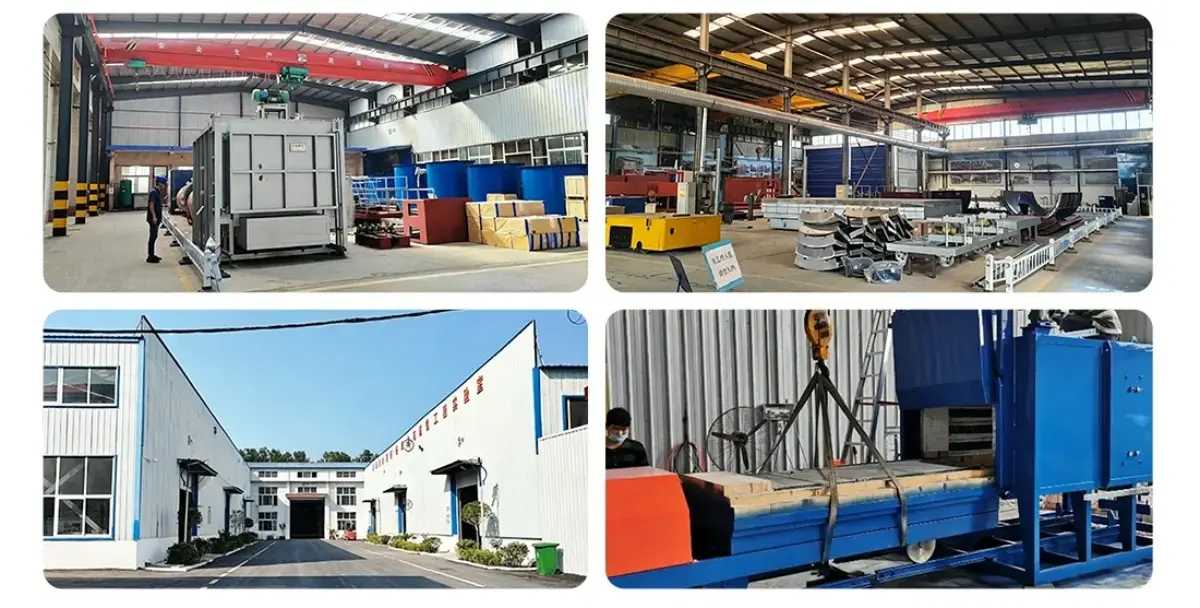
Practical Applications
This gear serves metalworking operations that prepare huge components. Ordinary applications include:
· Pre-heating steel ingots and billets some time recently open-die forging
· Annealing huge castings to diminish leftover stresses
· Normalizing overwhelming forgings to refine grain structure
· Stress calming welded congregations in shipbuilding and weight vessel fabrication
· Heat treating larger than average gears, shafts, and flanges
The wide temperature run suits both ferrous and non-ferrous amalgams. You can warm aluminum forgings at 400-500°C or handle device steels at 1200°C utilizing the same hardware with suitable environment control.
Customization and Support
Hebei Bolin Electric Heater Fabricating Co., Ltd. plans each framework agreeing to your particular prerequisites. We suit custom chamber measurements, extraordinary climate bundles, and integration with your existing fabric dealing with frameworks. Our building group works from your drawings to arrange trolley stack capacity, warming zone course of action, and control interface.
Production lead time ordinarily ranges from 10 to 40 days based on detail complexity. We offer both ODM and OEM administrations to meet territorial measures and voltage requirements.
Installation back incorporates on-site commissioning by our specialized staff. We give administrator preparing and nitty gritty documentation for your upkeep group. Each heater incorporates a 1-year guarantee covering materials and workmanship. Post-warranty benefit remains accessible for repairs, overhauls, and save parts.
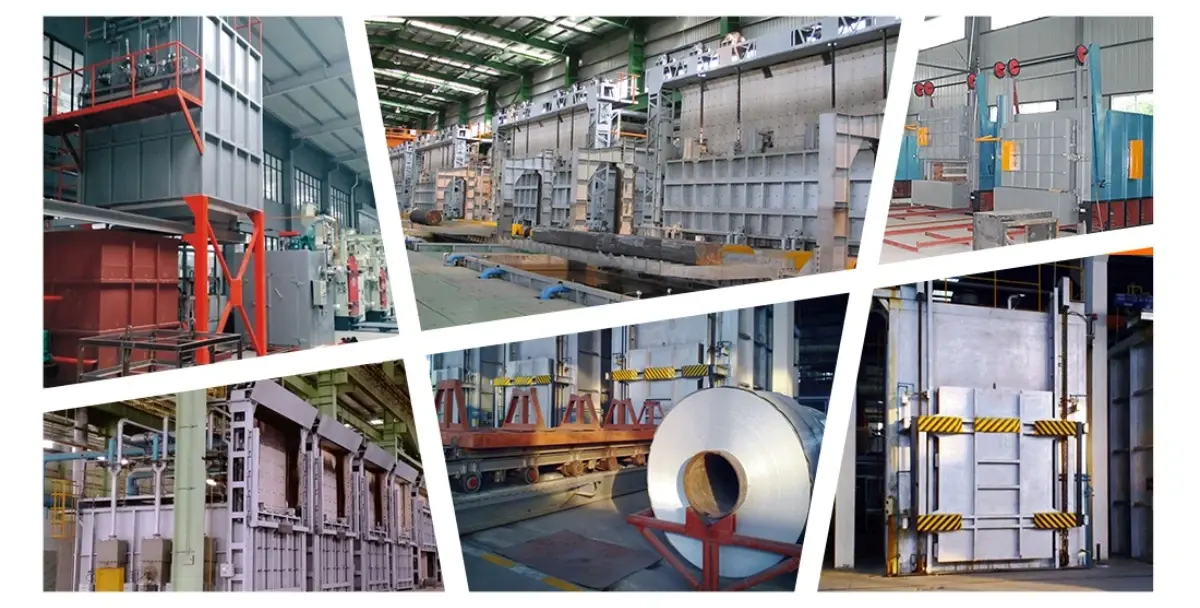
Frequently Asked Questions
What workpiece sizes can this heater accommodate?
Chamber measurements extend from 500mm to 50,000mm in any hub. We arrange the measure based on your biggest normal workpiece, with clearance for warm development and stacking access.
How does vitality utilization compare to other heater types?
The three-layer separator framework and fixed trolley section decrease warm misfortune altogether. Commonplace vitality reserve funds reach 25-35% compared to more seasoned brick-lined car-bottom heaters. Real utilization depends on cycle time, working temperature, and workpiece mass.
Can I handle diverse materials in the same furnace?
Yes. The wide temperature extend and programmable control permit batch-to-batch adaptability. You ought to confirm that remaining climate from past clusters won't sully delicate combinations. We can include air control frameworks for defensive or responsive gas environments.
What upkeep does the trolley instrument require?
Inspect rail arrangement and trolley wheel heading month to month. Grease up drive components per the support schedule—typically each 500 working cycles. The hard-headed lining requires intermittent review, with substitution interims of 2-5 a long time depending on working conditions and warm cycling frequency.
How rapidly can the heater warm up?
Empty chamber heat-up time from encompassing to 1200°C ordinarily takes 4-6 hours for expansive units. This moderate slope secures the hard-headed lining. Genuine generation cycles depend on workpiece mass and required splashing time—often 6-12 hours add up to for overwhelming forgings.
Contact Us
For technical specifications tailored to your production requirements, contact our engineering team at 15720259172@163.com. We'll provide detailed proposals including thermal calculations, electrical requirements, and facility integration plans for your Trolley Type Forging Furnace project.
Learn about our latest products and discounts through SMS or email