- English
- French
- German
- Portuguese
- Spanish
- Russian
- Japanese
- Korean
- Arabic
- Irish
- Greek
- Turkish
- Italian
- Danish
- Romanian
- Indonesian
- Czech
- Afrikaans
- Swedish
- Polish
- Basque
- Catalan
- Esperanto
- Hindi
- Lao
- Albanian
- Amharic
- Armenian
- Azerbaijani
- Belarusian
- Bengali
- Bosnian
- Bulgarian
- Cebuano
- Chichewa
- Corsican
- Croatian
- Dutch
- Estonian
- Filipino
- Finnish
- Frisian
- Galician
- Georgian
- Gujarati
- Haitian
- Hausa
- Hawaiian
- Hebrew
- Hmong
- Hungarian
- Icelandic
- Igbo
- Javanese
- Kannada
- Kazakh
- Khmer
- Kurdish
- Kyrgyz
- Latin
- Latvian
- Lithuanian
- Luxembou..
- Macedonian
- Malagasy
- Malay
- Malayalam
- Maltese
- Maori
- Marathi
- Mongolian
- Burmese
- Nepali
- Norwegian
- Pashto
- Persian
- Punjabi
- Serbian
- Sesotho
- Sinhala
- Slovak
- Slovenian
- Somali
- Samoan
- Scots Gaelic
- Shona
- Sindhi
- Sundanese
- Swahili
- Tajik
- Tamil
- Telugu
- Thai
- Ukrainian
- Urdu
- Uzbek
- Vietnamese
- Welsh
- Xhosa
- Yiddish
- Yoruba
- Zulu
Vacuum Tempering Furnace
Operating Temperature: 100-1300℃
Power: 5-3000KW
Dimensions: 500-50000mm
Application: Heat treatment of metal parts
Minimum Order Quantity: 1 unit
Customization: Supports on-demand customization, ODM/OEM customization
Packaging: Standard export container, customization supported
Vacuum Tempering Furnace: Precision Heat Treatment for Critical Metal Components
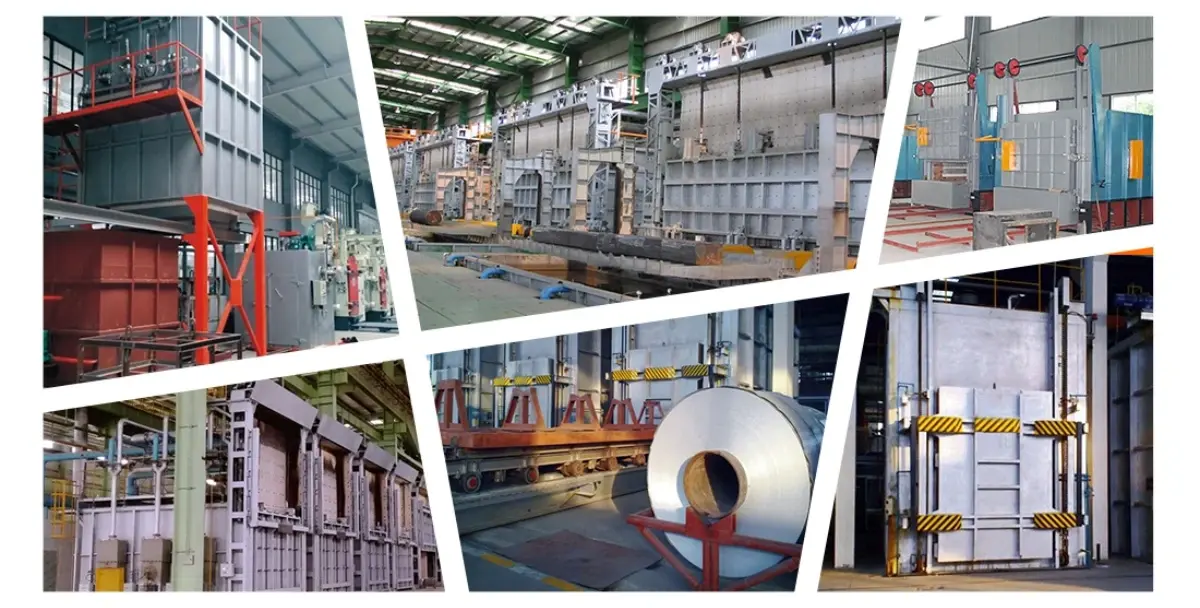
A Vacuum Tempering Furnace is a high-precision thermal processing system designed specifically to reheat quenched metal components under sub-atmospheric pressure conditions. You get optimal control over critical mechanical properties like toughness, ductility, and residual stress relief. Our systems operate across a temperature range of 100-1300℃ with power configurations from 5-3000KW, offering chamber dimensions from 500-50000mm to suit your production scale. Unlike conventional atmospheric tempering, this equipment eliminates oxygen from the process chamber, preventing surface oxidation and decarburization that typically compromise your finished parts. The result? Components emerge with a clean, bright finish that eliminates costly secondary operations like pickling or bead blasting. Whether you're processing tool steels, stainless alloys, or high-performance superalloys, this technology delivers consistent metallurgical results while protecting your investment in precision machining.
Core Structure and Working Principle
Furnace Chamber Design
The heart of the framework employments a high-sealed, high-strength vessel constructed with progressed composite materials. You'll discover our energy-saving structure incorporates:
· Ultra-lightweight high-strength microsphere vacuum ball bricks for predominant insulation
· Composite fiber cover cotton that minimizes warm loss
· Heavy-duty high-alumina bricks in high-stress zones
This multi-layer arrangement diminishes your vitality utilization altogether compared to conventional designs.
Heating System
Graphite or molybdenum warming elements provide uniform warm dissemination all through the working zone. The framework keeps up temperature consistency inside ±5℃ over the whole stack zone. This exactness guarantees each component in your clump gets indistinguishable warm treatment, dispensing with the execution variety that causes dismissal rates in basic applications.
Vacuum Generation
A devoted vacuum pumping framework evacuates the chamber to ordinary working weights of 7×10⁻¹ Dad. This sub-atmospheric environment makes the chemically inactive conditions essential for oxidation-free processing.
Temperature Control
Our PLC-based control system offers completely programmable warming and cooling cycles. You can store numerous formula profiles for diverse materials and applications, guaranteeing prepare repeatability over generation runs.
Technical Specifications
|
Parameter
|
Specification
|
|
Operating Temperature
|
100-1300℃
|
|
Power Range
|
5-3000KW
|
|
Chamber Dimensions
|
500-50000mm (customizable)
|
|
Vacuum Level
|
Up to 7×10⁻¹ Pa
|
|
Temperature Uniformity
|
±5℃ across working zone
|
|
Control System
|
PLC with multi-recipe storage
|
|
Heating Elements
|
Graphite or molybdenum
|
|
Insulation Type
|
Composite fiber with vacuum ball bricks
|
|
Cooling System
|
Integrated water cooling for shell and pumps
|
|
Production Lead Time
|
10-40 days
|
|
Minimum Order
|
1 unit
|
|
Customization
|
ODM/OEM available
|
Key Performance Advantages
Zero Surface Contamination
Your parts keep up their unique machined surface wrap up. No scale arrangement implies no dimensional misfortune from post-treatment cleaning. This is basic when you're working with components that have tight tolerances—medical inserts, aviation turbine components, or accuracy molds where indeed 0.01mm deviation causes rejection.
Metallurgical Consistency
The controlled climate dispenses with factors that influence treating energy. You accomplish unsurprising hardness values over the whole bunch, diminishing the measurable spread in mechanical testing. This consistency is basic for assembly car clasp details like Review 10.9 jolts or aviation fabric certifications.
Minimal Thermal Distortion
The uniform warming and controlled cooling rates diminish warm slopes that cause twisting in complex geometries. Passes on, molds, and thin-walled components keep up dimensional precision, cutting your revamp costs.
Energy Efficiency
The national standard energy-saving occasional heater plan decreases your working costs. The composite separator framework holds warm viably, bringing down power utilization per kilogram of treated fabric compared to more seasoned heater plans.
Industrial Applications
Tool and Die Manufacturing
Hardening of HSS (High-Speed Steel) and D2, H13, S7 instrument steels for molds, punches, and cutting apparatuses. The vacuum environment jam the sharp edges and complicated geometries in infusion molding components.
Aerospace Components
Processing of nickel-based superalloys and titanium alloys for turbine edges, auxiliary brackets, and landing adapt parts. These materials are profoundly responsive at lifted temperatures—vacuum handling avoids embrittlement.
Medical Device Production
Stainless steel surgical rebellious and orthopedic inserts require biocompatible surface conditions. Vacuum hardening guarantees no remaining oxides or contaminants that might compromise understanding safety.
Automotive Industry
Heat treating of transmission gears, CV joint components, and coil springs. The handle diminishes extinguishing stresses whereas keeping up the required hardness profile for wear resistance.
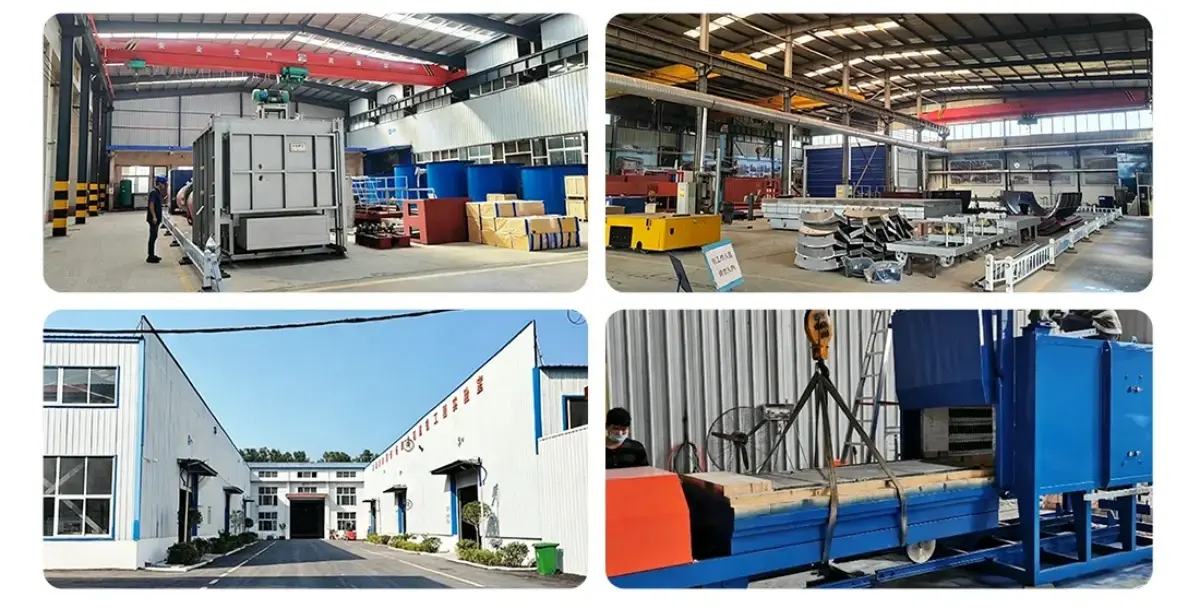
Why Choose Hebei Bolin Electric Furnace?
Engineering Expertise
Since 2022, we've focused exclusively on heat treatment equipment development. Our team understands the metallurgical challenges you face—from achieving specific Rockwell hardness values to controlling retained austenite levels.
Customization Capability
We offer complete ODM and OEM services. Provide us with your drawings and technical requirements, and we'll configure a system that fits your facility's layout, utility constraints, and throughput targets. Every Vacuum Tempering Furnace can be adapted for different voltage standards and control interface languages.
Comprehensive Support
· Local installation and commissioning: Our technicians ensure proper startup
· Technical guidance: Training for your operators on process optimization
· 1-year warranty: Coverage for components and workmanship
· On-site maintenance: Responsive service for equipment upgrades and repairs
Fast Delivery
Production lead times range from 10 to 40 days depending on configuration complexity. We maintain strategic inventory levels to respond quickly to your project timelines.
Frequently Asked Questions
Q: What's the normal cycle time for hardening solidified instrument steel components?
A: Cycle time depends on portion mass and required properties, but by and large ranges from 2 to 6 hours counting warming, splashing, and controlled cooling stages. Bigger loads or higher hardening temperatures amplify this duration.
Q: Can this heater handle both ferrous and non-ferrous alloys?
A: Yes. The temperature extend and dormant air oblige steel combinations, titanium, nickel-based superalloys, and certain aluminum amalgams requiring push help without oxidation.
Q: How do you guarantee temperature consistency over huge batches?
A: Our heater plan joins deliberately situated warming components and distribution fans (where appropriate) to minimize warm slopes. We conduct TUS (Temperature Consistency Surveys) during commissioning to confirm compliance with your handle specifications.
Q: What vacuum level is vital for oxidation-free tempering?
A: For most steel amalgams, a working weight of 10⁻² to 10⁻¹ Pa is adequate. Profoundly responsive materials like titanium may require lower weights in the 10⁻³ Pa range, which our framework can accomplish with overhauled pumping configurations.
Q: What upkeep plan ought to I follow?
A: Schedule assignments incorporate month to month review of entryway seals for vacuum judgment, quarterly vacuum pump oil changes, and yearly calibration of temperature sensors and controllers. We give point by point support conventions with each system.
Q: Is certification documentation included for aviation applications?
A: We supply fabric certifications for heater components and operational capability documentation. For particular industry measures like AMS 2750 or NADCAP compliance, we can arrange third-party certification administrations based on your prerequisites.
Get Started with Your Custom Solution
Every heat treatment application has unique requirements with Vacuum Tempering Furnace. Whether you need a compact batch furnace for tool room operations or a large-capacity system for continuous production, we'll work with you to design the optimal configuration.
Contact our engineering team at 15720259172@163.com to discuss your specific tempering requirements. We'll provide technical consultation on cycle parameters, chamber sizing, and utility requirements at no cost.
Learn about our latest products and discounts through SMS or email