- English
- French
- German
- Portuguese
- Spanish
- Russian
- Japanese
- Korean
- Arabic
- Irish
- Greek
- Turkish
- Italian
- Danish
- Romanian
- Indonesian
- Czech
- Afrikaans
- Swedish
- Polish
- Basque
- Catalan
- Esperanto
- Hindi
- Lao
- Albanian
- Amharic
- Armenian
- Azerbaijani
- Belarusian
- Bengali
- Bosnian
- Bulgarian
- Cebuano
- Chichewa
- Corsican
- Croatian
- Dutch
- Estonian
- Filipino
- Finnish
- Frisian
- Galician
- Georgian
- Gujarati
- Haitian
- Hausa
- Hawaiian
- Hebrew
- Hmong
- Hungarian
- Icelandic
- Igbo
- Javanese
- Kannada
- Kazakh
- Khmer
- Kurdish
- Kyrgyz
- Latin
- Latvian
- Lithuanian
- Luxembou..
- Macedonian
- Malagasy
- Malay
- Malayalam
- Maltese
- Maori
- Marathi
- Mongolian
- Burmese
- Nepali
- Norwegian
- Pashto
- Persian
- Punjabi
- Serbian
- Sesotho
- Sinhala
- Slovak
- Slovenian
- Somali
- Samoan
- Scots Gaelic
- Shona
- Sindhi
- Sundanese
- Swahili
- Tajik
- Tamil
- Telugu
- Thai
- Ukrainian
- Urdu
- Uzbek
- Vietnamese
- Welsh
- Xhosa
- Yiddish
- Yoruba
- Zulu
Water Quench Furnace
Operating Temperature: 100-1300℃
Power: 5-3000KW
Dimensions: 500-50000mm
Application: Heat treatment of metal parts
Minimum Order Quantity: 1 unit
Customization: Supports on-demand customization, ODM/OEM customization
Packaging: Standard export container, customization supported
Water Quench Furnace: Precision Heat Treatment for Critical Metal Applications
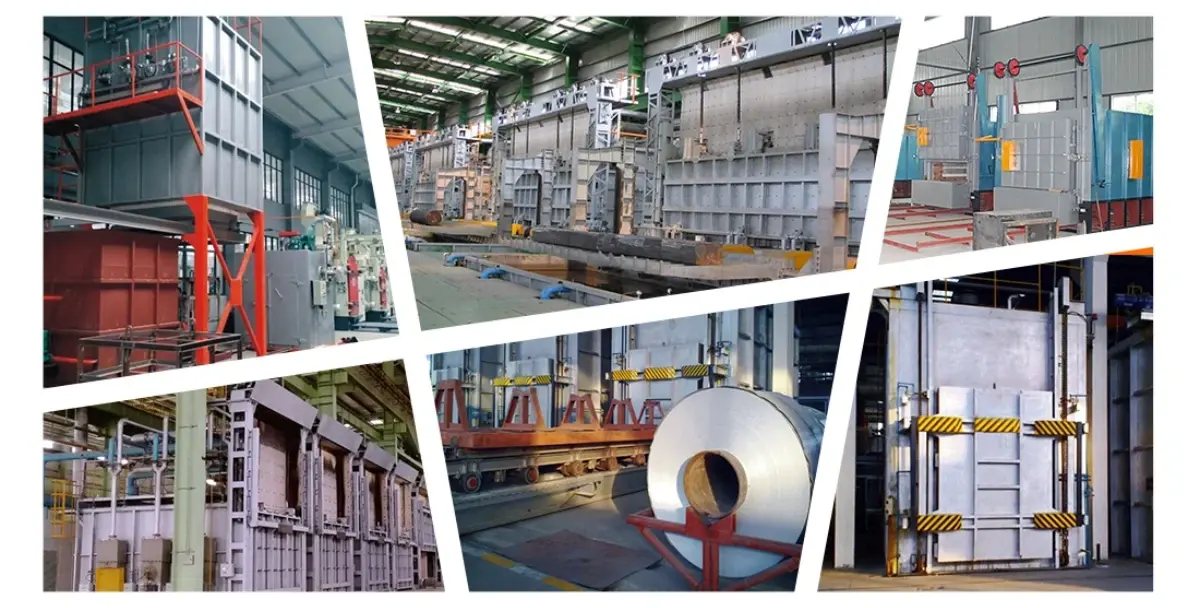
When you're processing high-strength aluminum alloys, stainless steel components, or heat-treatable carbon steels, the Water Quench Furnace delivers the thermal precision and rapid cooling your operations demand. Our systems achieve controlled heating from 100°C to 1300°C with power configurations ranging from 5 to 3000 KW, accommodating chamber dimensions from 500 mm up to 50,000 mm. What sets this equipment apart is the automated high-speed transfer mechanism that consistently achieves quench delays under 7-10 seconds—critical for preventing unwanted phase precipitation and ensuring maximum hardness retention. Built with energy-efficient composite fiber insulation and ultra-lightweight microsphere vacuum bricks, you get uniform temperature distribution across the entire working volume while reducing energy consumption by up to 30% compared to conventional designs.
What Makes Our Quench Furnace Solution Different?
You confront genuine challenges in warm treatment: conflicting hardness, postponed extinguish times that compromise metallurgical properties, and the feared Leidenfrost impact that makes delicate spots on your wrapped up parts. Our plan addresses these issues directly.
The heater chamber utilizes a national standard energy-saving occasional structure. Heavy-duty high-alumina bricks shape the deepest layer, giving auxiliary judgment at top temperatures. The center layer employments ultra-lightweight high-strength microsphere vacuum bricks that radically decrease warm mass. The external composite fiber separator cotton minimizes warm misfortune to the environment.
This three-layer development implies quicker warming, more steady temperature control, and lower working costs for you.
Rapid Transfer Mechanism
The mechanized exchange framework moves your workload from heater to extinguish tank in beneath 8 seconds. This speed is non-negotiable when preparing aerospace-grade 7075 or 2024 aluminum amalgams. Indeed a few additional seconds permits precipitation of alloying components from strong solution—resulting in decreased quality and rejected parts.
The component works on heavy-duty rails with high-temperature heading. Drive engines are measured to handle full generation loads without wavering. You won't encounter the speed corruption common in undersized frameworks after months of operation.
Technical Specifications
|
Parameter
|
Value
|
|
Operating Temperature Range
|
100°C - 1300°C
|
|
Power Configuration
|
5 KW - 3000 KW
|
|
Chamber Dimensions
|
500 mm - 50,000 mm
|
|
Quench Delay Time
|
< 10 seconds
|
|
Temperature Uniformity
|
±5°C (per AMS 2750)
|
|
Insulation Type
|
Composite fiber + microsphere vacuum brick
|
|
Control System
|
PLC with multi-zone programmable logic
|
|
Minimum Order Quantity
|
1 unit
|
|
Production Lead Time
|
10-40 days
|
|
Warranty Period
|
1 year
|
Where You'll Use This Equipment?
Aerospace Structural Components
You're manufacturing aluminum wing spars, fuselage ribs, or landing gear components that require T4 or T6 temper transitions. Solution heat treating at 480-530°C followed by immediate water immersion prevents localized grain growth. Our furnace maintains the tight temperature uniformity required by Nadcap certification—typically ±5°C across the entire load zone.
Automotive Powertrain Parts
Cast aluminum engine blocks and cylinder heads demand fatigue resistance under high-pressure combustion cycles. Rapid quenching after solution treatment at 500-540°C enhances structural integrity. The agitation system in our quench tank ensures uniform cooling rates, eliminating the distortion problems that plague parts with complex geometries.
Stainless Steel Processing
When you're producing 316L or 304L piping, fittings, or pressure vessels, proper annealing is critical. Heating to 1050-1100°C followed by rapid water quenching prevents chromium carbide precipitation along grain boundaries. This preserves corrosion resistance in aggressive chemical processing environments. Our furnace achieves these temperatures reliably in continuous 24/7 production schedules.
How the System Works?
You stack parts into the warming chamber utilizing roller transports or custom fixturing planned for your component geometry. The PLC control framework slopes temperature agreeing to your modified profile. Multi-zone warming components keep up consistency indeed with uneven stack distributions.
Once the drench time completes, the mechanized exchange component actuates. The chamber entryway opens, the carriage amplifies, and your parts move evenly into the extinguish tank—all in one liquid movement. High-volume disturbance pumps circulate water at controlled speeds around each surface of your workload.
Temperature sensors and stream meters ceaselessly nourish information back to the control board. You can screen and alter parameters in real-time or store formulas for diverse amalgams and portion arrangements.
Quality Control Measures
We understand you're not just buying equipment—you're investing in process capability. Your Water Quench Furnace undergoes temperature uniformity surveys during commissioning. We verify that no cold spots exist within the working volume using calibrated instrumentation traceable to national standards.
System accuracy testing confirms the relationship between control instruments and thermocouples. Quench tank agitation profiles are measured with flow velocity sensors at multiple locations. We provide documentation of these baseline measurements for your quality management system.
Water chemistry requires ongoing attention. pH levels, mineral content, and contamination affect both cooling performance and workpiece surface condition. We'll guide you through establishing monitoring procedures that prevent scaling or corrosion issues.
Customization for Your Process
No two generation situations are indistinguishable. We offer ODM and OEM administrations, customizing measurements, control setups, and control frameworks agreeing to your drawings and specifications.
Need a more extensive chamber for long expulsions? We'll design it. Require integration with your existing MES or SCADA framework? Our controls group handles the communication conventions. Handling materials that require polymer quenchants instep of water? We'll plan the tank framework accordingly.
Hebei Bolin Electric Heater Fabricating works specifically with your designing group from starting concept through last commissioning. You'll get specialized help amid establishment, operational preparing for your staff, and progressing back all through the guarantee period and past.
Frequently Asked Questions
What extinguish delay is achievable for high-strength aluminum alloys?
Our standard exchange instrument reliably conveys delays beneath 10 seconds, assembly necessities for 2024, 6061, and 7075 amalgams. For ultra-critical aviation applications, we can build frameworks that accomplish 7-second delays.
How do you guarantee temperature consistency over expansive loads?
Multi-zone warming components with autonomous PID control alter control to compensate for stack conveyance. Constrained circulation fans upgrade convection. We perform TUS confirmation per AMS 2750 necessities amid commissioning and suggest intermittent re-qualification based on your heater class.
Can the extinguish medium be changed?
Yes. Whereas water gives the quickest cooling rates, we can design tanks for water-glycol polymer arrangements when you require to minimize mutilation on thin-walled or complex-geometry parts. A few clients utilize constrained discuss for materials that split beneath quick water quenching.
What support does the exchange component require?
Daily visual assessment of drive engines and rails takes approximately 10 minutes. Month to month grease of high-temperature heading anticipates wear. We give point by point upkeep plans and can supply consumable parts units for your preventive support program.
Is the framework consistent with Industry 4.0 information collection?
Our control frameworks bolster Ethernet/IP, Modbus TCP, and OPC UA conventions. You can coordinated heater information straightforwardly into your plant-wide observing frameworks for real-time generation analytics and prescient support planning.
Partner With Proven Experience
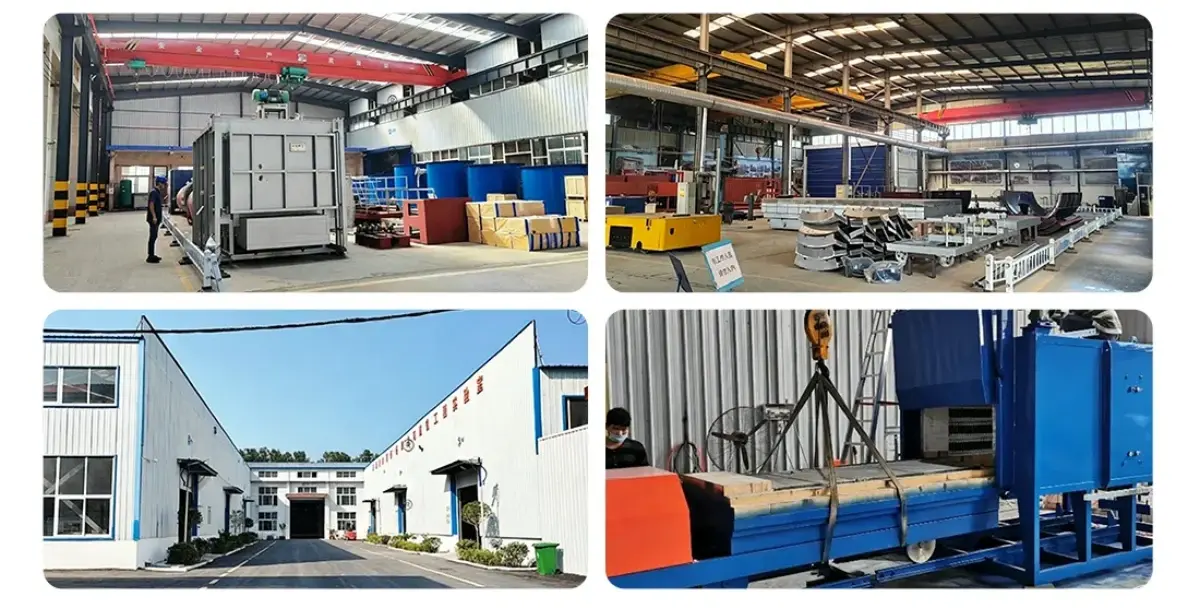
Hebei Bolin Electric Furnace Manufacturing Co., Ltd. brings engineering-focused solutions to your heat treatment challenges. Founded in 2022 and located in Zhenggan Industrial Park, we've rapidly established ourselves through rigorous quality standards and honest operations.
Our facility integrates R&D, design, production, and engineering support under one roof. This allows us to respond quickly to your technical questions and deliver customized solutions within 10-40 days depending on complexity.
We're not the oldest name in the industry, but our team brings decades of combined experience in thermal engineering, automation controls, and metallurgical processing. Every system we deliver reflects practical understanding of what works in real production environments—not just theoretical specifications.
Get Started With Your Heat Treatment Solution
If you're ready to discuss how a Water Quench Furnace fits into your production process, we're here to help. Our engineering team will review your part geometries, material specifications, and production volume requirements to recommend the optimal configuration.
Contact us at 15720259172@163.com with your technical requirements. We'll provide detailed proposals including equipment specifications, performance guarantees, and delivered pricing. Whether you need a single furnace or a complete heat treatment line, we'll work with you to develop a solution that meets both your metallurgical objectives and your budget constraints.
Learn about our latest products and discounts through SMS or email