- English
- French
- German
- Portuguese
- Spanish
- Russian
- Japanese
- Korean
- Arabic
- Irish
- Greek
- Turkish
- Italian
- Danish
- Romanian
- Indonesian
- Czech
- Afrikaans
- Swedish
- Polish
- Basque
- Catalan
- Esperanto
- Hindi
- Lao
- Albanian
- Amharic
- Armenian
- Azerbaijani
- Belarusian
- Bengali
- Bosnian
- Bulgarian
- Cebuano
- Chichewa
- Corsican
- Croatian
- Dutch
- Estonian
- Filipino
- Finnish
- Frisian
- Galician
- Georgian
- Gujarati
- Haitian
- Hausa
- Hawaiian
- Hebrew
- Hmong
- Hungarian
- Icelandic
- Igbo
- Javanese
- Kannada
- Kazakh
- Khmer
- Kurdish
- Kyrgyz
- Latin
- Latvian
- Lithuanian
- Luxembou..
- Macedonian
- Malagasy
- Malay
- Malayalam
- Maltese
- Maori
- Marathi
- Mongolian
- Burmese
- Nepali
- Norwegian
- Pashto
- Persian
- Punjabi
- Serbian
- Sesotho
- Sinhala
- Slovak
- Slovenian
- Somali
- Samoan
- Scots Gaelic
- Shona
- Sindhi
- Sundanese
- Swahili
- Tajik
- Tamil
- Telugu
- Thai
- Ukrainian
- Urdu
- Uzbek
- Vietnamese
- Welsh
- Xhosa
- Yiddish
- Yoruba
- Zulu
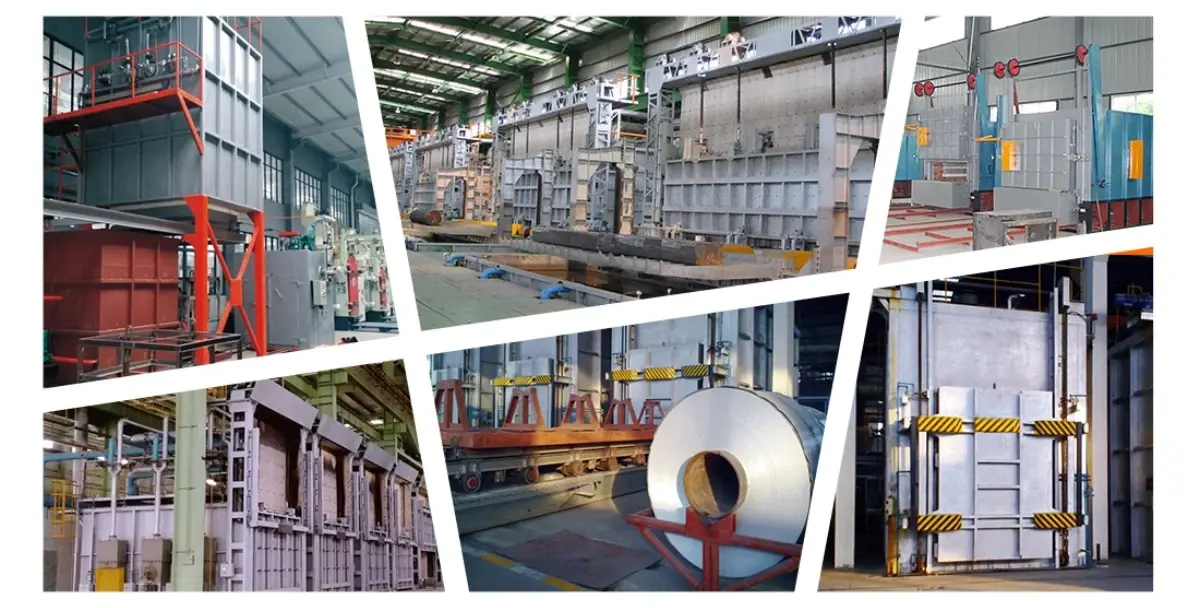
Custom Vacuum Furnace
Operating Temperature: 100-1300℃
Dimensions: 500-50000mm
Application: Heat treatment of metal parts
Minimum Order Quantity: 1 unit
Customization: Supports on-demand customization, ODM/OEM customization
Packaging: Standard export container, customization supported
Custom Vacuum Furnace: Precision Thermal Processing for Demanding Applications
When your production demands zero oxidation, precise metallurgical properties, and tight temperature control, a Custom Vacuum Furnace becomes essential. Our systems deliver ultimate vacuum levels from 10^-2 to 10^-7 mbar, operating temperatures spanning 100°C to 1300°C (extendable to 3000°C for specialized applications), and high-pressure gas quenching up to 20 bar for rapid, uniform cooling. Each product features an ultra-energy-saving structure with composite fiber insulation, lightweight high-strength microsphere vacuum bricks, and heavy-duty high-alumina refractory materials. Chamber dimensions range from 500mm to 50,000mm, tailored precisely to your component geometry and production volume requirements.
What Makes Our Vacuum Heat Treatment System Different?
You get a warm preparing arrangement built around your particular fabric challenges, not a bland off-the-shelf unit.
Our plan approach begins with your metallurgical objectives. Whether you're brazing aviation honeycomb structures, sintering therapeutic titanium inserts, or performing dissemination holding on micro-channel warm exchangers, we optimize hot zone geometry, pumping speed, and cooling rates accordingly.
The heater utilizes specialized warming elements—graphite, molybdenum, or tungsten—selected based on your greatest prepare temperature and air compatibility. Progressed separator bundles utilize unbending carbon felt or metallic warm shields to minimize warm misfortune and decrease vitality utilization by up to 40% compared to ordinary designs.
Temperature consistency meets AMS2750G pyrometry guidelines. Numerous thermocouples situated all through the hot zone guarantee ±5°C consistency over your whole stack, basic for aviation certification and repeatable fabric properties.
Technical Specifications
|
Parameter
|
Standard Range
|
Customization Available
|
|
Operating Temperature
|
100–1300°C
|
Up to 3000°C
|
|
Vacuum Level
|
10^-2 to 10^-7 mbar
|
Application-specific
|
|
Chamber Dimensions
|
500–50,000 mm
|
Custom geometry
|
|
Gas Quenching Pressure
|
Up to 20 bar
|
Nitrogen, Argon, Helium
|
|
Heating Element Material
|
Graphite, Molybdenum, Tungsten
|
Based on temperature
|
|
Insulation Type
|
Composite fiber, microsphere vacuum bricks
|
Energy-optimized
|
|
Cooling Method
|
High-pressure gas quench, controlled rate
|
Programmable profiles
|
|
Power Supply
|
3-phase, 380V/50Hz
|
Adaptable to region
|
|
Control System
|
PLC with touchscreen HMI
|
Industry 4.0 integration
|
|
Minimum Order Quantity
|
1 unit
|
—
|
How Vacuum Processing Solves Real Manufacturing Challenges?
Elimination of Surface Contamination
Operating in sub-atmospheric environments removes oxygen, moisture, and other reactive gases. Your components emerge with bright, clean surfaces—no oxidation layers, no decarburization. This proves critical for medical implants where biocompatibility depends on surface purity.
Precise Atmosphere Control
Partial pressure capability allows you to introduce controlled amounts of nitrogen, hydrogen, or argon during processing. For vacuum nitriding, pulsed gas injection creates superior case depth uniformity while preventing the brittle "white layer" common in conventional gas nitriding.
Uniform Temperature Distribution
Cold wall design with water-cooled outer shells maintains structural integrity while the hot zone achieves process temperatures. Multi-zone heating elements allow independent control of different Custom Vacuum Furnace regions, ensuring even heat distribution for complex geometries and mixed-load batches.
Rapid, Controlled Cooling
High-pressure gas quenching delivers faster cooling rates than oil or salt, with programmable profiles to achieve specific microstructures. You can adjust pressure, gas type, and flow direction to minimize distortion on thin-walled or asymmetric parts.
Where You'll Apply This Technology?
Aviation and Defense
Vacuum brazing of turbine edges, dissemination holding of titanium structures, and push calming of additive-manufactured components require contamination-free situations. Our frameworks bolster NADCAP accreditation necessities and AMS determinations for aviation warm treatment.
Medical Gadget Manufacturing
Sintering of 3D-printed titanium and cobalt-chrome inserts requests exact control over porosity and grain structure. Vacuum preparing avoids alpha-case arrangement on titanium, keeping up mechanical properties and erosion resistance fundamental for long-term embed performance.
Tool and Kick the bucket Production
High-speed steel and powder metallurgy tooling advantage from vacuum solidifying. The prepare dispenses with decarburization whereas permitting controlled climate solidifying with negligible mutilation, amplifying device life and decreasing post-heat-treatment grinding.
Power Era Components
Diffusion holding of different metals for warm exchangers, vacuum brazing of atomic fuel gatherings, and push calming of generator rotors require the contamination-free environment and exact warm control as it were vacuum frameworks provide.
Our Manufacturing and Support Approach
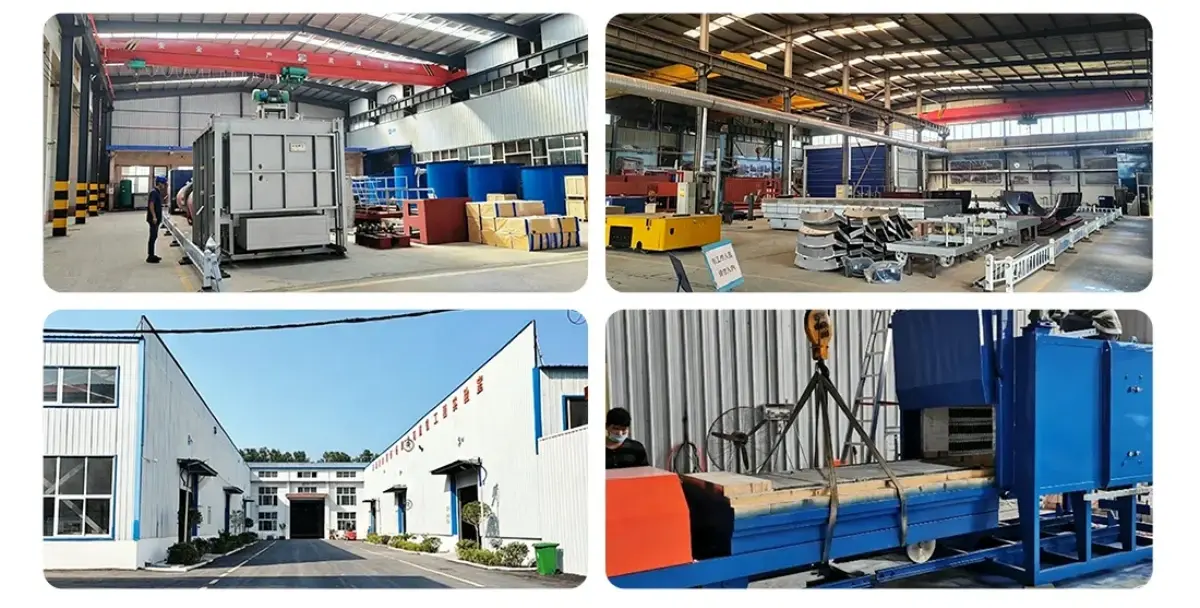
Hebei Bolin Electric Heater Fabricating Co., Ltd. combines designing encounter with adaptable generation capabilities. Since our establishing in 2022, we've centered on conveying dependable warm preparing frameworks that meet universal quality standards.
Engineering Customization
We give full ODM and OEM administrations. Send us your component drawings, fabric determinations, and generation volume prerequisites. Our building group will plan the hot zone geometry, select fitting warming components and cover materials, and design control frameworks to coordinate your handle recipe.
Quality Compliance
Our fabricating forms adjust with ISO quality administration standards. Vacuum frameworks consolidate ASME Segment VIII weight vessel codes where pertinent. Temperature control frameworks meet AMS2750G necessities for thermocouple situation, calibration, and framework precision testing.
Delivery and Installation
Production lead times extend from 10 to 40 days depending on framework complexity and current generation plans. We organize standard trade holder bundling or custom crating for larger than usual frameworks. On-site establishment, commissioning back, and administrator preparing guarantee effective startup.
After-Sales Service
Every framework incorporates a 1-year guarantee covering fabricating surrenders and component disappointments. We give specialized help for handle improvement, upkeep direction for vacuum pumps and warming components, and on-site benefit for hardware overhauls or repairs.
Frequently Asked Questions
What vacuum level do I require for my application?
For brazing and push calming, 10^-2 to 10^-3 mbar ordinarily suffices. Sintering and specialized amalgam handling may require 10^-5 to 10^-7 mbar. We'll prescribe the suitable pumping framework based on your fabric and handle requirements.
How long does a ordinary vacuum cycle take?
Cycle time depends on stack mass, target temperature, and required splash time. A ordinary solidifying cycle for instrument steel might take 4-6 hours, whereas vacuum brazing of expansive gatherings might amplify to 12-18 hours counting controlled cooling phases.
Can you coordinated the heater into our existing generation line?
Yes. Our control frameworks bolster common mechanical conventions counting Profibus, Modbus, and OPC-UA for Industry 4.0 integration. We can plan mechanized stacking frameworks, coordinated with your MES for formula administration, and give information logging for quality documentation.
What support does a vacuum heater require?
Regular errands incorporate assessing entryway seals and O-rings some time recently each cycle, changing vacuum pump oil agreeing to producer plans (regularly each 500-1000 hours), and calibrating thermocouples per AMS2750 prerequisites. We give point by point support plans and can supply substitution parts.
How do you handle responsive gas processing?
Systems outlined for hydrogen or other combustible airs incorporate explosion-proof valves, oxygen sensors, and programmable mass stream controllers. We guarantee compliance with nearby security controls and give administrator preparing on secure gas dealing with strategies.
Start Your Custom Design Process
Every thermal processing challenge has a Custom Vacuum Furnace solution. Whether you're scaling up from laboratory research or replacing aging equipment, we'll engineer a system that matches your technical requirements and production constraints.
Contact our engineering team at 15720259172@163.com with your component specifications, material types, and production volume goals. We'll discuss your application requirements and provide a technical proposal with performance specifications, delivery timeline, and comprehensive support services.
Learn about our latest products and discounts through SMS or email