- English
- French
- German
- Portuguese
- Spanish
- Russian
- Japanese
- Korean
- Arabic
- Irish
- Greek
- Turkish
- Italian
- Danish
- Romanian
- Indonesian
- Czech
- Afrikaans
- Swedish
- Polish
- Basque
- Catalan
- Esperanto
- Hindi
- Lao
- Albanian
- Amharic
- Armenian
- Azerbaijani
- Belarusian
- Bengali
- Bosnian
- Bulgarian
- Cebuano
- Chichewa
- Corsican
- Croatian
- Dutch
- Estonian
- Filipino
- Finnish
- Frisian
- Galician
- Georgian
- Gujarati
- Haitian
- Hausa
- Hawaiian
- Hebrew
- Hmong
- Hungarian
- Icelandic
- Igbo
- Javanese
- Kannada
- Kazakh
- Khmer
- Kurdish
- Kyrgyz
- Latin
- Latvian
- Lithuanian
- Luxembou..
- Macedonian
- Malagasy
- Malay
- Malayalam
- Maltese
- Maori
- Marathi
- Mongolian
- Burmese
- Nepali
- Norwegian
- Pashto
- Persian
- Punjabi
- Serbian
- Sesotho
- Sinhala
- Slovak
- Slovenian
- Somali
- Samoan
- Scots Gaelic
- Shona
- Sindhi
- Sundanese
- Swahili
- Tajik
- Tamil
- Telugu
- Thai
- Ukrainian
- Urdu
- Uzbek
- Vietnamese
- Welsh
- Xhosa
- Yiddish
- Yoruba
- Zulu
Resistance Heating Furnace
Operating Temperature: 100-1300℃
Dimensions: 500-50000mm
Application: Heat treatment of metal parts
Minimum Order Quantity: 1 unit
Customization: Supports on-demand customization, ODM/OEM customization
Packaging: Standard export container, customization supported
Resistance Heating Furnace: Industrial Heat Treatment Solutions for Precision Manufacturing
A Resistance Heating Furnace is an industrial thermal processing system that generates heat through the Joule effect—passing electric current through resistive heating elements. Our units deliver exceptional thermal efficiency exceeding 85% and precise temperature uniformity within ±3°C across the working chamber. With maximum operating temperatures ranging from 100°C to 1300°C, these furnaces accommodate diverse heat treatment applications including annealing, tempering, stress relieving, and aging processes. The advanced composite fiber insulation structure reduces energy consumption by 30-40% compared to conventional designs, while maintaining stable thermal performance throughout extended production cycles. This makes our product ideal for metal parts processing where controlled atmosphere purity and consistent thermal profiles directly impact material properties and dimensional accuracy.
Technical Specifications
|
Parameter
|
Value
|
|
Operating Temperature Range
|
100°C – 1300°C
|
|
Heating Element Material
|
FeCrAl alloy, NiCr alloy (depending on temperature zone)
|
|
Temperature Uniformity
|
±3°C (within effective heating zone)
|
|
Thermal Efficiency
|
≥85%
|
|
Chamber Dimensions
|
500mm – 50,000mm (customizable)
|
|
Insulation Structure
|
Composite fiber + lightweight microsphere brick + high-alumina brick
|
|
Power Supply
|
380V/50Hz (customizable for regional standards)
|
|
Control System
|
PID digital temperature controller with programmable profiles
|
|
Heating Rate
|
5-15°C/min (adjustable based on workload)
|
|
Minimum Order Quantity
|
1 unit
|
|
Lead Time
|
10-40 days
|
|
Warranty
|
1 year
|
Structural Design and Working Principle
The heater embraces a three-layer cover setup for optimized warm maintenance. The furthest layer comprises of composite fiber cotton with moo warm conductivity. The middle of the road layer employments ultra-lightweight microsphere vacuum bricks that withstand warm stun whereas minimizing warm capacity. The deepest layer utilizes heavy-duty high-alumina headstrong bricks for coordinate introduction to high-temperature environments.
Heating components are deliberately situated along the chamber dividers. When electric current streams through these resistive components, warm vitality transmits consistently toward the workload. The warm exchange happens fundamentally through radiation at temperatures over 600°C, and through convection at lower ranges. This circuitous warming strategy guarantees your workpieces get steady warm treatment without coordinate contact with the warming source.
The control framework screens chamber temperature through thermocouples and alters control yield through SCR units. This closed-loop direction keeps up your target temperature inside contract resiliences all through the whole cycle. The programmable controller permits you to set multi-segment warming profiles, counting slope rates, drench times, and cooling arrangements.
Performance Advantages in Real Applications
Energy Efficiency: The ultra-energy-saving structure reduces power consumption significantly. The composite insulation minimizes heat loss through the Resistance Heating Furnace shell, keeping exterior surface temperatures low even during prolonged operation. This translates to lower operating costs per heat treatment cycle.
Temperature Control Precision: Tight uniformity across the heating zone ensures consistent material properties in your finished parts. Whether you're processing gears, shafts, or stamped components, every piece receives identical thermal exposure. This eliminates soft spots or over-hardened areas that compromise mechanical performance.
Atmosphere Compatibility: The sealed chamber design supports controlled atmosphere processing when configured with gas input systems. You can introduce nitrogen, argon, or forming gas to prevent oxidation and decarburization during heat treatment. This protects surface finish quality and dimensional accuracy.
Operational Flexibility: The wide temperature range accommodates multiple processes in a single unit. You can perform low-temperature tempering at 200°C and high-temperature annealing at 1200°C without equipment changes. This versatility maximizes your production scheduling efficiency.
Maintenance Accessibility: The furnace design allows straightforward replacement of heating elements and insulation materials. Side-mounted access panels provide clear pathways to critical components. This reduces downtime during routine maintenance intervals.
Application Scenarios
Our resistance heating equipment serves metal component manufacturers requiring repeatable thermal cycles. Common applications include:
· Automotive transmission gears and axle components
· Industrial bearing races and rolling elements
· Tool steel cutting implements and dies
· Fastener hardening for grade 8.8 and above
· Stainless steel solution annealing
· Aluminum alloy aging treatments
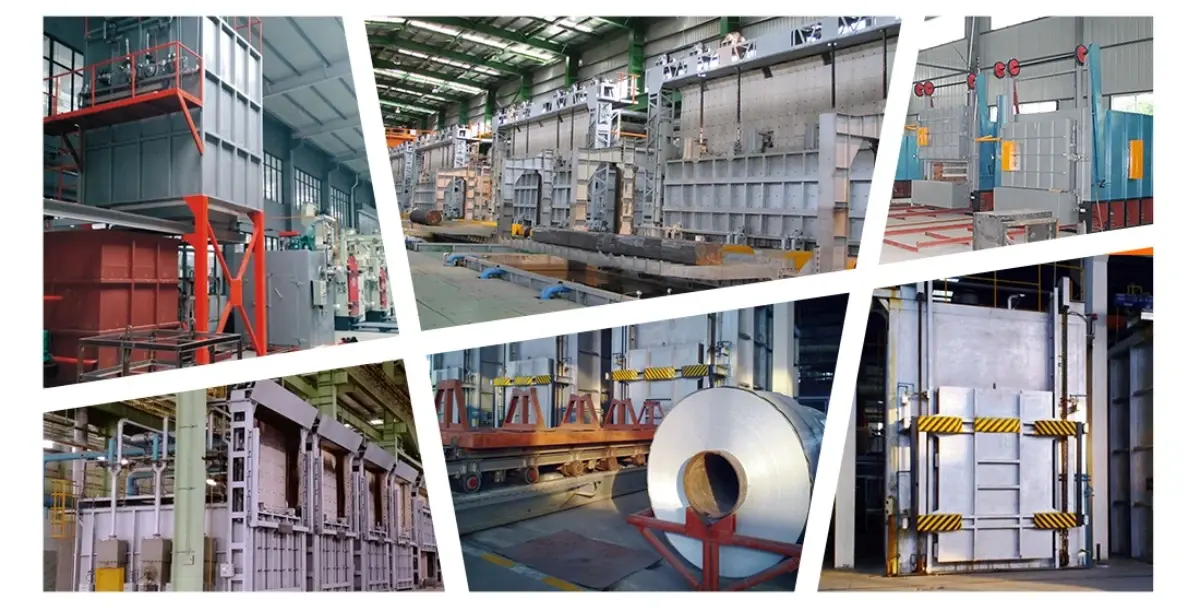
The heater structure suits group handling in plate or installations. For ceaseless generation requests, we offer integration capability with roller hearth or work belt transport systems.
Customization and Service Support
Hebei Bolin Electric Heater Fabricating gives ODM and OEM administrations custom-made to your particular necessities. We customize chamber measurements, warming component arrangements, and control framework parameters based on your drawings and handle details. Our designing group adjusts voltage benchmarks, control interfacing, and security highlights to comply with your territorial regulations.
Installation back incorporates on-site commissioning by our specialized staff. We confirm temperature consistency through TUS (Temperature Consistency Study) testing and calibrate control frameworks to your handle necessities. Preparing for your administrators covers every day operation strategies, schedule support errands, and investigating protocols.
Post-delivery bolster incorporates inaccessible specialized help and on-site support when required. The one-year guarantee covers fabricating abandons and component disappointments beneath typical working conditions. We keep up save parts stock for warming components, thermocouples, and control modules to minimize your gear downtime.
Why Choose Hebei Bolin?
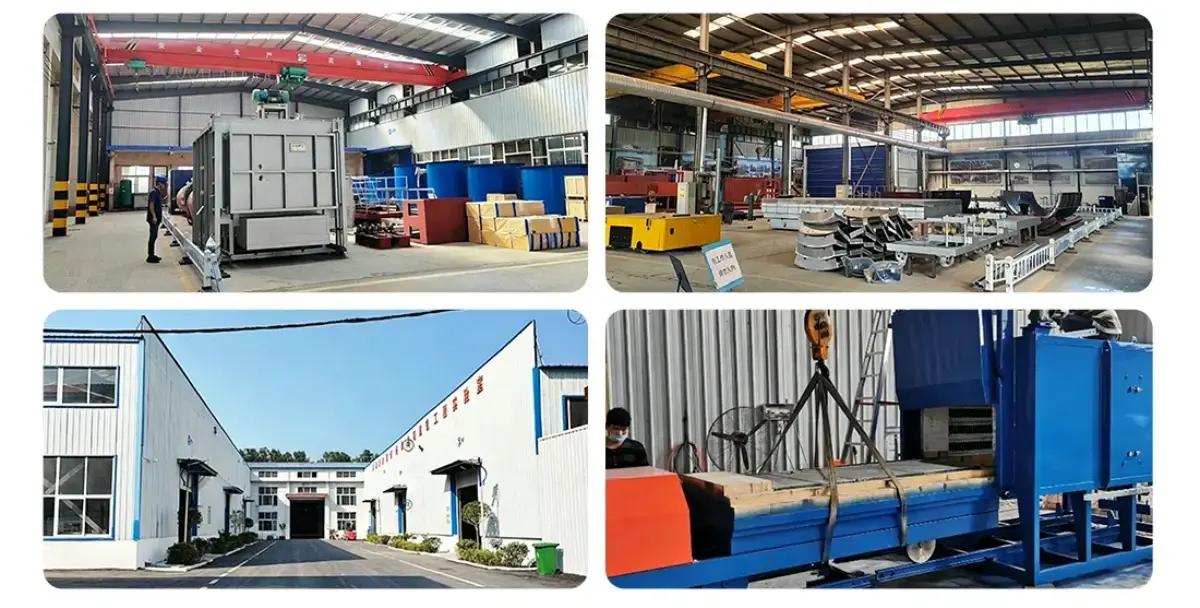
Established in 2022, we combine advanced fabricating capabilities with centered specialization in warm handling gear. Our office in Zhenggang Mechanical Stop utilizes thorough quality control all through creation and get together stages. We conduct full-load testing on each heater some time recently shipment to confirm execution parameters.
Our building approach prioritizes down to earth usefulness over superfluous highlights. Component choice emphasizes demonstrated unwavering quality and benefit life or maybe than test materials. This comes about in hardware that works reliably over thousands of warm cycles with unsurprising upkeep intervals.
Production lead times run from 10 to 40 days depending on arrangement complexity. We keep up adaptable planning to suit your extend timelines whereas guaranteeing intensive quality confirmation at each generation arrange.
Frequently Asked Questions
How do I amplify the life expectancy of the warming elements?
Avoid quick temperature changes that cause warm stun. Keep your warming and cooling rates inside prescribed limits based on component fabric. Guarantee appropriate air conditions—oxidizing situations suit certain component sorts, whereas diminishing climates require elective materials. Standard assessment recognizes early signs of component corruption some time recently disappointment occurs.
What is the contrast between coordinate and circuitous resistance heating?
Direct warming passes current through the workpiece itself, warming it from inside. This as it were works for electrically conductive materials. Backhanded warming employments isolated components that emanate warm vitality to your stack. This strategy gives superior consistency and works for all fabric sorts, counting ceramics and non-conductive alloys.
Can this hardware prepare non-ferrous materials?
Yes. Temperature control accuracy and air capability make these heaters appropriate for aluminum, copper, and titanium amalgams. Particular arrangements may require altered warming component materials and controlled cooling frameworks to anticipate mutilation in gentler alloys.
What support interims do you recommend?
Perform visual assessment of warming components month to month. Check thermocouple calibration quarterly. Full cover assessment ought to happen every year or after 2000 working hours, whichever comes to begin with. Supplant entryway seals when you take note expanded warm misfortune or obvious gaps.
How do I recognize separator degradation?
Monitor outside shell temperature—abnormal increments demonstrate separator breakdown. Rising control utilization to keep up the same setpoint recommends warm misfortune through harmed separator. Obvious hot spots on the external casing require quick assessment and potential cover substitution in that zone.
Contact Us
For technical specifications tailored to your heat treatment requirements, reach our engineering team at 15720259172@163.com. We provide detailed Resistance Heating Furnace proposal documents including chamber layout drawings, power calculations, and process capability assessments based on your component specifications and production volume.
Learn about our latest products and discounts through SMS or email