- English
- French
- German
- Portuguese
- Spanish
- Russian
- Japanese
- Korean
- Arabic
- Irish
- Greek
- Turkish
- Italian
- Danish
- Romanian
- Indonesian
- Czech
- Afrikaans
- Swedish
- Polish
- Basque
- Catalan
- Esperanto
- Hindi
- Lao
- Albanian
- Amharic
- Armenian
- Azerbaijani
- Belarusian
- Bengali
- Bosnian
- Bulgarian
- Cebuano
- Chichewa
- Corsican
- Croatian
- Dutch
- Estonian
- Filipino
- Finnish
- Frisian
- Galician
- Georgian
- Gujarati
- Haitian
- Hausa
- Hawaiian
- Hebrew
- Hmong
- Hungarian
- Icelandic
- Igbo
- Javanese
- Kannada
- Kazakh
- Khmer
- Kurdish
- Kyrgyz
- Latin
- Latvian
- Lithuanian
- Luxembou..
- Macedonian
- Malagasy
- Malay
- Malayalam
- Maltese
- Maori
- Marathi
- Mongolian
- Burmese
- Nepali
- Norwegian
- Pashto
- Persian
- Punjabi
- Serbian
- Sesotho
- Sinhala
- Slovak
- Slovenian
- Somali
- Samoan
- Scots Gaelic
- Shona
- Sindhi
- Sundanese
- Swahili
- Tajik
- Tamil
- Telugu
- Thai
- Ukrainian
- Urdu
- Uzbek
- Vietnamese
- Welsh
- Xhosa
- Yiddish
- Yoruba
- Zulu
Vacuum Casting Furnace
Operating Temperature: 100-1300℃
Dimensions: 500-50000mm
Application: Heat treatment of metal parts
Minimum Order Quantity: 1 unit
Customization: Supports on-demand customization, ODM/OEM customization
Packaging: Standard export container, customization supported
Vacuum Casting Furnace: High-Purity Metal Melting and Casting Solution
Our Vacuum Casting Furnace operates within a temperature range of 100-1300℃, utilizing advanced ultra-energy-saving structure and composite fiber insulation to deliver consistent thermal performance for high-end metallurgical applications. This equipment features heavy-duty high-alumina bricks combined with ultra-lightweight high-strength microsphere vacuum ball energy-saving bricks, achieving significantly reduced energy consumption during prolonged operation cycles. The furnace chamber dimensions range from 500mm to 50,000mm, supporting flexible customization for your specific production requirements. By maintaining vacuum levels down to 7×10⁻³ Pa, this system eliminates atmospheric contamination during melting and casting processes, ensuring superior material purity and mechanical properties in finished components. Minimum order quantity starts at just one unit, with full ODM/OEM support available to match your technical specifications and production goals.
Technical Specifications
|
Parameter
|
Value
|
|
Operating Temperature Range
|
100-1300℃
|
|
Chamber Dimensions
|
500-50,000mm (customizable)
|
|
Vacuum Level
|
Up to 7×10⁻³ Pa
|
|
Insulation Material
|
Composite fiber + microsphere vacuum ball bricks
|
|
Lining Material
|
Heavy-duty high-alumina bricks
|
|
Heating Method
|
Induction heating system
|
|
Control System
|
Advanced PLC with temperature/vacuum regulation
|
|
Power Supply
|
Customizable based on capacity
|
|
Minimum Order Quantity
|
1 unit
|
|
Lead Time
|
10-40 days
|
|
Customization
|
ODM/OEM supported
|
How It Works?
The vacuum casting framework coordinating a few center components to accomplish controlled dissolving and pouring. To begin with, the vacuum chamber is emptied utilizing multi-stage pumps to expel oxygen, nitrogen, and dampness. Once the target vacuum level is come to, the acceptance warming coils produce substituting attractive areas that actuate whirlpool streams specifically inside your metal charge.
The crucible—fabricated from alumina, zirconia, or graphite depending on your combination type—holds the liquid fabric at temperatures up to 2000℃. All through the softening cycle, the control framework ceaselessly screens and alters control input, keeping up exact temperature consistency over the liquefy pool.
When the combination comes to the required superheat, the tilt component permits you to pour liquid metal into preheated molds with controlled stream rates. This disposes of turbulence-induced gas entanglement and guarantees total form filling. The whole handle happens beneath vacuum or dormant gas security, anticipating oxidation and unstable component loss.
Key Performance Advantages
Metallurgical Purity
By evacuating air gasses, you kill oxidation of responsive components like Titanium and Aluminum. This comes about in castings free from oxide incorporations that would something else compromise weariness resistance and basic integrity.
Reduced Porosity
Vacuum conditions anticipate hydrogen and nitrogen retention amid dissolving. Your wrapped up components show negligible gas porosity, which is basic for pressure-containing parts and aviation basic elements.
Alloy Composition Control
In vacuum situations, unstable components such as Magnesium and Zinc display unsurprising dissipation rates. You can alter charge composition more precisely, accomplishing more tightly chemical detail tolerances.
Energy Efficiency
The composite separator structure and microsphere vacuum ball bricks essentially decrease warm misfortune through heater dividers. This deciphers to lower power utilization per casting cycle and quicker temperature recuperation between batches.
Dimensional Stability
Controlled cooling rates beneath vacuum minimize warm angles inside castings. You accomplish decreased remaining push and superior dimensional repeatability, diminishing machining stipends and scrap rates.
Industrial Applications
Aerospace Component Manufacturing
You can produce turbine blades, vanes, and engine structural parts from Nickel-based superalloys. The vacuum environment is essential for directionally solidified and single-crystal casting processes, where any contamination would disrupt grain structure formation.
Medical Device Production
When casting Titanium or Cobalt-Chrome implants, vacuum processing prevents alpha-case formation on component surfaces. This ensures biocompatibility and long-term performance in joint replacements and dental prosthetics.
Automotive High-Performance Parts
For turbocharger impellers and exhaust valves requiring Inconel or other heat-resistant alloys, the Vacuum Casting Furnace delivers the clean metallurgy needed to withstand sustained high-temperature and corrosive exhaust gas exposure.
Specialty Alloy Processing
You can melt magnetic alloys like Neodymium-Iron-Boron and semiconductor-grade materials where trace impurities would severely degrade functional properties. The vacuum environment provides the contamination control these applications demand.
Customization and Support Services
We plan each framework concurring to your particular drawings and handle necessities. Whether you require altered chamber geometry, specialized cauldron setups, or coordinates robotization for nonstop generation, our building group gives total ODM and OEM solutions.
Installation and commissioning back is accessible at your office. Our specialists direct your administrators through beginning setup, calibration methods, and prepare optimization. Specialized help proceeds all through the one-year guarantee period, with on-site support and hardware updates accessible as your generation needs evolve.
Standard send out holder bundling guarantees secure conveyance to your area. We arrange coordinations based on your getting capabilities and plan necessities.
Frequently Asked Questions
What materials can I handle in a vacuum casting system?
You can liquefy and cast most designing amalgams counting Titanium, Nickel-based superalloys, Cobalt-Chrome, Aluminum amalgams, and strength attractive materials. Pot choice depends on your particular combination chemistry and working temperature.
How do I decide the required vacuum level for my application?
For responsive metals like Titanium, keep up vacuum underneath 10⁻² Dad. Superalloys ordinarily require 10⁻³ Dad run. We offer assistance you indicate the fitting vacuum framework capacity based on your amalgam sort and craved casting quality.
What cycle time ought to I expect?
Total cycle time depends on charge weight, target temperature, and cooling prerequisites. Ordinary softening cycles run from 2 to 6 hours. We give nitty gritty warm modeling amid framework plan to assess your generation throughput.
Can the heater suit distinctive form sizes?
Yes. Our chamber measurements run from 500mm to 50,000mm, supporting different casting sizes. We arrange the tilt component and shape dealing with framework concurring to your component geometry and generation volume.
What upkeep does the vacuum framework require?
Regular pump oil changes, entryway seal reviews, and vacuum gage calibration keep up framework execution. We give upkeep plans adjusted with your generation concentrated and prescribe save parts inventory.
How is temperature consistency verified?
We conduct temperature consistency overviews utilizing calibrated thermocouples conveyed all through the chamber. Documentation takes after your quality guidelines and pertinent aviation details where required.
About Hebei Bolin Electric Furnace Manufacturing
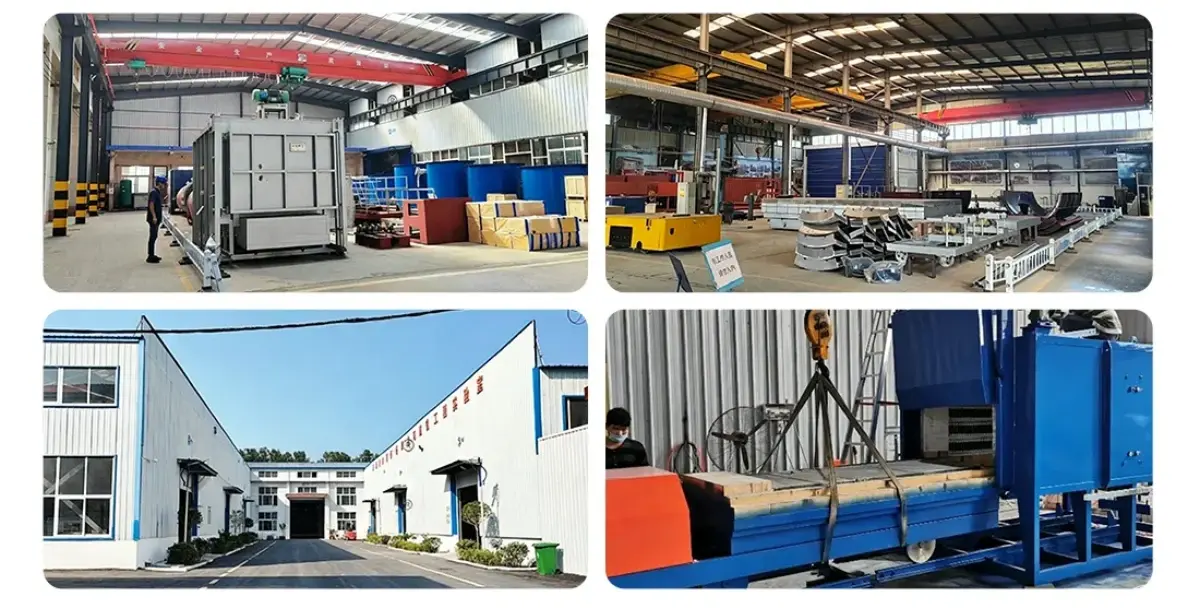
Since 2022, we have specialized in designing and manufacturing industrial thermal processing equipment at our facility in Zhengbing Industrial Park, Yanshan Economic Development Zone. Our engineering team brings practical experience in heat treatment furnace systems, working directly with clients to solve specific metallurgical challenges.
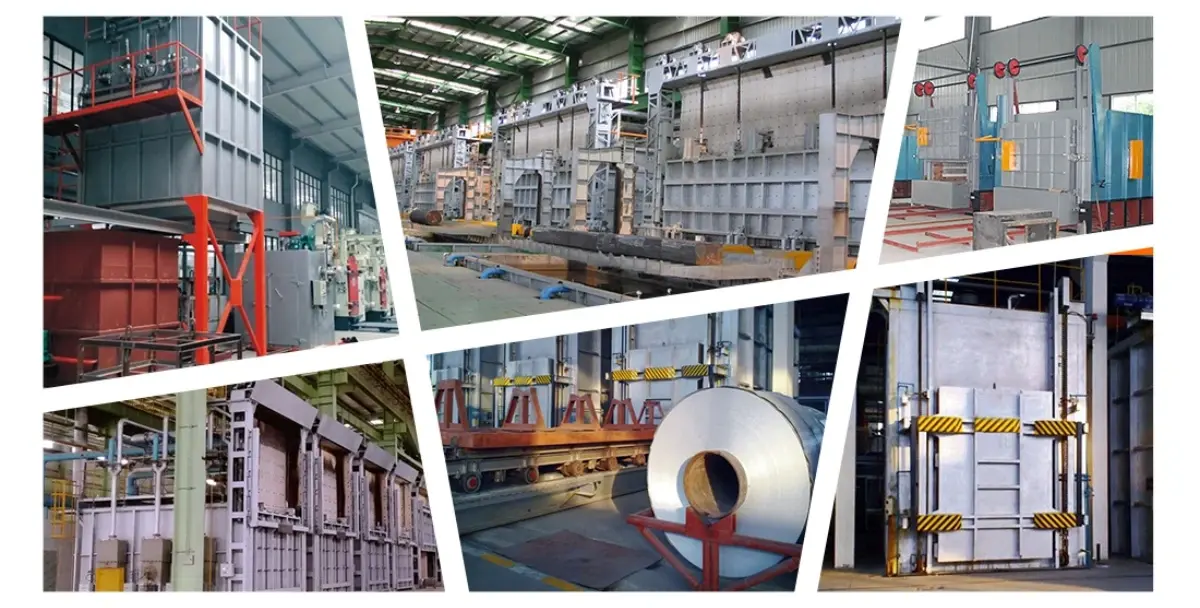
We maintain production capacity for both standard and custom product configurations, with lead times from 10 to 40 days depending on system complexity. Our portfolio includes pit furnaces, batch quenching systems, and continuous processing lines for various heat treatment applications.
Quality control procedures are integrated throughout fabrication and assembly. Each system undergoes functional testing before shipment, with complete documentation provided for your operational and maintenance teams.
Contact Us
For technical inquiries or quotation requests, contact our engineering department at 15720259172@163.com. We respond to Vacuum Casting Furnace specification questions and provide preliminary system layouts based on your application details.
Learn about our latest products and discounts through SMS or email