- English
- French
- German
- Portuguese
- Spanish
- Russian
- Japanese
- Korean
- Arabic
- Irish
- Greek
- Turkish
- Italian
- Danish
- Romanian
- Indonesian
- Czech
- Afrikaans
- Swedish
- Polish
- Basque
- Catalan
- Esperanto
- Hindi
- Lao
- Albanian
- Amharic
- Armenian
- Azerbaijani
- Belarusian
- Bengali
- Bosnian
- Bulgarian
- Cebuano
- Chichewa
- Corsican
- Croatian
- Dutch
- Estonian
- Filipino
- Finnish
- Frisian
- Galician
- Georgian
- Gujarati
- Haitian
- Hausa
- Hawaiian
- Hebrew
- Hmong
- Hungarian
- Icelandic
- Igbo
- Javanese
- Kannada
- Kazakh
- Khmer
- Kurdish
- Kyrgyz
- Latin
- Latvian
- Lithuanian
- Luxembou..
- Macedonian
- Malagasy
- Malay
- Malayalam
- Maltese
- Maori
- Marathi
- Mongolian
- Burmese
- Nepali
- Norwegian
- Pashto
- Persian
- Punjabi
- Serbian
- Sesotho
- Sinhala
- Slovak
- Slovenian
- Somali
- Samoan
- Scots Gaelic
- Shona
- Sindhi
- Sundanese
- Swahili
- Tajik
- Tamil
- Telugu
- Thai
- Ukrainian
- Urdu
- Uzbek
- Vietnamese
- Welsh
- Xhosa
- Yiddish
- Yoruba
- Zulu
Vacuum Hardening Furnace
Operating Temperature: 100-1300℃
Dimensions: 500-50000mm
Application: Heat treatment of metal parts
Minimum Order Quantity: 1 unit
Customization: Supports on-demand customization, ODM/OEM customization
Packaging: Standard export container, customization supported
Vacuum Hardening Furnace: High-Precision Heat Treatment Equipment for Tool Steels and Alloys
When you're processing tool steels, high-alloy steels, or martensitic stainless steels, achieving consistent hardness without surface oxidation is your top priority. Our Vacuum Hardening Furnace eliminates atmospheric contamination by heating components to austenitizing temperature in a vacuum environment—typically maintaining vacuum levels up to 7×10⁻¹ Pa—followed by controlled gas or oil quenching. Operating across a temperature range of 100-1300℃ with maximum hardening temperatures reaching 1350℃, this equipment delivers bright, oxide-free surfaces while minimizing dimensional distortion. You get precise hardness values without costly secondary machining or chemical cleaning. Available in chamber dimensions from 500mm to 50,000mm, each system supports full customization to match your production requirements.
What Makes Vacuum Heat Treatment Different?
Traditional atmosphere furnaces expose your parts to oxygen and nitrogen during heating. This causes three problems: surface scale formation, carbon loss from the outer layer, and intergranular oxidation.
Vacuum processing removes these atmospheric gases before heating begins. Your components heat uniformly without chemical reaction at the surface. The result is a clean, bright finish that retains dimensional accuracy.
The process works through four stages. First, the chamber evacuates air down to ultra-low pressure. Second, graphite or molybdenum heating elements raise the temperature uniformly. Third, the workload soaks at austenitizing temperature for controlled grain refinement. Finally, inert gas—typically nitrogen or argon—floods the chamber at high velocity for rapid cooling, or parts transfer to an oil quench tank.
Core Components and Technical Configuration
Heater Chamber: High-sealed vessel built with graphite or molybdenum lining. Graphite chambers suit oil extinguishing applications; molybdenum chambers handle high-pressure gas extinguishing. The double-wall plan coordinating water cooling channels to secure the external shell.
Heating Framework: Graphite or molybdenum resistance components organized in numerous zones give uniform warm dissemination. Multi-zone control compensates for warm mass varieties in complex loads.
Vacuum Framework: Rotational vane pumps handle starting departure. Dissemination or turbomolecular pumps accomplish working vacuum. Programmed valves separate pump stages based on weight readings.
Temperature Control: PLC-based frameworks screen numerous thermocouples all through the hot zone. Programmable slopes and douse times guarantee metallurgical prerequisites are met reliably over clump production.
Quenching Framework: Gas extinguishing circulates dormant air through warm exchangers at controlled stream rates. Oil extinguishing frameworks utilize computerized exchange instruments with coordinates agitation.
Loading Component: Pressure driven or motorized frameworks move workloads between the vestibule and hot zone. This keeps up vacuum astuteness and administrator security.
Technical Specifications
|
Parameter
|
Specification
|
|
Operating Temperature
|
100–1300℃
|
|
Maximum Hardening Temperature
|
1350℃
|
|
Vacuum Level
|
Up to 7×10⁻¹ Pa
|
|
Chamber Dimensions
|
500–50,000 mm (customizable)
|
|
Heating Element Material
|
Graphite / Molybdenum
|
|
Control System
|
PLC with programmable cycles
|
|
Quenching Method
|
Inert gas / Oil
|
|
Temperature Uniformity
|
±5℃ (per AMS 2750)
|
|
Production Lead Time
|
10–40 days
|
|
Minimum Order Quantity
|
1 unit
|
Applications Across Critical Industries
Aviation and Defense: You require landing equip components and turbine edges that withstand warm cycling without weakness breaking. Vacuum solidifying forms nickel-based superalloys and titanium amalgams whereas protecting their microstructure integrity.
Tool and Kick the bucket Fabricating: High-speed steel cutting apparatuses and infusion form cavities (H13, D2 grades) require sharp edges and dimensional soundness. Vacuum preparing keeps up these highlights without decarburization that dulls cutting surfaces.
Medical Gadget Generation: Surgical rebellious and inserts request biocompatible, oxide-free surfaces. Vacuum-hardened stainless steel meets FDA cleanliness guidelines without extra chemical passivation.
Automotive Division: Transmission gears and bearing races advantage from uniform case solidifying without post-treatment crushing to expel scale.
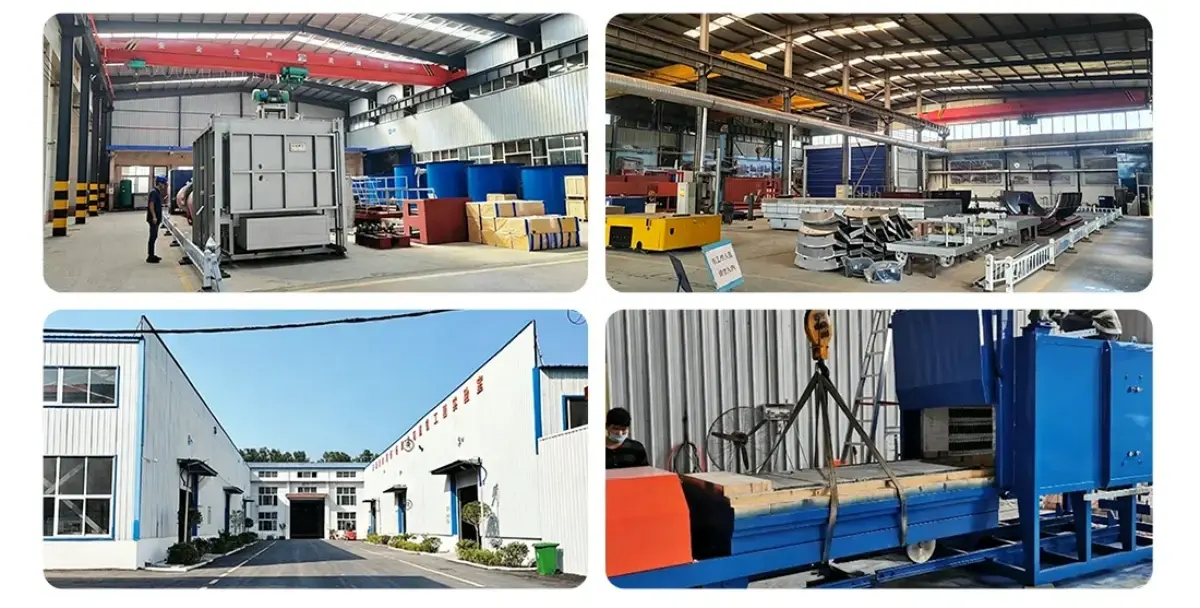
Why Choose Vacuum Over Conventional Methods?
You eliminate secondary operations. Parts exit the Vacuum Hardening Furnace ready for assembly—no descaling, no excessive stock removal, no rework for dimensional correction.
Surface brightness moves forward by killing oxidation. This things for components where erosion resistance begins at the surface finish.
Distortion decreases altogether. Controlled cooling rates and uniform warming minimize warm slopes that twist lean areas or complex geometries.
Environmental compliance gets to be less complex. No salt shower transfer, no smelling salts outflows, no perilous environment gasses requiring cleaning systems.
Material flexibility extends. You can handle receptive metals like titanium or materials delicate to hydrogen embrittlement without defilement risk.
Customization and Service Support
We fabricate each framework based on your determinations. ODM and OEM administrations adjust chamber geometry, warming capacity, and extinguishing arrangement to your generation workflow.
Installation groups give on-site commissioning. We confirm temperature consistency studies per AMS 2750 prerequisites and prepare your administrators on cycle programming.
A one-year guarantee covers all major components. Our specialized bolster reacts to prepare questions and gear updates as your generation needs evolve.
For standard setups, generation plans extend from 10 to 40 days. Custom plans require building review—contact us at 15720259172@163.com with your drawings and fabric determinations for point by point timeline gauges.
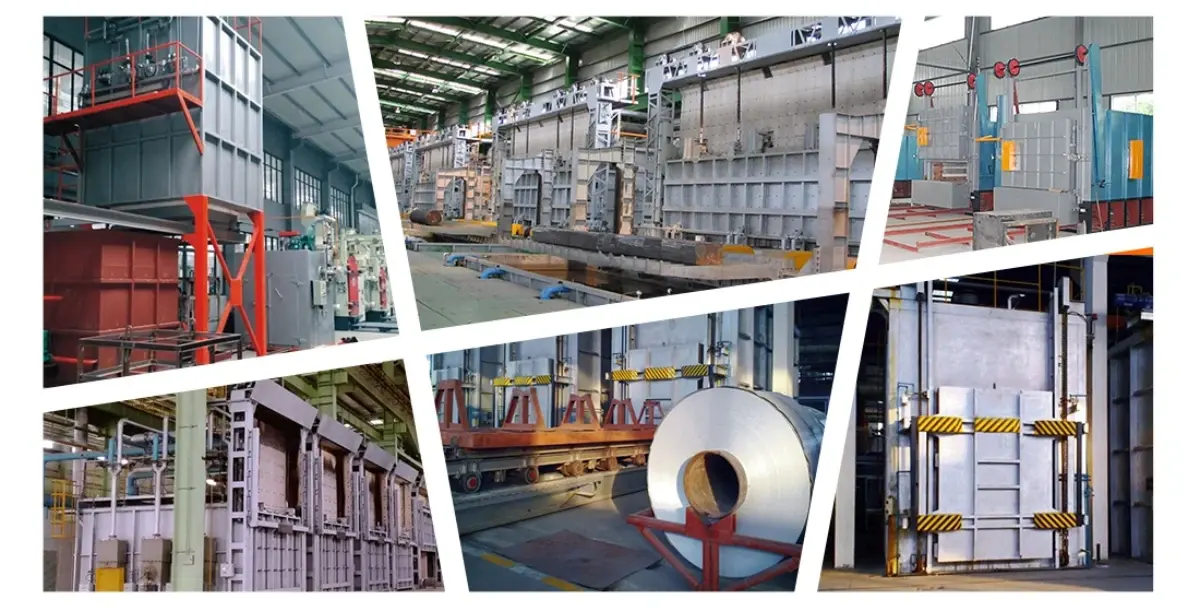
Frequently Asked Questions
What sorts of steels accomplish best comes about in vacuum hardening?
Tool steels (A2, D2, H13), high-speed steels (M2, M42), and martensitic stainless steels (410, 440C) react outstandingly well. The vacuum environment jam their alloying components amid austenitizing.
How does gas extinguishing compare to oil extinguishing in cooling rate?
Oil extinguishing gives speedier cooling—suitable for through-hardening overwhelming areas. Gas extinguishing offers more uniform cooling with less mutilation, perfect for thin-walled or complex shapes. Your portion geometry and steel review decide the ideal method.
Can you prepare numerous portion sorts in one batch?
Yes, if their warm treatment cycles coordinate. Gather components requiring the same austenitizing temperature and extinguish rate. Utilize fixturing to anticipate contact between divergent materials.
What upkeep keeps vacuum astuteness reliable?
Inspect entryway seals quarterly for compression set. Alter vacuum pump oil each 500 working hours. Confirm temperature consistency every year per AMS 2750 measures. Clean graphite components to expel volatilized contaminants after preparing sleek or coated parts.
How do you confirm hardness consistency over expansive batches?
We prescribe thermocouples set all through the workload amid capability runs. Post-process hardness testing at numerous areas affirms uniform change. PLC information logs record time-at-temperature for traceability.
Contact Us
Hebei Bolin Electric Furnace Manufacturing Co., Ltd. designs and manufactures industrial heat treatment systems from our facility in Zhenggang Industrial Park, Hebei Province. Since 2022, we've focused on delivering reliable thermal processing equipment backed by engineering support and responsive service. Contact our Vacuum Hardening Furnace technical team at 15720259172@163.com to discuss your hardening requirements.
Learn about our latest products and discounts through SMS or email