- English
- French
- German
- Portuguese
- Spanish
- Russian
- Japanese
- Korean
- Arabic
- Irish
- Greek
- Turkish
- Italian
- Danish
- Romanian
- Indonesian
- Czech
- Afrikaans
- Swedish
- Polish
- Basque
- Catalan
- Esperanto
- Hindi
- Lao
- Albanian
- Amharic
- Armenian
- Azerbaijani
- Belarusian
- Bengali
- Bosnian
- Bulgarian
- Cebuano
- Chichewa
- Corsican
- Croatian
- Dutch
- Estonian
- Filipino
- Finnish
- Frisian
- Galician
- Georgian
- Gujarati
- Haitian
- Hausa
- Hawaiian
- Hebrew
- Hmong
- Hungarian
- Icelandic
- Igbo
- Javanese
- Kannada
- Kazakh
- Khmer
- Kurdish
- Kyrgyz
- Latin
- Latvian
- Lithuanian
- Luxembou..
- Macedonian
- Malagasy
- Malay
- Malayalam
- Maltese
- Maori
- Marathi
- Mongolian
- Burmese
- Nepali
- Norwegian
- Pashto
- Persian
- Punjabi
- Serbian
- Sesotho
- Sinhala
- Slovak
- Slovenian
- Somali
- Samoan
- Scots Gaelic
- Shona
- Sindhi
- Sundanese
- Swahili
- Tajik
- Tamil
- Telugu
- Thai
- Ukrainian
- Urdu
- Uzbek
- Vietnamese
- Welsh
- Xhosa
- Yiddish
- Yoruba
- Zulu
Electric Furnace Belt
Electric Furnace Belt: High-Performance Resistance Heating Elements for Industrial Furnaces
When you need reliable heating elements for your industrial thermal processing equipment, the Electric Furnace Belt delivers exceptional performance through its specialized alloy construction and optimized ribbon design. Manufactured from premium Nickel-Chromium (Ni-Cr) or Iron-Chromium-Aluminum (Fe-Cr-Al) resistance alloys, these heating elements feature electrical resistivity ranging from 1.09 to 1.45 Ω·mm²/m and operating temperatures up to 1400°C. The flat strip configuration maximizes surface area for superior heat radiation compared to traditional round wire elements. You'll benefit from higher thermal efficiency, more uniform temperature distribution across your furnace chamber, and extended service life thanks to excellent oxidation resistance. The ribbon shape provides greater mechanical stability at elevated temperatures, effectively preventing the creep deformation that often shortens the lifespan of conventional heating elements.
What Makes Our Heating Belts Different?
Our resistance belt elements solve real production challenges you face daily. The larger radiation surface transfers heat more efficiently to your workpieces. This means faster heating cycles and lower energy consumption for your operation.
Temperature uniformity improves significantly with belt-style elements. You'll see fewer hot spots and cold zones in your furnace chamber. This consistency translates directly to better product quality and reduced rejection rates.
The flat profile offers another practical advantage. Installation becomes simpler, and you can position elements closer to furnace walls. This compact arrangement saves valuable chamber space while maintaining proper heating capacity.
Material Options for Different Applications
Iron-Chromium-Aluminum Alloys (Fe-Cr-Al)
Fe-Cr-Al resistance belts exceed expectations in high-temperature situations. HRE review amalgams work dependably at temperatures coming to 1400°C in barometrical conditions.
These components shape a defensive aluminum oxide layer amid beginning warming. This Al₂O₃ scale gives amazing oxidation resistance all through the element's benefit life.
You'll appreciate the cost-effectiveness of Fe-Cr-Al materials. They offer extraordinary execution at a lower cost point than nickel-based alternatives.
Nickel-Chromium Alloys (Ni-Cr)
Ni-Cr warming belts keep up prevalent mechanical quality at tall temperatures. Indeed after thousands of warm cycles, the fabric stands up to embrittlement.
The chromium oxide defensive layer shapes rapidly and follows solidly to the base metal. This Cr₂O₃ scale avoids assist oxidation beneath requesting working conditions.
Ni-Cr amalgams illustrate higher emissivity when completely oxidized. This characteristic empowers more compelling brilliant warm exchange to your items.
Technical Specifications
|
Parameter
|
Fe-Cr-Al Type
|
Ni-Cr Type
|
|
Electrical Resistivity
|
1.35-1.45 Ω·mm²/m
|
1.09-1.12 Ω·mm²/m
|
|
Maximum Operating Temperature
|
1400°C
|
1200°C
|
|
Melting Point
|
1500°C
|
1400°C
|
|
Density
|
7.1 g/cm³
|
8.4 g/cm³
|
|
Tensile Strength (20°C)
|
≥700 MPa
|
≥750 MPa
|
|
Elongation
|
≥15%
|
≥20%
|
|
Thermal Expansion Coefficient
|
13.5×10⁻⁶/°C
|
17.0×10⁻⁶/°C
|
How Resistance Belts Generate Heat?
The working rule takes after Joule's law of electrical warming. When electric current passes through the high-resistance amalgam, electrical vitality changes over to warm energy.
The lace geometry disperses this warm era over a wide surface zone. Infrared radiation at that point exchanges vitality from the component to heater substance and walls.
The defensive oxide layer serves double purposes. It anticipates advance oxidation whereas keeping up electrical astuteness. This steady oxide arrangement guarantees reliable resistance values all through operational life.
Temperature control frameworks control current stream based on thermocouple input. This closed-loop control keeps up your target temperature inside tight resiliences.
Applications Across Industries
Heat Treatment Operations
Annealing, normalizing, and stress-relieving processes rely on uniform heating. Resistance belts provide the temperature consistency these applications demand.
Ceramics and Glass Processing
Kiln operations benefit from the high-temperature capability and even heat distribution. You'll achieve better firing results with fewer defects.
Metallurgical Furnaces
Melting, sintering, and brazing applications require reliable heating elements. The Electric Furnace Belt withstands harsh metallurgical environments effectively.
Laboratory and Testing Equipment
Research furnaces need precise temperature control and repeatability. Our heating belts deliver the accuracy your experiments require.
Installation and Operational Guidelines
Mount elements with adequate clearance from furnace walls and each other. Proper spacing prevents overheating and extends service life.
Allow for thermal expansion during heating cycles. Use appropriate mounting hardware that accommodates dimensional changes.
Initial break-in procedures are important. Gradually heat new elements to operating temperature over several hours. This process develops the protective oxide layer properly.
Monitor element performance regularly. Visual inspection helps identify potential issues before failure occurs. Look for signs of excessive oxidation, sagging, or hot spots.
Why Choose Hebei Bolin Electric Furnace Manufacturing?
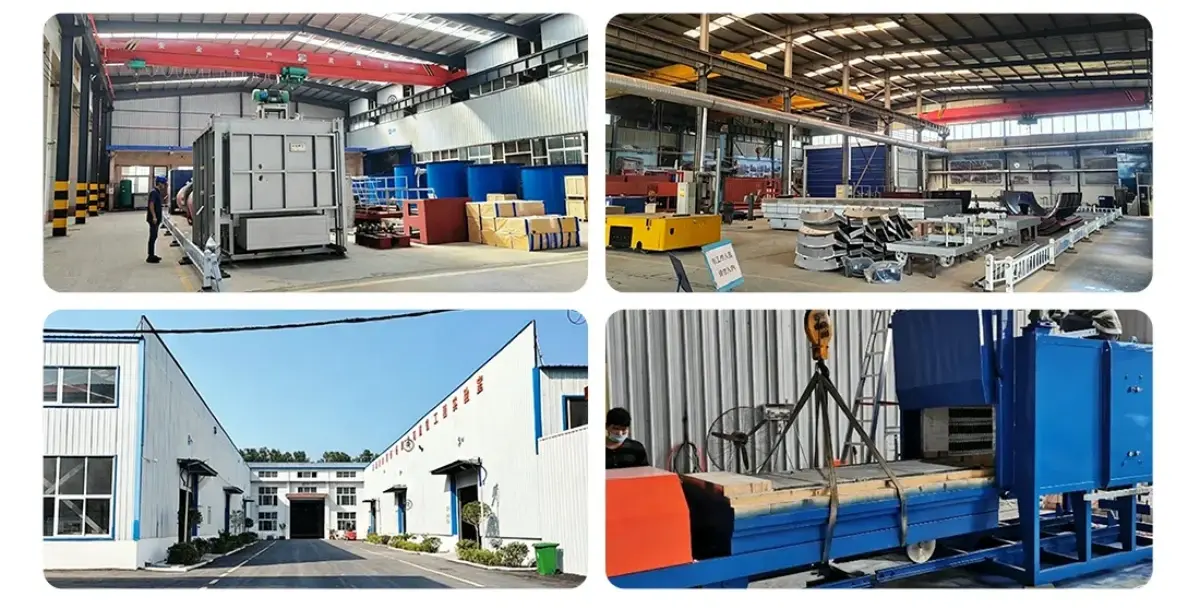
Since our foundation in 2022, we've centered on conveying quality warm handling gear. Our designing group gets it the specialized prerequisites of mechanical warming applications.
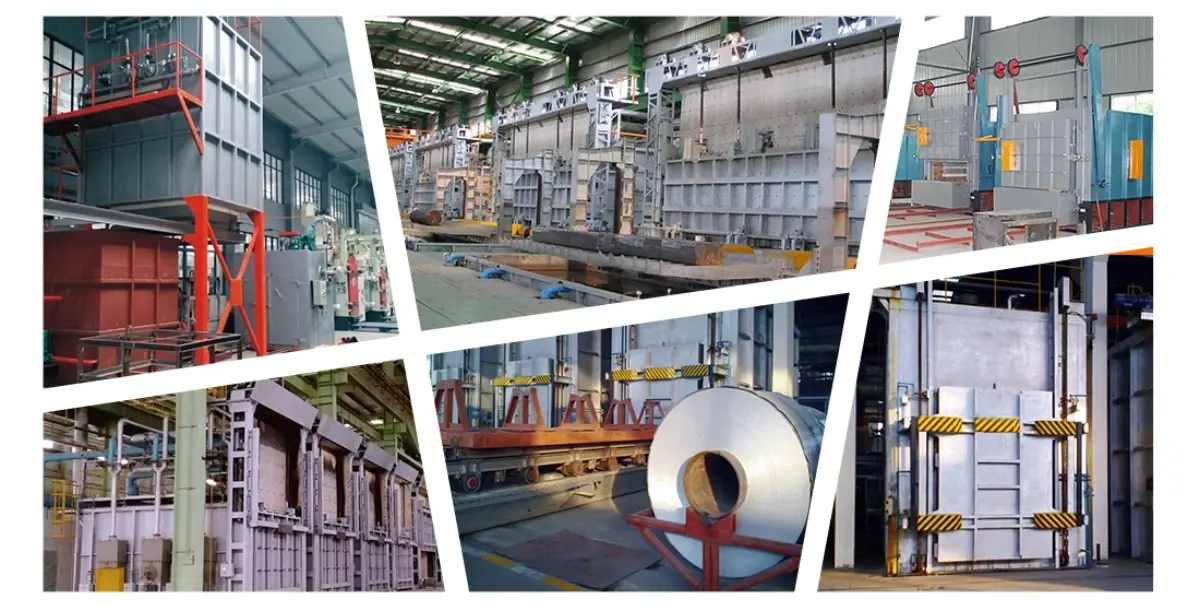
We fabricate total warm treatment frameworks, counting all warming component components. This coordinates approach guarantees compatibility and performance.
Customization Services
Every application has special necessities. We offer ODM and OEM administrations custom-made to your details. Give your drawings and working parameters, and we'll design a arrangement that fits.
Quality Assurance
Our fabricating prepare takes after strict quality control conventions. Chemical composition confirmation, dimensional resistance testing, and microstructure examination guarantee each component meets execution standards.
Technical Support
Our group gives establishment direction and commissioning help. We're accessible to offer assistance troubleshoot operational issues and optimize heater performance.
Delivery and Service
Production lead times run from 10 to 40 days depending on arrange details. We keep up stock levels to react rapidly to your requirements.
All items incorporate a 1-year guarantee. On-site upkeep and gear overhaul administrations are accessible all through your equipment's operational life.
Frequently Asked Questions
How long do resistance warming belts ordinarily last?
Service life shifts based on working temperature, warm cycling recurrence, and air conditions. Beneath ordinary mechanical utilize at 80% of most extreme evaluated temperature, you can anticipate 2-3 a long time of persistent operation. Higher temperatures or forceful climates diminish life expectancy, whereas controlled conditions expand it.
Can I supplant person belts in a multi-element furnace?
Yes, but we suggest supplanting components in total sets when conceivable. Modern components have marginally distinctive resistance values than matured ones. Blended establishments can make current lopsided characteristics and uneven warming. If you must supplant person components, coordinate the details precisely and screen temperature dispersion closely.
What causes untimely component failure?
Common disappointment modes incorporate oxidation from sullied climates, mechanical harm amid establishment, warm stun from quick warming, and operation over appraised temperature. Guarantee appropriate air control, cautious taking care of, continuous heat-up strategies, and exact temperature checking to maximize component life.
Do these components work in vacuum furnaces?
No, resistance belts require an oxidizing environment to shape the defensive oxide layer. In vacuum or lessening airs, the base metal oxidizes quickly without security. For vacuum applications, consider molybdenum or graphite warming components instead.
How do I calculate the redress component estimate for my furnace?
Element determination depends on chamber volume, craved temperature, warming rate necessities, and accessible electrical supply. Contact our building group with your determinations. We'll calculate control necessities, decide ideal component setup, and prescribe the suitable belt measurements for your application.
Contact Us
Need technical assistance with your Electric Furnace Belt thermal processing equipment? Our engineering team is ready to help you select the right heating elements for your specific application. Contact us at 15720259172@163.com for detailed specifications, custom quotations, or technical consultation. We'll work with you to optimize your furnace performance and reduce operational costs.
Learn about our latest products and discounts through SMS or email