- English
- French
- German
- Portuguese
- Spanish
- Russian
- Japanese
- Korean
- Arabic
- Irish
- Greek
- Turkish
- Italian
- Danish
- Romanian
- Indonesian
- Czech
- Afrikaans
- Swedish
- Polish
- Basque
- Catalan
- Esperanto
- Hindi
- Lao
- Albanian
- Amharic
- Armenian
- Azerbaijani
- Belarusian
- Bengali
- Bosnian
- Bulgarian
- Cebuano
- Chichewa
- Corsican
- Croatian
- Dutch
- Estonian
- Filipino
- Finnish
- Frisian
- Galician
- Georgian
- Gujarati
- Haitian
- Hausa
- Hawaiian
- Hebrew
- Hmong
- Hungarian
- Icelandic
- Igbo
- Javanese
- Kannada
- Kazakh
- Khmer
- Kurdish
- Kyrgyz
- Latin
- Latvian
- Lithuanian
- Luxembou..
- Macedonian
- Malagasy
- Malay
- Malayalam
- Maltese
- Maori
- Marathi
- Mongolian
- Burmese
- Nepali
- Norwegian
- Pashto
- Persian
- Punjabi
- Serbian
- Sesotho
- Sinhala
- Slovak
- Slovenian
- Somali
- Samoan
- Scots Gaelic
- Shona
- Sindhi
- Sundanese
- Swahili
- Tajik
- Tamil
- Telugu
- Thai
- Ukrainian
- Urdu
- Uzbek
- Vietnamese
- Welsh
- Xhosa
- Yiddish
- Yoruba
- Zulu
High-Temperature Cotton
Good flexibility: Maintains its toughness and fiber structure even under neutral oxidizing gas conditions.
Thermal insulation: Low thermal conductivity, good thermal stability, chemical stability, and low heat capacity.
Multiple specifications: Factory direct sales, various specifications, and sizes can be customized.
High-Temperature Cotton for Industrial Thermal Insulation
When you need reliable thermal insulation for industrial furnaces and kilns, High-Temperature Cotton delivers proven performance where traditional materials fail. This engineered refractory ceramic fiber maintains structural integrity at temperatures from 1000°C to 1430°C, with thermal conductivity as low as 0.09–0.15 W/m·K at 600°C. Manufactured from high-purity alumina-silica through precision blowing processes, it offers bulk densities ranging from 64 to 160 kg/m³ and fiber diameters of 2-5 microns. Unlike mineral wool that degrades rapidly under thermal cycling, this material provides less than 3% linear shrinkage after 24-hour exposure at classification temperature, conforming to ASTM C892 and ISO 10635 standards.
What Makes This Insulation Material Different?
You face real challenges in your heat treatment operations: excessive energy consumption, thermal shock damage, and weight limitations in furnace design. The product addresses these issues through its low thermal mass construction.
The material's structure consists of interlocking ceramic fibers that trap air pockets, creating effective thermal barriers. When heated, these fibers maintain their morphology and flexibility even under neutral or oxidizing gas conditions. This structural stability prevents the brittleness and cracking you typically see in rigid insulation boards.
The working principle is straightforward. Heat transfer occurs through three mechanisms: conduction, convection, and radiation. The fine fiber network minimizes conduction pathways while the trapped air reduces convective heat loss. The result is significantly lower heat soak in your furnace walls, reducing both heating and cooling cycle times in batch operations.
Technical Parameters
|
Parameter
|
Specification
|
|
Classification Temperature
|
1000°C – 1430°C
|
|
Thermal Conductivity
|
0.09–0.15 W/m·K (at 600°C)
|
|
Bulk Density
|
64–160 kg/m³
|
|
Fiber Diameter
|
2–5 microns (average)
|
|
Linear Shrinkage
|
<3% (24-hour soak at rated temp)
|
|
Tensile Strength
|
High (maintains integrity under mechanical stress)
|
|
Chemical Resistance
|
Excellent (except HF, H₃PO₄, strong alkalis)
|
|
Shot Content
|
Low (minimal non-fibrous particles)
|
|
Standards Compliance
|
ASTM C892, ISO 10635
|
Performance Advantages in Real Applications
Your steam pipe insulation needs to withstand continuous thermal cycling without deformation. This material's low heat capacity means it absorbs minimal energy during startup, reducing fuel consumption by 15-30% compared to heavyweight refractories in similar applications.
For kiln linings, the flexibility of the fiber blanket accommodates thermal expansion without creating stress points. You can install it in curved sections and around penetrations where rigid materials would require complex cutting and fitting.
The chemical stability ensures long service life in atmospheres containing sulfur dioxide, carbon monoxide, or hydrogen. Only hydrofluoric acid, phosphoric acid, and strong caustic solutions will degrade the fiber structure.
Sound absorption is an additional benefit. The porous structure dampens noise from burner operation and material handling, contributing to safer work environments without additional acoustic treatment.
Application Guidelines
You should consider this insulation for:
· Industrial furnace hot faces where temperatures exceed 1000°C
· Expansion joints requiring flexible thermal barriers
· Backup insulation layers behind hard refractories to reduce shell temperatures
· Aluminum melting and holding furnaces where non-wetting properties prevent metal infiltration
· Steam pipe wrapping in power generation and chemical processing plants
Installation of High-Temperature Cotton requires appropriate personal protective equipment. Although the material is inorganic, fine fibers can irritate skin and respiratory passages during handling. Proper containment and dust suppression during cutting and fitting are essential.
Material Selection Considerations
When indicating cover for your application, coordinate the classification temperature to your working conditions. Working persistently inside 50-100°C of the classification temperature will quicken fiber devitrification and shrinkage.
Bulk thickness influences both warm execution and mechanical quality. Lower densities give way better cover but less resistance to mechanical mishandle or gas disintegration. Higher-density grades suit applications with physical contact or high-velocity gas streams.
Bio-soluble fiber choices meet stricter wellbeing directions beneath EU Mandate 97/69/EC. These materials break down in lung liquids if breathed in, decreasing long-term wellbeing dangers for establishment faculty. They regularly have somewhat lower most extreme utilize temperatures than conventional hard-headed ceramic fibers.
If your application includes dampness introduction, get it that whereas strands are hydrophobic, water can involve void spaces. Warm properties return upon drying if no chemical contaminants were display in the water.
Why Choose Hebei Bolin for Your Thermal Insulation Needs?
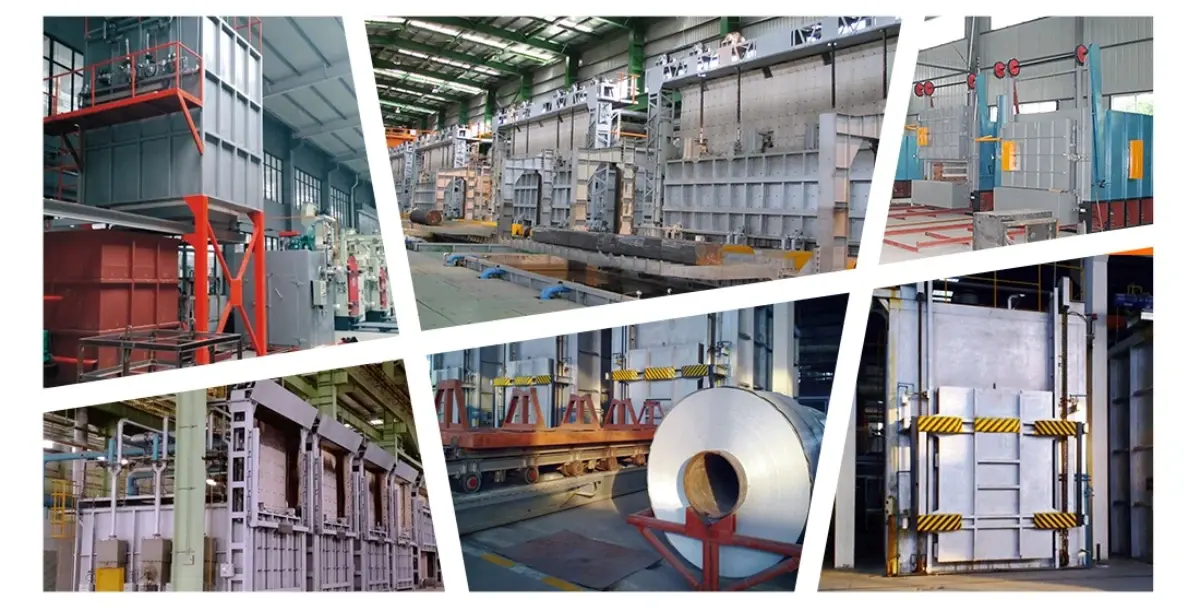
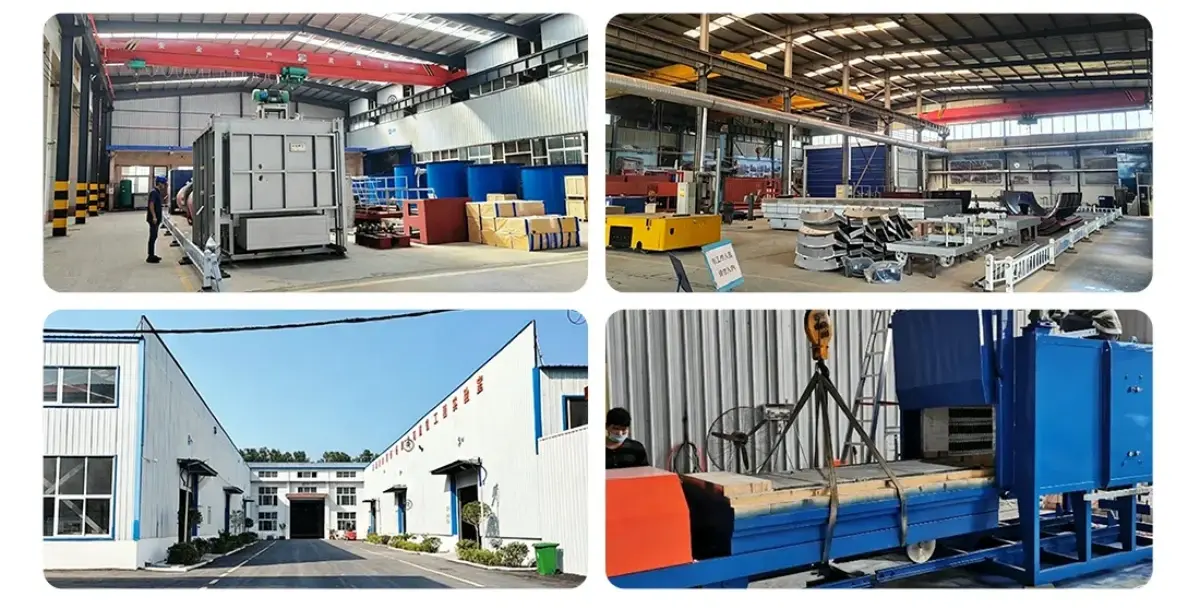
Hebei Bolin Electric Heater Fabricating Co., Ltd. coordinating warm treatment hardware plan with high-quality warm cover materials. Found in Zhenggang Mechanical Stop, Yanshan Financial Improvement Zone, we've built our notoriety since 2022 through specialized ability or maybe than promoting claims.
Our building group gets it your heater frameworks since we plan and make them. This implies you get down to earth counsel on separator choice, establishment strategies, and support plans based on genuine operational data.
We keep up prepared stock of standard details whereas advertising customization for your particular necessities. Generation lead times run from 10 to 40 days depending on arrange complexity. ODM and OEM administrations suit your drawings and execution criteria.
Technical back doesn't conclusion with conveyance. Our administrations incorporate establishment direction, on-site commissioning help, and a 1-year guarantee covering fabric surrenders. We give upkeep bolster and hardware updates as your operations advance.
Frequently Asked Questions
What is the distinction between RCF and Bio-Soluble variants?
RCF (Hard-headed Ceramic Fiber) gives higher most extreme temperature resistance, ordinarily up to 1430°C. Bio-Soluble adaptations are built to break up in human lung liquids, assembly EU Mandate 97/69/EC for decreased wellbeing dangers. They ordinarily work up to 1200°C. Select based on your temperature necessities and territorial security regulations.
Why does the fabric radiate smoke amid starting heating?
Standard ceramic fiber is inorganic and produces no smoke. In any case, a few producers utilize natural covers amid shaping. These folios burn out underneath 250°C, making brief smoke and odor. This happens as it were amid to begin with heat-up and doesn't influence long-term performance.
Can I utilize this fabric in coordinate contact with liquid aluminum?
Yes. The fabric is non-wetting to liquid aluminum, making it reasonable for wash linings, dispersion boxes, and holding heater cover in non-ferrous casting operations. The strands won't penetrate the metal or sully your product.
How does fiber distance across influence performance?
Finer filaments (beneath 3 microns) make more discuss pockets per unit volume, making strides warm resistance and adaptability. Be that as it may, they require stricter taking care of controls and individual defensive hardware amid establishment. Coarser strands are less demanding to handle but give marginally lower cover value.
What happens if the cover gets damp amid storage?
Water possesses discuss voids and briefly diminishes separator execution. Permit the fabric to dry totally some time recently establishment. If as it were clean water was included, warm properties return completely after drying. Chemical defilement may forever debase fiber structure.
Contact Us
Need technical assistance with your High-Temperature Cotton insulation selection? Contact our engineering team at 15720259172@163.com for application-specific recommendations and quotations. We provide detailed thermal calculations and installation specifications based on your operating parameters.
Learn about our latest products and discounts through SMS or email