- English
- French
- German
- Portuguese
- Spanish
- Russian
- Japanese
- Korean
- Arabic
- Irish
- Greek
- Turkish
- Italian
- Danish
- Romanian
- Indonesian
- Czech
- Afrikaans
- Swedish
- Polish
- Basque
- Catalan
- Esperanto
- Hindi
- Lao
- Albanian
- Amharic
- Armenian
- Azerbaijani
- Belarusian
- Bengali
- Bosnian
- Bulgarian
- Cebuano
- Chichewa
- Corsican
- Croatian
- Dutch
- Estonian
- Filipino
- Finnish
- Frisian
- Galician
- Georgian
- Gujarati
- Haitian
- Hausa
- Hawaiian
- Hebrew
- Hmong
- Hungarian
- Icelandic
- Igbo
- Javanese
- Kannada
- Kazakh
- Khmer
- Kurdish
- Kyrgyz
- Latin
- Latvian
- Lithuanian
- Luxembou..
- Macedonian
- Malagasy
- Malay
- Malayalam
- Maltese
- Maori
- Marathi
- Mongolian
- Burmese
- Nepali
- Norwegian
- Pashto
- Persian
- Punjabi
- Serbian
- Sesotho
- Sinhala
- Slovak
- Slovenian
- Somali
- Samoan
- Scots Gaelic
- Shona
- Sindhi
- Sundanese
- Swahili
- Tajik
- Tamil
- Telugu
- Thai
- Ukrainian
- Urdu
- Uzbek
- Vietnamese
- Welsh
- Xhosa
- Yiddish
- Yoruba
- Zulu
Resistance Ribbon
Resistance Ribbon: High-Performance Heating Element for Industrial Furnaces
Resistance Ribbon is your solution. Engineered with a rectangular cross-section from specialized alloys like Nickel-Chromium (NiCr) or Iron-Chromium-Aluminum (FeCrAl), this precision heating element offers exceptional surface-to-volume ratio for superior heat dissipation. With electrical resistivity up to 1.45 μΩ·m and maximum operating temperatures reaching 1425°C, it outperforms standard round wires in thermal uniformity and mechanical stability. You'll experience fewer hot-spot issues, reduced thermal lag, and improved durability in high-vibration applications. The flat profile design enables higher power density without wire-on-wire shorting risks—perfect for your heat treatment furnaces, sealing equipment, and precision thermal processing systems.
What Makes Our Resistance Ribbon Different?
When you're running mechanical heaters at tall temperatures, each component things. Our item stands out since of its prevalent metallurgical soundness and steady electrical properties.
The level geometry isn't fair around aesthetics. It gives you a bigger warming surface compared to circular wire of comparable cross-sectional zone. This implies way better warm exchange to your workpiece and more uniform temperature conveyance over the warming zone.
You'll take note the distinction in how it handles warm cycling. The controlled coefficient of warm development minimizes mechanical stretch amid rehashed warming and cooling. This interprets to longer benefit life and less impromptu shutdowns in your generation line.
Material Composition and Protective Properties
Our warming components create a tireless oxide layer amid operation. For NiCr combinations, this Cr2O3 layer acts as a obstruction against assist oxidation. FeCrAl grades frame an Al2O3 defensive layer with indeed way better resistance in oxidizing atmospheres.
This self-protecting characteristic implies you can work certainly in different environments—whether oxidizing, diminishing, or vacuum conditions. The lace keeps up basic keenness and electrical execution all through expanded benefit periods.
Technical Specifications
|
Parameter
|
Specification
|
|
Material Options
|
Nickel-Chromium (NiCr), Iron-Chromium-Aluminum (FeCrAl)
|
|
Electrical Resistivity
|
Up to 1.45 μΩ·m (FeCrAl grades)
|
|
Maximum Operating Temperature
|
1425°C
|
|
Cross-Section Shape
|
Rectangular/Flat
|
|
Protective Oxide Layer
|
Cr2O3 (NiCr), Al2O3 (FeCrAl)
|
|
Quality Standards
|
ASTM B344, DIN 17470
|
|
Typical Dimensions
|
Customizable width and thickness
|
|
Lead Time
|
10–40 days (depending on specification)
|
Where You Can Apply This Technology?
Large-Scale Heat Treatment Furnaces
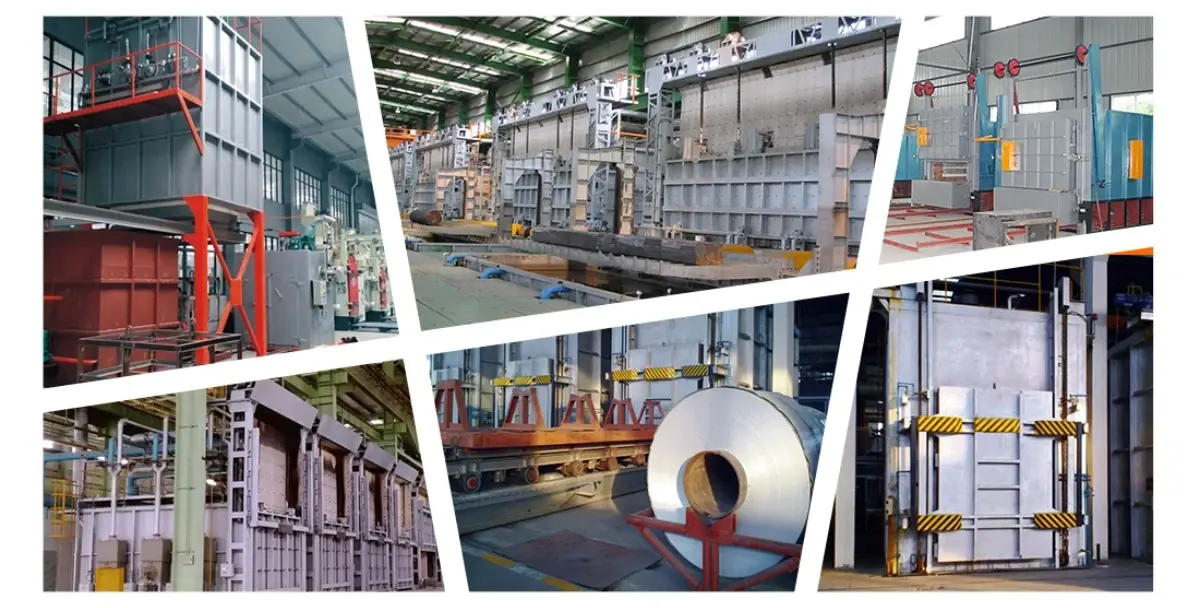
In pit furnaces, roller hearth furnaces, and continuous heat treatment lines, the ribbon serves as a radiant heating element. Its flat profile allows you to achieve high power density without compromising safety or performance. You can pack more heating capacity into the same furnace volume.
High-Speed Packaging and Sealing Equipment
For plastic film welding and vacuum packaging machinery, rapid thermal response is critical. The low thermal mass of Resistance Ribbon enables quick pulse heating and cooling cycles. This keeps your production line running at maximum throughput without quality compromises.
Precision Drying and Curing Systems
When you need tight temperature control in low-temperature high-precision drying furnaces, uniform heat distribution is non-negotiable. The ribbon's geometry delivers consistent thermal output across the entire heating surface, eliminating cold spots that could affect product quality.
Specialized Industrial Applications
You'll find this heating element in nitriding furnaces, bright annealing furnaces, and multi-purpose furnaces where atmosphere control is essential. The protective oxide layer maintains performance even in challenging chemical environments.
How Structure Drives Performance?
The working rule is direct but viable. When electrical current passes through the lace, its inalienable electrical resistance changes over electrical vitality into warm vitality. The level shape maximizes surface zone contact with the encompassing environment or radiation target.
This geometry advantage implies warm exchanges more proficiently from the component to your workload. You'll see quicker warming rates and superior temperature consistency compared to ordinary circular wire elements.
The tall crawl quality avoids listing or misshapening beneath supported warm loads. Indeed after thousands of warming cycles, the lace keeps up its unique shape and electrical characteristics. This mechanical soundness is particularly important in flat heater establishments where component underpins are broadly spaced.
Why Choose Hebei Bolin for Your Heating Elements?
We get it that your generation cannot bear downtime from warming component disappointments. That's why we center on fabricating quality or maybe than showcasing promises.
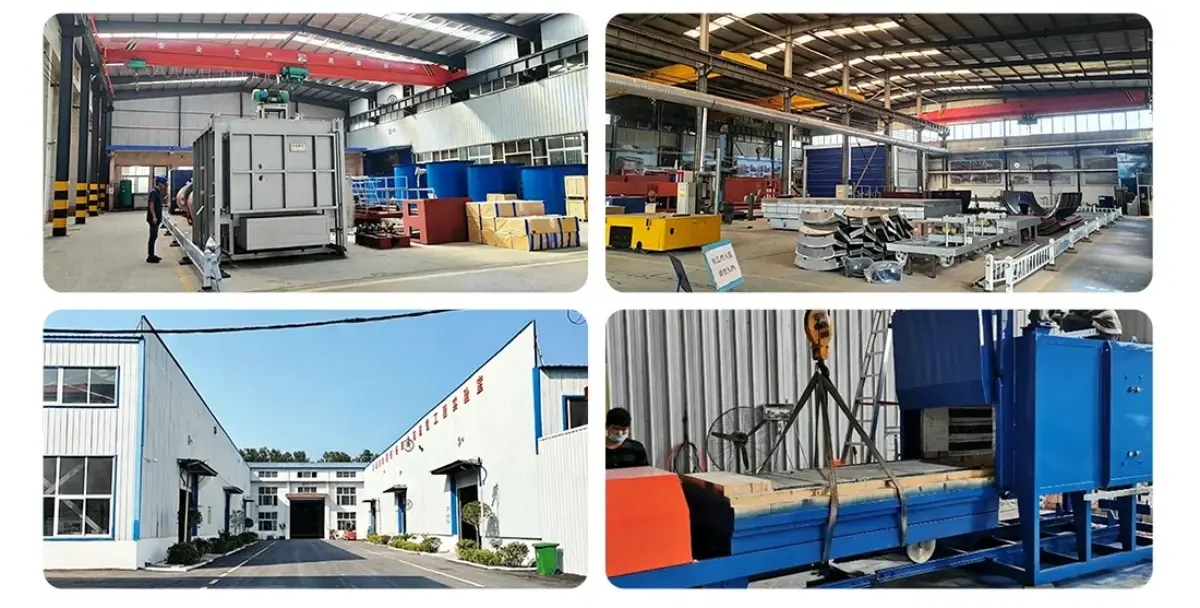
Located in Zhengabi Mechanical Stop, our office coordinating investigate, plan, generation, and designing bolster. We fabricate total warm treatment systems—from huge gas-fired heaters to robotized generation lines—so we get it precisely how warming components perform in genuine working conditions.
Customization That Fits Your Equipment
You send us your drawings and details. We fabricate to your correct necessities. Whether you require particular measurements, resistance values, or terminal setups, our ODM and OEM administrations adjust to your needs.
We work with clients over distinctive nations and businesses. If your application has interesting barometrical conditions or temperature profiles, we can alter amalgam composition and geometry accordingly.
Support Beyond Manufacturing
After you get your arrange, our specialized group remains accessible for establishment direction and commissioning back. We give one-year guarantee scope and can organize on-site upkeep when needed.
For gear updates or capacity extensions, we offer specialized counseling to offer assistance you select the right warming component arrangement for your adjusted setup.
FAQ
What is the typical lifespan of the product in industrial furnaces?
Service life depends on operating temperature, atmosphere, and cycling frequency. At temperatures below 80% of maximum rating with controlled atmosphere, you can expect 12,000–18,000 operating hours. Frequent thermal cycling and oxidizing atmospheres reduce this timeframe.
Can I replace round wire heating elements with flat ribbon in existing furnaces?
Yes, but you'll need to verify mounting bracket compatibility and recalculate power density. The flat profile may require different support spacing. Contact us with your furnace specifications for retrofit recommendations.
How do I specify the right alloy for my application?
NiCr alloys work well up to 1150°C in most atmospheres. FeCrAl alloys handle higher temperatures (up to 1425°C) and offer better resistance in oxidizing conditions but have lower ductility. Share your temperature requirements and atmosphere composition with us for proper material selection.
What quality standards do your products meet?
Our heating elements comply with ASTM B344 and DIN 17470 specifications. We can provide material certificates and dimensional inspection reports with your order.
Do you offer technical support for furnace design?
Yes. We provide technical consulting for heating element configuration, power calculations, and thermal modeling. Our engineering team has experience with various furnace types and can assist with both new installations and retrofits.
How quickly can you deliver custom specifications?
Production lead time ranges from 10 to 40 days depending on specification complexity and order quantity. We maintain inventory of standard sizes for faster delivery of common configurations.
Contact Us
Ready to upgrade your furnace heating system with Resistance Ribbon? Contact our engineering team at 15720259172@163.com with your specifications. We'll provide technical recommendations and a detailed quotation tailored to your application requirements.
Learn about our latest products and discounts through SMS or email