- English
- French
- German
- Portuguese
- Spanish
- Russian
- Japanese
- Korean
- Arabic
- Irish
- Greek
- Turkish
- Italian
- Danish
- Romanian
- Indonesian
- Czech
- Afrikaans
- Swedish
- Polish
- Basque
- Catalan
- Esperanto
- Hindi
- Lao
- Albanian
- Amharic
- Armenian
- Azerbaijani
- Belarusian
- Bengali
- Bosnian
- Bulgarian
- Cebuano
- Chichewa
- Corsican
- Croatian
- Dutch
- Estonian
- Filipino
- Finnish
- Frisian
- Galician
- Georgian
- Gujarati
- Haitian
- Hausa
- Hawaiian
- Hebrew
- Hmong
- Hungarian
- Icelandic
- Igbo
- Javanese
- Kannada
- Kazakh
- Khmer
- Kurdish
- Kyrgyz
- Latin
- Latvian
- Lithuanian
- Luxembou..
- Macedonian
- Malagasy
- Malay
- Malayalam
- Maltese
- Maori
- Marathi
- Mongolian
- Burmese
- Nepali
- Norwegian
- Pashto
- Persian
- Punjabi
- Serbian
- Sesotho
- Sinhala
- Slovak
- Slovenian
- Somali
- Samoan
- Scots Gaelic
- Shona
- Sindhi
- Sundanese
- Swahili
- Tajik
- Tamil
- Telugu
- Thai
- Ukrainian
- Urdu
- Uzbek
- Vietnamese
- Welsh
- Xhosa
- Yiddish
- Yoruba
- Zulu
Trolley Type Heat Treatment Furnace for Annealing, Quenching, and Tempering
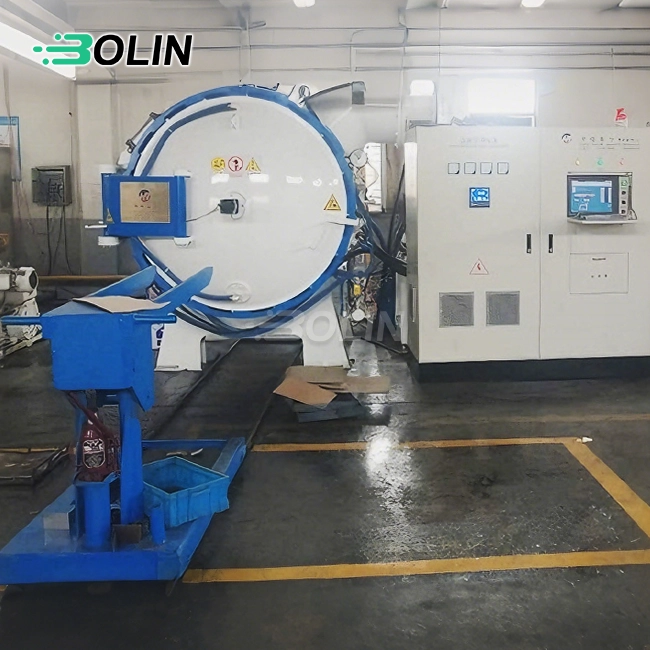
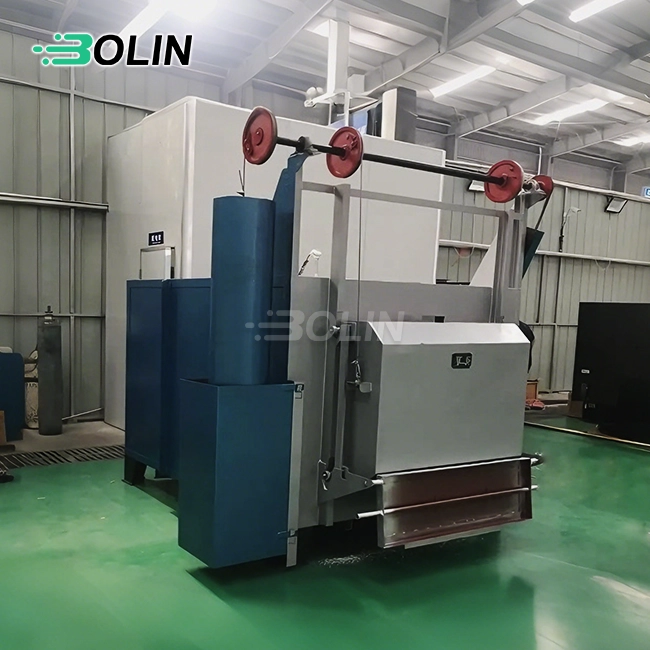
Trolley Type Heat Treatment Furnaces are important pieces of industrial machinery used for precise heating, quenching and tempering tasks in many manufacturing sectors. These strong systems have mobile trolleys that move workpieces quickly through controlled heating rooms. This makes sure that the temperature is even and produces excellent metallurgical results. Because they are so well-designed and easy to use, these furnaces can handle batches of different sizes while keeping the same heat treatment conditions, which is important for improving material features and making sure products meet quality standards.
Understanding Trolley Type Heat Treatment Furnaces
Equipment for modern heat treatment must provide precise control and consistent outcomes throughout processing cycles. Unlike batch or continuous heating systems, trolley-style furnaces meet these needs through clever engineering.
Basic design rules
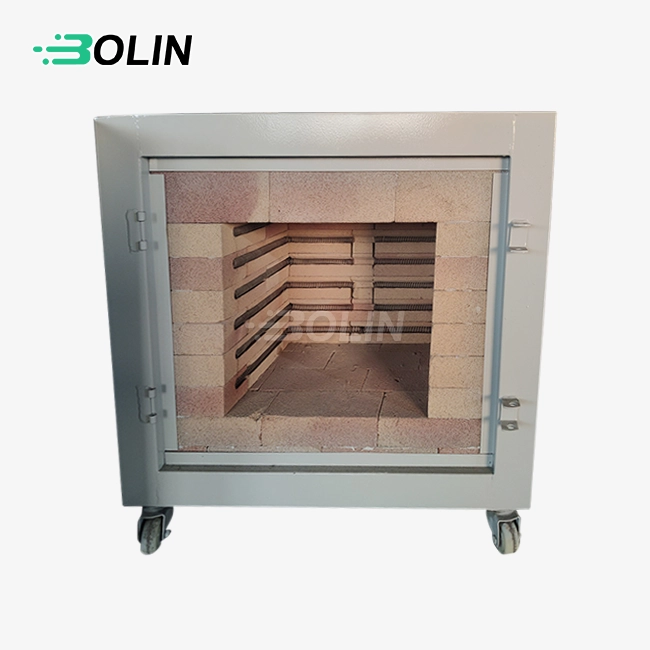
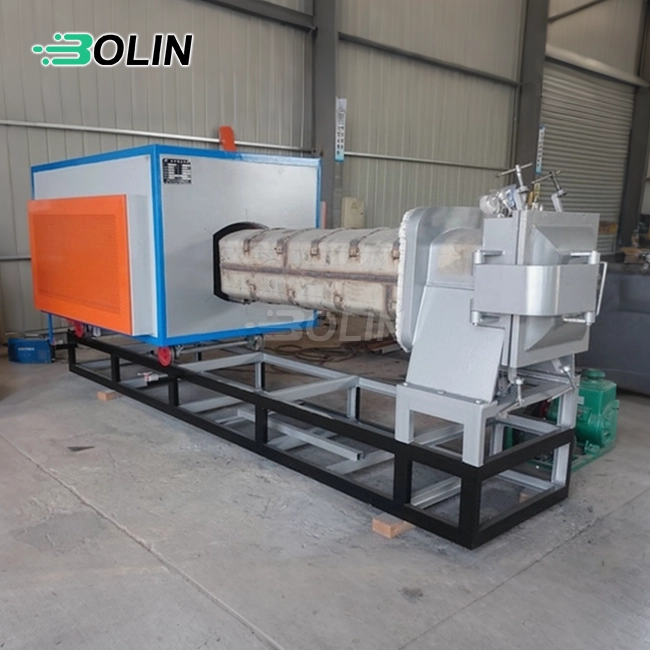
A mobile platform mechanism allows trolley heat treatment systems to carry workpieces smoothly. A rail-mounted trolley transfers materials into and out of the heating chamber, allowing operators to load components safely while maintaining boiler thermal conditions. Advanced insulation and properly placed heating sources create uniform working temperatures in the heating chamber.
Professional experts designed these systems to meet metallurgical needs at industrial-grade temperatures from 200°C to 1250°C. The regulated atmosphere allows annealing to modify grain structure and quenching to rapidly cool materials to increase hardness. Tempering cycles benefit from accurate temperature regulation that balances hardness and toughness per material specifications.
Operations Control Systems
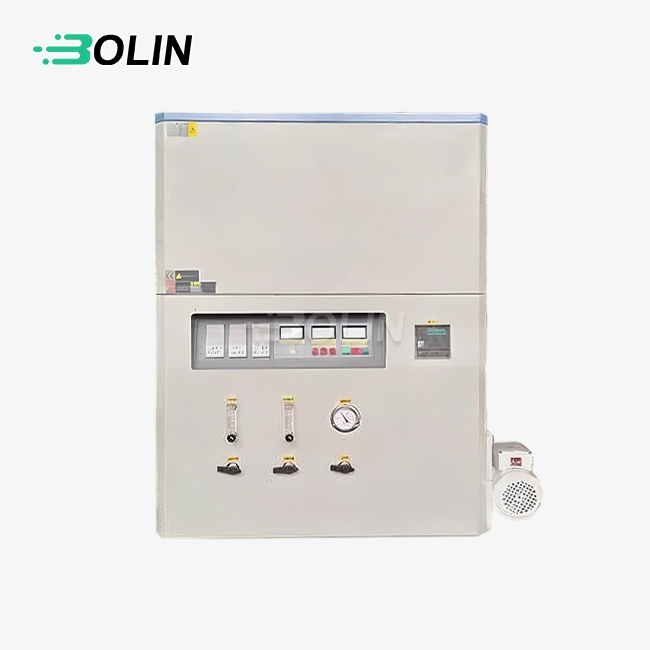
Advanced control technology easily interacts with trolley furnace operations, giving operators complete monitoring. Digital temperature controllers ensure ±2°C setpoint accuracy, while programmable logic systems automate complex heat treatment cycles. These control elements ensure uniform processing independent of batch or operator expertise.
Key Benefits and Applications of Trolley Type Heat Treatment Furnaces
Industrial manufacturers increasingly recognise trolley-style heating systems' practical advantages in different manufacturing situations. These benefits go beyond heating to efficiency and quality improvements that boost industry competitiveness.
Better Process Flexibility and Efficiency
Trolley Type Heat Treatment Furnace can handle several component sizes and geometries. Mobile loading systems can process bigger parts that batch furnaces cannot while maintaining consistent chamber heating. This versatility is especially useful in custom production where batch compositions vary often.
The main operational benefits of these systems:
1. Less handling: The trolley mechanism minimises repeated material transfers, decreasing handling damage and labour costs from complex loading procedures.
2. Improved productivity: Parallel loading lets operators prepare next batches while current cycles continue, decreasing processing time and increasing throughput.
3. Improved safety protocols: External loading reduces operator exposure to high temperatures, decreasing workplace safety concerns and maintaining production schedules.
4. Heat distribution: Advanced chamber design eliminates hot spots that could damage material qualities by maintaining constant temperature profiles over the operating volume.
These advantages solve production problems and help firms retain low processing costs and high quality.
Industry Uses and Material Compatibility
Numerous industries use trolley heat treatment systems for precise metallurgical control and product reliability. Transmission, engine, and suspension parts that require hardness are processed in these furnaces by automakers. Critical aerospace components like landing gear assemblies and turbine elements require material uniformity.
These versatile systems help steel service centres process different alloys. Controlled annealing cycles optimise mechanical qualities for carbon steel components, while solution annealing temperatures for stainless steel materials are accurate. These systems maintain precise tempering temperatures for tool steel applications.
Comparison and Selection Guide for Trolleys in Heat Treatment
When choosing heat treatment equipment, procurement experts have difficult choices. Understanding trolley system advantages over other furnace designs helps make operational and budget-friendly judgements.
Compared to Alternative Systems
Trolley Type Heat Treatment Furnace have advantages over pit and continuous systems in certain applications. Pit furnaces thrive at processing tall or cylindrical parts, although trolley designs make different part geometries easier to load. Continuous furnaces have higher throughput but less flexibility for batch mixes.
For medium-volume production, trolley systems are frequently the most cost-effective. High-capacity continuous systems and smaller batch furnaces have similar initial capital investments, but efficient heating chamber designs and sophisticated insulating materials keep operating costs low.
Selection Criteria by Material
Different steel grades and alloy compositions require different heat treatment parameters, affecting furnace selection. Carbon steel production uses atmosphere control to prevent decarburisation during heating. For constant hardenability throughout component cross-sections, alloy steel applications require exact temperature uniformity.
During solution annealing cycles, stainless steel heat treatment requires careful temperature regulation and oxidation control. Trolley furnaces preserve material surface quality and metallurgical qualities with regulated environment and homogeneous heating.
Standards for Safety and Compliance
CE marking and ISO conformity affect equipment selection. Emergency stops, over-temperature prevention and controlled environment monitoring are built into trolley furnaces. These features protect operators and comply with regulations in multiple markets.
Maintenance and Optimization for Prolonged Performance
Successful maintenance plans affect equipment reliability, operational costs, and product quality. Comprehensive maintenance methods extend equipment life and reduce production-disrupting downtime.
Scheduled Maintenance
Visual inspections of trolley mechanics, heating elements and control system indications occur daily. Operators verify trolley alignment, heating element quality, and temperature controller operation. Weekly maintenance includes lubricating moving parts and cleaning chamber interiors to prevent infection.
More extensive thermocouple calibration, insulation condition assessment, and heating element resistance tests are performed monthly. They detect faults before they affect production quality or equipment availability.
Optimising Performance
Modern insulating materials boost thermal efficiency and lower running expenses. Compared to refractory brick construction, ceramic fibre insulation retains heat better, allowing faster heating and lower energy use. Modern controls use adaptive algorithms to optimise heating cycles based on load and ambient factors.
A quarterly temperature uniformity survey ensures heat distribution throughout the working volume. These surveys detect heating element or insulation degradation that could lower product quality. Equipment performance is optimised by rapid corrective actions.
Procurement Considerations and Vendor Selection
Reliable equipment providers are crucial to long-term operational success. Complete assessment criteria ensure that suppliers supply high-quality equipment, reliable support, and competitive value throughout the equipment lifecycle.
Manufacturer Evaluation Criteria
Companies with substantial heat treatment equipment design and production experience are reliable, particularly those who manufacture systems like the Trolley Type Heat Treatment Furnace. ISO 9001 quality management systems and relevant safety requirements demonstrate quality and reliability. Customer references from similar programs reveal performance and support quality.
Design engineering, production, and testing affect equipment quality and reliability. Companies with substantial in-house capabilities give better support and faster reaction times than those that heavily rely on subcontractors.
Customisation and Support
Heat treatment solutions typically need to be tailored to industrial needs. Custom chamber size, atmosphere systems, and control setups are accommodated by flexible manufacturers. Customisation optimises equipment performance and remains cost-effective.
After-sales support includes installation, operator training, and technical support. Comprehensive warranty coverage protects initial investment and shows manufacturer confidence in equipment quality. Service response times and spare parts availability affect long-term operational costs and production reliability.
Company Introduction and BO LIN Solutions
BO LIN has over 20 years of industrial furnace design and manufacturing experience, earning a reputation for heat treatment equipment innovation and durability. Our holistic strategy combines modern engineering with customer-focused service delivery to satisfy operational requirements and exceed quality expectations.
Advanced Tech Integration
We use considerable sintering furnace design experience to provide accurate and reliable temperature, airflow, and vacuum control. Customers can trust our equipment reliability and process consistency because our full testing methodology provides consistent performance across varied operating situations.
Our uniform temperature field technology sets us apart from competitors. Our expert temperature field simulation technology team executes thorough 3D simulation design procedures to assure optimum performance for every electric furnace we make. This comprehensive modelling allows optimal heating element placement and chamber shape optimisation for temperature uniformity.
Customised Service Method
BO LIN electric furnaces are customised for our customers' material applications and usage scenarios. Each system performs optimally and costs effectively with this personalised strategy. Based on our conventional furnace types, we provide configuration alternatives and improvements for adaptable solutions that meet particular requirements without engineering expenditures.
Our thermal engineering, industrial automation, and sophisticated control systems R&D and manufacturing skills are combined. Our technical consultation, installation, and technology transfer services improve customer success throughout the project lifecycle due to our extensive knowledge.
Conclusion
Trolley Type Heat Treatment Furnace provide outstanding value for firms seeking reliable, efficient annealing, quenching and tempering solutions. Their unique design, operational flexibility, and constant performance make them perfect for various industrial applications. These systems meet production requirements at competitive operating costs with powerful control systems, safety features, and customisation choices. Selecting the right manufacturer and following maintenance methods maximises equipment performance and longevity, extending heat treatment investment value.
FAQ
1. Which materials can trolley heat treatment systems process?
Trolley furnaces may process carbon steel, alloy steel, stainless steel and cast iron. These systems maintain uniform heating for constant material properties while handling different part sizes and shapes.
2. How to choose electric or gas-fired models?
Electric variants are suited for metallurgical control applications due to their precise temperature control and clean operation. For high-volume production applications where energy costs are important, gas-fired systems provide lower running costs and faster heating rates.
3. Which maintenance methods optimise performance?
Daily visual inspections, weekly lubrication, and monthly calibration checks are routine maintenance. Quarterly temperature uniformity surveys and annual comprehensive inspections detect faults before they affect production or equipment availability.
Contact BO LIN for Your Trolley Type Heat Treatment Furnace Requirements
Discover how BO LIN's advanced heat treatment solutions can enhance your production efficiency and product quality. Our experienced engineering team stands ready to develop customized Trolley Type Heat Treatment Furnace configurations that meet your specific material processing requirements. With comprehensive manufacturer support, competitive pricing, and proven reliability, we deliver the technical expertise your operations demand. Contact our team at 15720259172@163.com to discuss your heat treatment needs and receive detailed quotations for your next equipment procurement project.
References
1. American Society for Testing and Materials. "Standard Practice for Heat Treatment of Steel Products." ASTM A1033-18, 2018.
2. International Organization for Standardization. "Heat Treatment Equipment - Safety Requirements for Industrial Heat Treatment Furnaces." ISO 17659-2019.
3. Totten, George E. "Steel Heat Treatment: Equipment and Process Design." CRC Press, 2020.
4. European Committee for Standardization. "Industrial Thermoprocessing Equipment - Safety Requirements for Combustion and Fuel Handling Systems." EN 746-3:2018.
5. Heat Treating Society. "Practical Heat Treating: Basic Principles." ASM International, 2019.
6. Japanese Industrial Standards Committee. "Heat Treatment Furnaces - Performance Test Methods." JIS B 8415:2021.
Learn about our latest products and discounts through SMS or email