- English
- French
- German
- Portuguese
- Spanish
- Russian
- Japanese
- Korean
- Arabic
- Irish
- Greek
- Turkish
- Italian
- Danish
- Romanian
- Indonesian
- Czech
- Afrikaans
- Swedish
- Polish
- Basque
- Catalan
- Esperanto
- Hindi
- Lao
- Albanian
- Amharic
- Armenian
- Azerbaijani
- Belarusian
- Bengali
- Bosnian
- Bulgarian
- Cebuano
- Chichewa
- Corsican
- Croatian
- Dutch
- Estonian
- Filipino
- Finnish
- Frisian
- Galician
- Georgian
- Gujarati
- Haitian
- Hausa
- Hawaiian
- Hebrew
- Hmong
- Hungarian
- Icelandic
- Igbo
- Javanese
- Kannada
- Kazakh
- Khmer
- Kurdish
- Kyrgyz
- Latin
- Latvian
- Lithuanian
- Luxembou..
- Macedonian
- Malagasy
- Malay
- Malayalam
- Maltese
- Maori
- Marathi
- Mongolian
- Burmese
- Nepali
- Norwegian
- Pashto
- Persian
- Punjabi
- Serbian
- Sesotho
- Sinhala
- Slovak
- Slovenian
- Somali
- Samoan
- Scots Gaelic
- Shona
- Sindhi
- Sundanese
- Swahili
- Tajik
- Tamil
- Telugu
- Thai
- Ukrainian
- Urdu
- Uzbek
- Vietnamese
- Welsh
- Xhosa
- Yiddish
- Yoruba
- Zulu
How Do Resistance Ribbon Specifications Impact Device Performance?
Controlling power density, thermal homogeneity, and working life in industrial heating systems, resistance ribbon parameters determine device performance. When you choose heating elements composed of the correct materials (such as Nickel-Chromium or Iron-Chromium-Aluminum alloys) and sizes, you uniformly distribute heat throughout your furnace, prevent hot spots, and prolong equipment life. Flat profiles, which have a larger surface-to-volume ratio than round lines, enable more heat escape, reducing thermal lag during high-speed riding and preventing mechanism failure in vibration-prone areas. Heat treatment procedures can provide tighter temperature tolerances and higher production rates with the correct requirements.
Understanding Resistance Ribbon Specifications: A Comprehensive Overview
Industrial heating parts require more precision than you realize. Resistance ribbon parameters affect how effectively thermal processing equipment performs under harsh manufacturing conditions.
Material Composition Fundamentals
A heater element's performance depends on its metal. Most nickel-chromium alloys have 80% nickel and 20% chromium. With an electrical resistivity of 1.09 µohms/meter, they can endure temperatures up to 1150°C. These alloys protect the parent metal against corrosion by forming a chromium oxide coating. Iron-Chromium-Aluminum versions can withstand temperatures in excess of 1425°C and resist up to 1.45 μ··m. Aluminum forms an alumina protective coating that resists corrosion in difficult situations. Material choice impacts temperature capacity, flexibility, and creep resistance, which indicate how well an element can endure temperature variations without irreversibly deforming.
Dimensional Parameters That Define Performance
Electrical resistance and heat production depend on size and form. Thickness is commonly 0.1–3.0 mm. Though structurally stronger, thick profiles need more energy to provide the same power density. Wider dimensions affect the area that touches the environment and radiative heat transfer. To operate with your power supply, the length must be assessed for total resistance. The rectangular cross-section has a larger surface area than the circular wire. Heat flows 30% more effectively across the wire. This form ensures a more equal heating zone and lowers energy usage per unit of heat.
Resistance Levels and Power Density Considerations
Resistance per unit length determines power production when electricity is applied. To construct smaller furnaces, metals with higher resistivity allow shorter element lengths with the same resistance value. Watts per square centimeter (power density) must be suited to the application. Too high power density causes early corrosion and a lower service life, whereas too little density prevents heat transmission. We balance these aspects by selecting the proper material types and size specifications to maximize performance within your application's thermal and mechanical restrictions. Flat ribbon designs increase power density without the wire-on-wire contact risks of coiled round wire designs. This makes it ideal for heating close-together sections in continuous production furnaces.
Dimensional Analysis of Resistance Ribbon Specifications and Their Functional Impact
Real-world heating usage shows how physical measures affect anything. Knowing these linkages helps you pick tool attributes that improve performance and minimize costs.
How Thickness Influences Thermal Response
Thicker hot strips affect how quickly the element responds to power fluctuations. When temperature changes are needed quickly, such as pulse heating in packing equipment, thinner forms respond more quickly. Because it has less bulk, it warms and cools faster, making process control easier. In shaky environments like roller hearth furnaces and conveyor systems, larger pieces are more mechanically stable. The larger cross-sectional area distributes the current, lowering current density and increasing oxidation resistance. We recommend 0.5mm to 1.5mm for most heat treatment jobs. 0.2mm to 0.5mm profiles eliminate heat lag during quick cycle, making them ideal for high-speed sealing tools.
Width Selection for Optimal Heat Distribution
Width impacts mechanical handling and heat radiation. Wider bands spread heat. This avoids temperature peaks that harm sensitive items. This is especially advantageous in bright annealing furnaces, where uniform heating without oxidation improves surface quality. Heat is concentrated in narrow lengths, which is useful for seam welding. Wider shapes help prevent sagging at high temperatures. For horizontal furnace elements with lengthy support points, this is crucial. Consider how the electricity will be connected and the furnace space when picking a width.
Length Variations and Their Application-Specific Benefits
Overall resistance is estimated based on element length, voltage, and desired power output. Longer portions offer higher resistance and may use normal power sources without transformers. Shorter, higher-current designs may pack a lot of power into compact spaces, but they may require unique power sources. In continual production lines like mesh belt furnaces, element length depends on heating zone size. Longer elements heat the work area evenly. We build custom lengths to meet your furnace's form and wiring, so you don't have to deal with off-the-shelf parts. The appropriate length measurement impacts how the material expands and contracts when heated and cooled. This is because longer unsupported spans need more area for size changes during heating and cooling.
Comparing Resistance Ribbon Types and Their Impact on Device Performance
Flat Ribbon Elements for Radiant Heating Applications
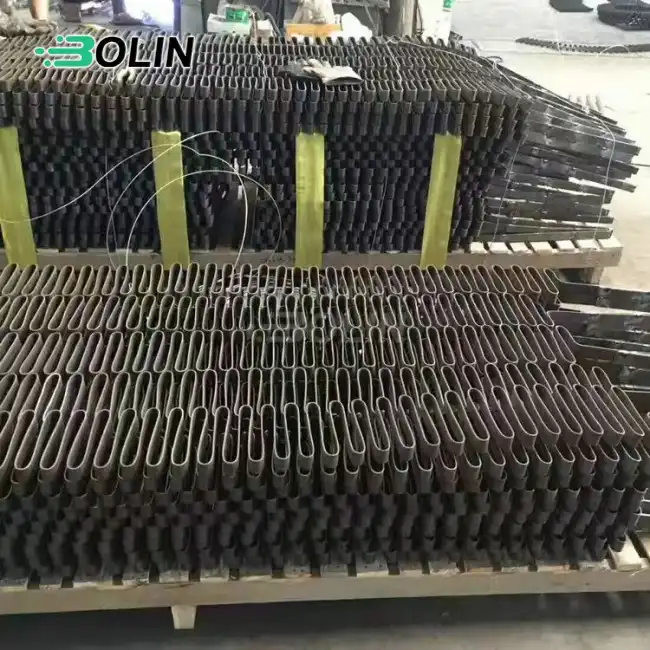
Flat arrangements are ideal for direct radiative heat transfer. Its vast surface area efficiently transmits infrared heat, making it ideal for pit furnaces and continuous heat treatment lines. Although round wires shrink at high temperatures, rectangular wires retain their form. We can create these elements in 3–50 mm widths and 0.3–2.0 mm thicknesses. This lets you pick the ideal ones for power density and mechanical demands. Flat coils can be wound tightly for compact heating modules, whereas sinusoidal or zigzag coils can swiftly fill rectangular furnace chambers.
Corrugated and Formed Element Designs
Over flat patterns, corrugated patterns increase surface area and mechanical stiffness to withstand gravity stresses. Unsupported gaps between mounting points might be longer due to their stiffness. This means big furnace rooms need fewer support insulators. This design works well in tunnel kilns and roller hearth systems, where element replacement is expensive and time-consuming. In forced air heating scenarios, corrugations increase gas turbulentness, improving convective heat transfer. These elements are made from high-quality metals used to build flat bands. They have greater mechanical performance and the same oxidation and temperature resistance.
Comparative Analysis Across Leading Industrial Specifications
Luxury resistance ribbon key performance advantages in industrial environments are:
• Material integrity differs most. High-quality alloys maintain electrical properties throughout time. High-purity raw materials have fewer defects that cause resistance discrepancies and early failure. The grain uniformity, flexibility, and thermal stress cracking resistance of the material depend on its manufacturing.
• Surface finish quality and electrical link reliability depend on surface finish. Smooth, scale-free surfaces equally produce protective oxides and provide good terminal link electrical contact. Ribbons created using modern manufacturing technologies maintain constant electrical characteristics throughout production lots due to tight size tolerances (typically ±3% for thickness and width).
• Temperature cycling endurance distinguishes industrial-grade materials from lower-quality ones. Premium ribbons retain their form and strength after thousands of heating and cooling cycles. Controlling thermal expansion reduces temperature-related mechanical stress. This prolongs product life in batch processing furnaces with fluctuating temperatures.
These performance qualities save care costs, reduce unplanned shutdowns, and improve product quality. Heating parts that fit your demands last longer and function more consistently, giving you a good return on investment.
Safety, Maintenance, and Best Practices in Using Resistance Ribbons
Installing, checking, and maintaining equipment properly ensures equipment longevity and operator safety.
Critical Installation Considerations
Correct placement prevents failures and safety issues. Clay or refractory supports for resistance ribbon prevent electricity from flowing while allowing expansion. The breadth and thickness of the band and the weight and warmth of the elements determine the 75mm to 150mm spacing between supports. Bad electrical contact creates localized warmth that accelerates corrosion; therefore, check terminal connections. We recommend fastening compression connections with an anti-oxidant and retorquing them often over the first few temperature cycles until the materials settle. Leaving space between furnace walls and workpieces prevents short circuits and improves heat transfer. This spacing should be 20–50 mm, depending on power density and furnace environment.
Identifying Wear Indicators Before Failure Occurs
Regular inspections catch issues before they harm equipment or cease production. Dark stains on the surface indicate burning from poor electrical connections or debris buildup. Pulling or stretching might indicate poor support or usage at temperatures exceeding the acceptable range. Resistance testing detects internal corrosion before failure. Values exceeding 10% of the initial value indicate the product is nearing its finish. It is recommended to write down standard resistance values during installation and test them once a month while the system is working. Trend the findings to determine when to replace the system. Too much oxide layer formation indicates that the system was employed in acidic or high-temperature settings.
Maintenance Protocols That Extend Service Life
Repairing heater elements regularly extends their lifespan. Scale and other particles that create hot spots and corrosion may be eliminated by frequent cleaning. Gently mechanically cleaning minor residues with delicate brushes avoids damaging protective oxide layers. Heat cycling weakens terminal connections; they should be examined and tightened periodically. We recommend evaluating the connection's strength every 500 hours for the first year and subsequently annually. Controlling furnace room air quality affects element life. Keeping the proper quantity of oxygen in the air prevents over-oxidation and carburization. Predictive maintenance scheduling can use thermal records instead of calendar dates by tracking working parameters like peak temperatures and cycle counts.
Procurement Insights for Resistance Ribbons: Optimizing Selection for Your Business Needs
Strategically choosing where to buy heating parts requires balancing short-term cost with long-term value. Knowing the most critical buying considerations enables you to properly pick a supplier and maximize specs.
Evaluating Supplier Capabilities and Quality Certifications
Reputable manufacturers have strong quality control methods that ensure all product lots operate the same. Find vendors with ISO 9001 quality management certification and documented chemical, mechanical, and electrical test methodologies. Material certifications should relate alloy composition to approved mill tests that verify nickel, chromium, and aluminum levels. Manufacturing controls dimension homogeneity. Request tolerance details and production statistical process control approaches. Application engineering support from suppliers may help you identify the proper parts and build thermal processing-optimal designs. We've noticed that established manufacturers with decades of expertise have stronger technological tools than commodity vendors that merely provide inexpensive pricing.
Cost-Benefit Analysis for Long-Term Value
The original purchase price is a modest fraction of automobile ownership expenditures. Pricey heating elements last longer, reducing the frequency of replacements and labor expenditures. Compare suppliers using working hour cost instead of unit cost. A resistance ribbon that lasts 5,000 hours at twice the price is preferable to one that lasts 1,500 hours. Consider how much it costs to pause output during element replacement. This is crucial in 24/7 plants because furnace shutdowns might delay flow. Different element designs impact how much it costs to run for thousands of hours—lower mass and greater temperature constancy consume less energy per unit of production. Warranty periods and technical support speed are hard to quantify yet crucial for speed issues.
Custom Engineering for Optimized Furnace Integration
Some heat processing systems require custom-engineered parts, although catalog parts work effectively in most cases. Custom specs match electrical qualities to power source infrastructure, so you don't require equipment to adjust voltage. Size customization maximizes the furnace's heating capacity within its limits. Your atmosphere's chemistry and temperature profile might help you choose metals with protective oxide qualities that suit your needs. We design heating elements for whole furnace systems with thermal processing experts. This ensures they use control systems, atmosphere management technologies, and automated material handling.
Conclusion
Resistance ribbon requirements determine industrial heating equipment's reliability, efficiency, and performance. Power density and dynamic stability depend on a material's size and capacity to tolerate high temperatures and oxidation. You may make sensible purchase decisions that increase heating system performance by understanding these links. Correct installation, frequent maintenance, and strategic supplier agreements may maximize equipment performance and save overall ownership costs. The correct heating element qualities are increasingly crucial to maintain industrial operations' competitiveness as thermal processing demands improve efficiency and process control.
FAQ
What temperature ranges can resistance heating ribbons achieve?
Nickel-Chromium metals may reach 1150°C in acidic settings, whereas Iron-Chromium-Aluminum grades can reach 1425°C. Maximum temperatures depend on element design, atmospheric composition, and use time. Higher temperatures accelerate corrosion and limit element life.
How does ribbon width affect heating uniformity?
Wider bands disperse thermal energy more. This reduces heating zone temperature unevenness. Narrow lengths concentrate heat, which can be useful for some jobs but can cause hot spots if made improperly.
What maintenance schedule should we follow for industrial heating elements?
Check the terminal links and measure resistance monthly for the first year, then every three months. Clean up filth as needed and record hours and peak temps to replace the part before it breaks.
Can heating ribbons operate in controlled atmosphere furnaces?
The Resistance Ribbon functions effectively in oxidizing, reducing, neutral, and vacuum situations when utilized properly. Air chemistry must be considered while choosing an alloy. Iron-Chromium-Aluminum oxidizes better than Nickel-Chromium, which reduces.
Partner with Bolin for Superior Heat Treatment Solutions
Complete thermal processing systems with high-quality heating parts are made by Hebei Bolin Electric Furnace Manufacturing to fulfill your manufacturing demands. Our engineers have installed high-performance resistance ribbon in continuous manufacturing lines, precision drying systems, and heat treatment ovens for many industries. We manufacture pit furnaces, roller hearth systems, brilliant annealing, and nitriding equipment. These systems use heating elements tailored to each application's temperature and environment. As a leading resistance ribbon supplier, we provide experienced advice from planning to installation and support. We can ensure your thermal processing equipment is always up and running this way. Contact our application engineers at 15720259172@163.com to discuss your heat treatment issues and learn how correctly designed heating elements may help you manufacture more and better goods.
References
1. Davis, J.R. (2001). ASM Specialty Handbook: Nickel, Cobalt, and Their Alloys. ASM International, Materials Park, Ohio.
2. Kanthal AB Engineering Division (2018). Handbook for Resistance Heating. Hallstahammar, Sweden: Kanthal AB Technical Publications.
3. Richardson, M.J. & Watkinson, W.P. (1997). Electric Resistance Heating Elements: Design and Application. Industrial Heating Equipment Association Technical Monograph Series.
4. American Society for Testing and Materials (2019). ASTM B344-19: Standard Specification for Drawn or Rolled Nickel-Chromium and Nickel-Chromium-Iron Resistance Heating Wire and Resistance Wire. West Conshohocken, PA.
5. Chen, L., Wang, S., & Zhang, H. (2020). Oxidation behavior and protective mechanisms of FeCrAl heating alloys in industrial atmospheres. Journal of Materials Engineering and Performance, 29(4), 2156-2167.
6. Harper, C.A. (2004). Handbook of Materials for Product Design (3rd ed.). McGraw-Hill Professional, New York: Chapter 12, High-Temperature Resistance Heating Materials.
Learn about our latest products and discounts through SMS or email