- English
- French
- German
- Portuguese
- Spanish
- Russian
- Japanese
- Korean
- Arabic
- Irish
- Greek
- Turkish
- Italian
- Danish
- Romanian
- Indonesian
- Czech
- Afrikaans
- Swedish
- Polish
- Basque
- Catalan
- Esperanto
- Hindi
- Lao
- Albanian
- Amharic
- Armenian
- Azerbaijani
- Belarusian
- Bengali
- Bosnian
- Bulgarian
- Cebuano
- Chichewa
- Corsican
- Croatian
- Dutch
- Estonian
- Filipino
- Finnish
- Frisian
- Galician
- Georgian
- Gujarati
- Haitian
- Hausa
- Hawaiian
- Hebrew
- Hmong
- Hungarian
- Icelandic
- Igbo
- Javanese
- Kannada
- Kazakh
- Khmer
- Kurdish
- Kyrgyz
- Latin
- Latvian
- Lithuanian
- Luxembou..
- Macedonian
- Malagasy
- Malay
- Malayalam
- Maltese
- Maori
- Marathi
- Mongolian
- Burmese
- Nepali
- Norwegian
- Pashto
- Persian
- Punjabi
- Serbian
- Sesotho
- Sinhala
- Slovak
- Slovenian
- Somali
- Samoan
- Scots Gaelic
- Shona
- Sindhi
- Sundanese
- Swahili
- Tajik
- Tamil
- Telugu
- Thai
- Ukrainian
- Urdu
- Uzbek
- Vietnamese
- Welsh
- Xhosa
- Yiddish
- Yoruba
- Zulu
How Can Custom Thermocouples Enhance Industrial Process Control?
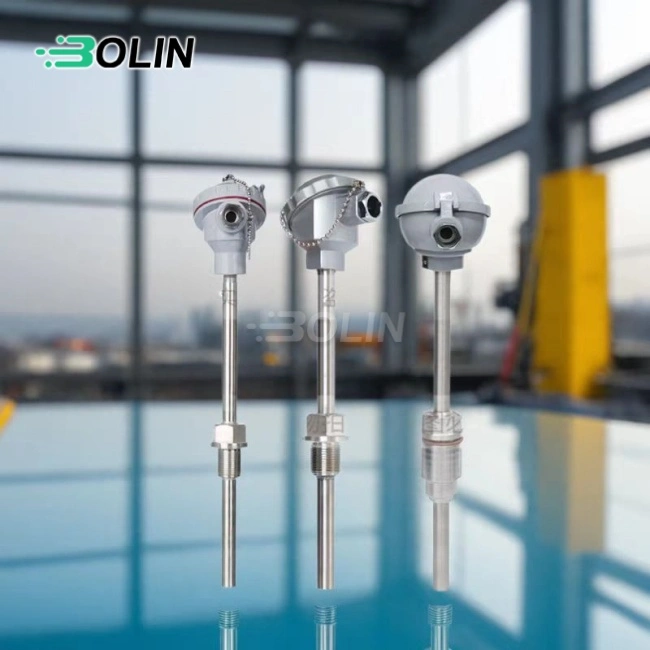
Custom thermocouples improve industrial process management by measuring temperature precisely to your demands. Size, endurance, and accuracy are generally sacrificed with standard sensors. These specialist instruments are designed to endure extreme heat, corrosive conditions, and unusual mounting configurations. Custom thermocouples eliminate guesswork for reliable measurements in heat treatment processes up to 1300°C, with ±1.5°C accuracy. They function in furnaces, molten metal, and chemical processing systems where off-the-shelf products don't. This provides reliable data for quality control and efficient operations.
Understanding Custom Thermocouples and Their Role in Industrial Processes
Custom thermocouples differ greatly from regular instruments. Standard thermocouples perform well for normal purposes but not for industrial applications. Some sensors push your process to match their boundaries, while these precise instruments are developed from the bottom up to fulfill specific needs.
The Working Principle Behind Temperature Measurement
Temperature is estimated using the Seebeck effect. Two metal lines intersect at the detector tip. A tiny charge forms at this junction when heated. This power is temperature-dependent. Workplace issues cause problems. Standard sensors have standard sizes and cover materials. They fail when corrosive gases damage common metals, restricted space pushes probes at strange angles or lengths, rapid flows induce vibration and mechanical stress, or thermal shock from short heating and cooling cycles.
Common Thermocouple Types and Customization Options
Type K thermocouples are popular because they can function from several hundred degrees below zero to over 2000°F. In most chemical environments, these monitors are used to assess high temperatures in chemical, vehicle engine, and energy production. Although they can only function in a restricted temperature range, Type J thermocouples work better in low-pressure situations than Type K ones. In the food industry, where process temperatures dip well below zero, and precise readings are crucial for product safety, Type T thermocouples are superior at monitoring very low temperatures. Custom manufacturing carefully selects and engineers materials to solve each need. Sheath selection is crucial. 310 stainless steel may oxidize up to 1200°C; however, ceramic sheaths can resist chemical breakdown in carburizing or nitriding furnaces. Insulation judgment matters too. Compacted magnesium oxide fills the thermocouple wire-cover gap. This material swiftly transfers heat to the monitoring joint and blocks electricity even at high temperatures. Your installation demands define the terminating head style, protective tube arrangement, and connection type. Compression fittings are excellent for frequent repairs, whereas flanged connections prevent controlled atmosphere heater leaks.
Material Selection for Extreme Environments
Sensor durability and accuracy depend on material selection. The durable ceramic and stainless steel design can withstand tough industrial heat treatment conditions. Inconel, Tantalum, and Molybdenum can withstand chemical assaults that would destroy normal materials. Ground, ungrounded, or open junctions impact response time and electrical separation. Ungrounded junctions isolate controller signals from ground loops and electromagnetic interference. This is crucial in high-power or motorized areas.
Why Choose Custom Thermocouples Over Standard Sensors?
Limited off-the-shelf monitors make process control tougher. Fixed setups don't suit all systems. Extreme heat activities can't utilize custom thermocouples since they only work at certain temperatures. People have to discover workarounds that create measurement errors or decrease sensor life since they can't be adjusted to intricate industrial settings.
Enhanced Accuracy and Durability
Special Limits of Error wire has half the tolerance of standard wire due to its pure metals. This reduces measuring uncertainty and improves consistency. This precision is crucial when temperature fluctuations of a few degrees impact metal properties or product quality. Precision levels of ±1.5°C provide process control that traditional sensors cannot match. Cover materials must be suitable for the circumstances to last. Ceramic-protected sensors can measure accurately during soak and quench cycles in carbon-rich carburizing conditions.
Flexibility Tailored to Process Constraints
Customized designs can accommodate unusual mounting shapes. Custom-length sensors match furnace depth. This places measuring points in the most critical temperature-control locations. Multiple measurements provide uniform heating across the item's cross-sections. This eliminates hot or cold regions that might impair product quality. Standard sensors can't function in high-pressure environments since they need custom-engineered wall widths and compression fittings that can take above 10,000 PSI.
Comparison with Alternative Temperature Sensors
For some jobs, resistance temperature detectors and thermistors can replace thermocouples, but not in many commercial situations. RTDs are accurate at normal temperatures but break rapidly and cost a lot at heat treatment temperatures. Thermistors are sensitive in tiny temperature ranges but can't tolerate a furnace's extremes. Specialized temperature sensors are durable, fast, and perform in a broad range of temperatures. Industrial environments are too severe for other sensors.
How to Integrate Custom Thermocouples Into Your Industrial Process Control System
Merging well maximizes temperature tracking benefits. Installing, calibrating, and maintaining custom thermocouples correctly assures reliable data and lets process controllers make informed decisions.
Installation Best Practices
Understanding your process demands is the initial site preparation stage. Find the most critical temperature points that impact product quality or tool safety. Diverse mounting methods suit diverse needs. Compression valves protect attachments and make maintenance and repair easier. Hermetic coverings require flanged linkages for controlled atmosphere or vacuum procedures. Thermorewells protect sensors from process contact while allowing them to respond to temperature changes. Wiring greatly affects signal quality. Shielded extension lines prevent electromagnetic radiation from disrupting low-voltage thermocouple signals. Ground loops that cause measurement errors are eliminated by correct grounding. Junction boxes near sensors reduce wire runs and noise.
Calibration and Accuracy Verification
With NIST-traceable calibration, multi-point temperature verification over the defined operating range is feasible. This procedure ensures sensor accuracy before installation and establishes a tracking standard. A lot of heat or corrosion causes metal loss and drift. Every year, sensors exceeding 1200°C should be calibrated to detect any deterioration before measurement errors impair product quality. Electrical isolation of the element and sheath is confirmed by 500VDC insulation resistance testing. This verifies sensor stability after installation or repair.
Maintenance Considerations for Ongoing Reliability
Its longevity depends on temperature and climatic harshness. Sensors may fail after months of usage in extreme situations, but they should last for years in moderate conditions. Sheath deterioration, connection tightness, and insulator resistance should be visually inspected regularly. Radiographic checking uses X-ray imaging to evaluate interior joint welds and locate magnesium oxide insulating holes that might break early. Helium leak testing ensures airtight sealing in high-pressure or vacuum settings, when process contamination or sensor failure might cost a lot and stop production.
Procurement Considerations for Custom Thermocouples in B2B Settings
Industrial buyers of custom thermocouples confront distinct challenges. Considering pricing, seller selection, and shipping simplifies the purchase process and ensures you acquire sensors that fit your demands and arrive on time.
Pricing Factors and Cost Optimization
Material selection affects unit costs. Platinum-rhodium combinations cost a lot but can work up to 1700°C in vacuum or inert atmospheres for Type R, S, or B thermocouples. Customization impacts production costs. Simple dimension modifications add tiny premiums, while complex sheath forms or connection designs require longer to create. Order number provides cost savings. By increasing production efficiency and reducing material costs, buying in bulk decreases unit costs. Blanket buy orders with scheduled releases enable you to budget while having several inventory possibilities.
Selecting Reliable Manufacturers
Certifications demonstrate quality and control in production. ISO 9001 certifies systematic quality management. Industrial certifications like NADCAP for aircraft or nuclear quality assurance requirements demonstrate expertise. Quality assurance should include thorough testing. NIST-traceable calibration, radiography, helium leak testing, insulation resistance verification, and measurement validation must be checked. These inspections ensure sensors satisfy standards before shipment. Delivery history matters when production plans depend on sensors arriving on schedule. Check the supplier's on-time deliveries, proper orders, and technical support history.
Global Sourcing and Logistics Solutions
Maker and customisation level determine minimum order quantities. Some vendors accept single orders for prototypes or replacement sensors, while others impose minimums that are greater than needed. Lead times vary on product customization and production capacity. Complex bespoke designs take months to arrive after ordering, while standard revisions take weeks. Maintaining safety stock and establishing supplier relationships reduces downtime. When domestic vendors can't satisfy your technical or cost criteria, you can buy from other nations if you know the import restrictions, shipping methods, and customs clearance process.
Real-World Impact: Case Studies on Custom Thermocouples Enhancing Industrial Control
Real-world examples illustrate that custom thermocouples may alleviate workplace issues and boost company outcomes.
High-Temperature Manufacturing Success
Sensors broke in 1400°C ovens at a big forging company. Rusty sheaths caused measurement drift and joint failure in Type K thermocouples after a few weeks. Switching to Type S sensors with ceramic sheathing increases service life to over six months and improves measurement accuracy from ±5°C to ±1.5°C. It was simpler to monitor the entire process, which reduced waste by 12% and improved heating accuracy, saving energy. Specialized sensors reduced waste and maintenance, paying for themselves in three months.
Corrosive Chemical Processing Reliability
Sensors failed fast at a chlorine chemical business. Corrosive atmospheres attacked standard stainless steel sheaths within days, requiring regular sensor replacement shutdowns. Inconel 600 sheath material and ungrounded connection designs were needed to build a solution to corrosion-related electrical leakage. Standard sensors failed in days, whereas custom thermocouples worked for over a year. Production consistency improved, and unexpected downtime that cost thousands of dollars disappeared. Sensor failures prompted process adjustments that led to rejected batches; therefore, consistent temperature measurements assisted quality control.
Vacuum Furnace Application Optimization
An aviation parts manufacturer wanted vacuum heat treatment monitors that wouldn't let impurities ruin the surface finish. Normal sensors with normal insulators released volatile compounds that contaminated workpieces under vacuum. Specifying vacuum-compatible terminal parts and high-purity magnesium oxide wire eliminated contamination. The furnace's exact geometry was used to create custom probe lengths to set measurement sites for even heating. These improvements allowed the maker to fulfill demanding aeronautical standards. This opened new contract opportunities that standard sensing equipment couldn't handle.
Conclusion
Good business process control requires accurate temperature measurement. By tailoring custom thermocouples to your specific operational needs, you avoid the issues with standard sensors. Choosing the proper materials, designing the connections, and checking the measurements ensures dependable performance in high-heat, hazardous, and severe mechanical settings where off-the-shelf choices fail. Specialized temperature measurement improves product quality, downtime, sensor life, and process efficiency. As heat treatment processes get more intricate and quality requirements tighten, being able to detect temperatures accurately and consistently under difficult conditions is useful and important to stay competitive.
FAQ
What temperature range can specialized thermocouples handle?
Depending on calibration and cover material, custom thermocouples can function at -200°C to 1700°C. Type K sensors typically operate from -200°C to 1260°C. Platinum-rhodium sensors type R, S, and B can withstand 1700°C in neutral atmospheres. No oxidation defense is needed since molybdenum sheaths allow greater temperatures in low-oxygen or high-reduction environments.
How does junction type affect sensor performance?
Because the measuring junction is directly attached to the sheath, grounded junctions react faster to temperature changes. Ungrounded junctions prevent ground loops and interference. Electrically noisy areas require this. Exposed joints provide the fastest response time, but mechanical damage and metal-eating media must be avoided. The optimal junction design depends on your software.
What maintenance schedule should we follow?
Sensors over 1200°C or in corrosive environments should be calibrated annually to detect metal loss drift. Visual inspections before each manufacturing cycle identify damage that needs immediate repair. In routine maintenance, insulating resistance is checked for electrical integrity. In moderate temperatures and non-corrosive air, repair periods may be 18–24 months based on prior performance.
Partner with Bolin for Advanced Temperature Measurement Solutions
Hebei Bolin Electric Furnace Manufacturing provides comprehensive heat treatment services, including production-process temperature control. As experienced custom thermocouple providers, we know that precise temperature measurement is essential for hardening, annealing, and carburizing. Our technical staff collaborates with your process expertise to design sensor setups that fulfill all your demands, from material selection to installation. We've been a trusted partner for industrial manufacturers that need specialized heat processing systems and reliable automation equipment since 2022. To ensure your temperature measuring infrastructure is accurate and durable, we offer entire solutions from design and building to after-sales support. Contact our experts at 15720259172@163.com to learn how unique sensing solutions may improve your processes and create more.
References
1. Johnson, M. & Williams, R. (2021). Temperature Measurement in Industrial Processes: Principles and Applications. Industrial Press Inc., New York.
2. Chen, L. (2020). "Material Selection for High-Temperature Thermocouple Applications." Journal of Thermal Analysis and Engineering, Vol. 45, No. 3, pp. 287-304.
3. Anderson, K. T. (2022). Heat Treatment Equipment Design and Optimization. American Society for Metals International, Materials Park, Ohio.
4. Rodriguez, S. & Thompson, D. (2019). "Calibration Standards and Accuracy Verification for Industrial Temperature Sensors." Measurement Science and Technology, Vol. 30, No. 12, pp. 1250-1268.
5. National Institute of Standards and Technology (2021). Temperature Measurement Guidelines for Industrial Applications. U.S. Department of Commerce, Washington, D.C.
6. Wilson, P. E. (2020). "Corrosion Resistance of Thermocouple Sheath Materials in Chemical Processing Environments." Corrosion Engineering Journal, Vol. 76, No. 8, pp. 712-729.
Learn about our latest products and discounts through SMS or email