- English
- French
- German
- Portuguese
- Spanish
- Russian
- Japanese
- Korean
- Arabic
- Irish
- Greek
- Turkish
- Italian
- Danish
- Romanian
- Indonesian
- Czech
- Afrikaans
- Swedish
- Polish
- Basque
- Catalan
- Esperanto
- Hindi
- Lao
- Albanian
- Amharic
- Armenian
- Azerbaijani
- Belarusian
- Bengali
- Bosnian
- Bulgarian
- Cebuano
- Chichewa
- Corsican
- Croatian
- Dutch
- Estonian
- Filipino
- Finnish
- Frisian
- Galician
- Georgian
- Gujarati
- Haitian
- Hausa
- Hawaiian
- Hebrew
- Hmong
- Hungarian
- Icelandic
- Igbo
- Javanese
- Kannada
- Kazakh
- Khmer
- Kurdish
- Kyrgyz
- Latin
- Latvian
- Lithuanian
- Luxembou..
- Macedonian
- Malagasy
- Malay
- Malayalam
- Maltese
- Maori
- Marathi
- Mongolian
- Burmese
- Nepali
- Norwegian
- Pashto
- Persian
- Punjabi
- Serbian
- Sesotho
- Sinhala
- Slovak
- Slovenian
- Somali
- Samoan
- Scots Gaelic
- Shona
- Sindhi
- Sundanese
- Swahili
- Tajik
- Tamil
- Telugu
- Thai
- Ukrainian
- Urdu
- Uzbek
- Vietnamese
- Welsh
- Xhosa
- Yiddish
- Yoruba
- Zulu
How Can Furnace Bottom Plates Reduce Energy Costs in Production?
Furnace bottom plates reduce energy expenses by enhancing thermal retention and hearth heat distribution. These plates hold their form at high temperatures, preventing heat loss that would increase fuel or power usage. High-quality heat-transferring metals reduce temperature fluctuations. This reduces energy expenditures and improves industrial efficiency.
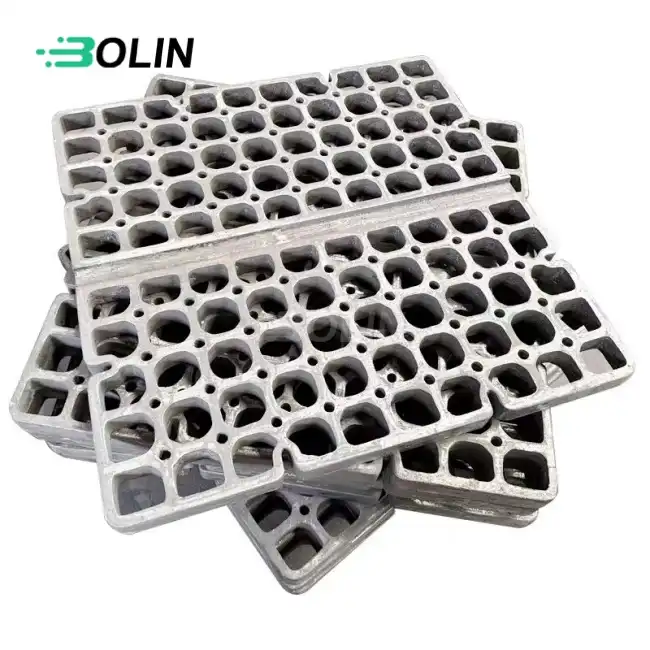
Understanding Furnace Bottom Plates and Their Energy Impact
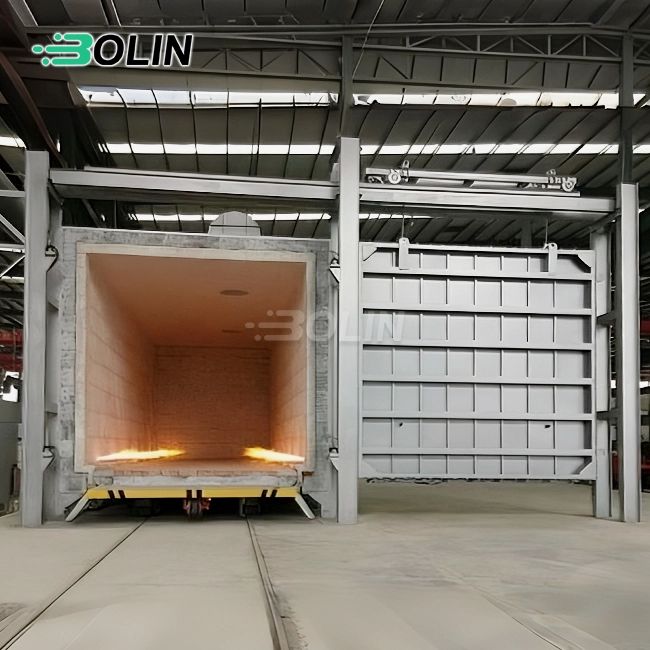
The basis of your heat processing system determines energy transfer to workpieces. Work is hard in industrial furnaces. The furnace bottom plate supports your heat treatment equipment. It handles above 5,000 kg and 1200°C temperatures. This portion directly affects how heat moves through your system and whether it reaches parts or escapes.
The Role of Material Composition in Heat Retention
Furnace bottom plates conserve or lose energy depending on their material. Traditional cast iron plates may bear weight, but rust erodes the surface and makes heat distribution difficult. Steel variants are stronger mechanically but not robust at high temperatures, essential for long-term usage over 1000°C. New heat-resistant metals improve efficiency. We use high Cr-Ni alloys with 18% chromium and 8–12% nickel in our plates. These metals resist oxidation and transmit heat well. Oxide scales, insulators that make heater elements work harder and require more energy to attain the appropriate temperature, are prevented by this combination. These metals don't distort when temperatures change fast because of their regulated thermal expansion rate. They stay in touch with the heating elements and eliminate air gaps that reduce heat transfer.
How Structural Integrity Affects Operational Costs
Twisted or fractured furnace bottom plates create hot and cold zones in your workplace. Cycle durations are extended when cold zones do not achieve the proper temperature due to temperature variations. This immediately increases batch energy usage. When surface flatness decreases, some parts get too much heat and others too little. Much scrap wastes energy and resources. In engineering planning, we employ finite element analysis to account for static loads and thermal stress. Therefore, a furnace bottom plate is built that stays flat for 3–5 years while being hardened and polished. This dimensional stability ensures consistent metallurgical results and lowers the energy needed to compensate for temperature errors. Maintaining a surface temperature differential of ±5°C eliminates the need to exceed target temperatures to prevent cold patches.
Key Factors Affecting Furnace Bottom Plate Performance Related to Energy Costs
Material quality alone doesn't ensure energy efficiency; proper installation and maintenance are needed. When your furnace bottom plate meets the furnace construction, heat loss routes might breach even the toughest metallurgical requirements.
Comparing Alloy Options for Long-Term Efficiency
Materials need distinct qualities for different purposes. ASTM A297 Grade HU cast iron works well below 900°C and is inexpensive. In high-intensity heat cycles, its creep-rupture strength is insufficient, producing premature sagging and greater replacement costs than the initial savings. High-temperature metals like 1.4848 (GX40CrNiSi25-20) have enhanced oxidation resistance due to self-healing Cr₂O₃ layers. While maintaining heat performance during service life, this innovation extends replacement intervals. Silicon concentration of 1.5%–2.5% improves oxidation resistance and casting flexibility. Too much silicon can embrittle, reducing mechanical durability under heat shock. Due to decreased energy usage and longer maintenance intervals, modern alloys pay for themselves in 18–24 months. When a plate maintains its thermal efficiency, it doesn't lose performance; thus, furnace personnel don't have to raise power output to boost heat transmission.
Installation Techniques That Prevent Energy Loss
Seating your furnace bottom plate against the furnace shell creates a key barrier that keeps outside air out of your controlled environment. In pit furnace designs, rabbet joints or gasket grooves facilitate heat buildup while maintaining air purity. Oxygen enters through gaps in this seal, speeding plate and workpiece burning. Hot air escaping through these perforations wastes energy. Batch-type installations benefit from modular plate designs. Parts of the furnace bottom plate can be changed without replacing the whole unit. This reduces downtime and heat cycling damage to neighboring parts. This approach maintains the broken-in thermal characteristics of undamaged parts while addressing localized wear, increasing system efficiency throughout full replacement cycles.
Maintenance Practices That Sustain Thermal Performance
Regular inspections detect wear and tear before it affects energy usage. Monitoring surface oxidation determines when scaling will hinder heat transmission. This allows maintenance to be scheduled instead of shutting down abruptly, which disrupts productivity. Non-destructive testing with liquid penetrant or ultrasonography can detect under-surface fractures before they cause structural failure. The fundamental purpose of preventative maintenance is to maintain heat circulation between the furnace bottom plate and heating components. Oxides and particles form insulating layers that reduce heat transfer by 15–30%. The furnace must utilize extra power to compensate. Regular cleaning removes these barriers and restores heat conductivity without waiting for performance measurements to diminish.
Advanced Furnace Bottom Plate Solutions for Energy Cost Reduction
Energy-efficient furnace bottom plate designs have emerged as heat processing equipment technology has advanced. These advancements consider heat transfer science and manufacturing technology.
Innovations in Thermal Barrier Coatings
Modern surface techniques add layers that affect heat-resistant metals' properties. Ceramic-based thermal barrier layers on the furnace-facing surface prevent radiant heat from leaking to the building below, heating your work. These items have coverings that cling after hundreds of heat cycles at temperatures above 1300°C. Different upper-skin treatments work better. Carbon absorption affects the metal characteristics of your furnace bottom plate over time, but anti-carburizing coatings prevent it. The base's thermal expansion remains constant throughout its service life. This stability prevents the material from bending as the top layers get carbon and expand faster than the base.
Composite and Layered Material Approaches
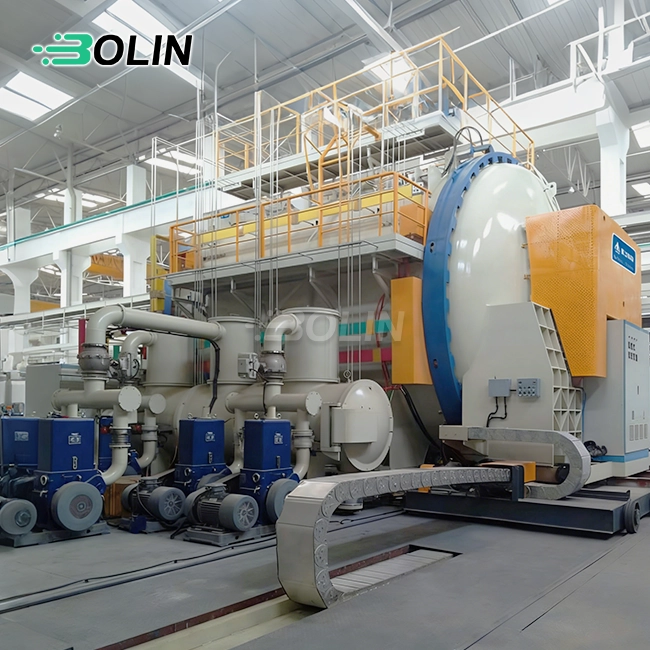
Modern engineering allows furnace bottom plates to be created from functionally graded materials with the optimum attributes at different levels. The load-bearing core uses alloys with mechanical strength and creep resistance, while the thermal contact surface uses alloys with thermal conductivity and oxidation resistance. This layered approach achieves performance that uniform materials can't. New vacuum furnace water-jacketed designs save shell constructions and maintain metallurgical cooling rates. The plate assembly's cooling ducts remove heat from the furnace's outside. This reduces insulation and shell structural heat burden. This controlled heat removal reduces energy consumption and protects temperature-sensitive items below fire level.
Documented Performance Improvements
Business case studies demonstrate how these technological advances have transformed reality. A Midwest auto parts manufacturer replaced cast iron furnace bottom plates with advanced alloy plates with heat barrier coatings along their batch furnace line. Natural gas utilization was reduced by 23% per heat-treat cycle over a year. The investment was compensated for in 22 months by energy savings. Improving temperature constancy reduced scrap rates by 18%, adding to the economic benefit beyond energy savings. Different burner setups and processes provide the same results. Moving to modular high-alloy plates with superior heat conductivity reduced continuous pusher furnace transmission gear production energy by 19%. The installation increased maintenance intervals from 18 to 36 months, reducing new part costs and furnace bottom plate rebuild time.
Procurement and Supplier Selection for Optimal Energy Saving Furnace Bottom Plates
You need a plan that evaluates vendors based on their technical expertise, product quality, and long-term support to receive high-performance furnace bottom plate parts. Because these products are so intricate, purchase requires more than price comparison.
Technical Evaluation Criteria for Buyers
Specification papers help you compare, but comprehending a material's real-world consequences distinguishes successful buying from simple buying. A metal's chromium and nickel content dictates its oxidation resistance, but its microstructure during casting and heat treatment determines its thermal cycle performance. Ask for metallurgical certifications and third-party material evidence to ensure your parts are manufactured of the proper materials. Dimensional restrictions affect system performance and heat retention. Flatness specifications should contain measuring standards and testing techniques, not just numbers. A plate that is flat to 3 mm will behave differently in real life if measured across multiple reference planes or under varied stress conditions. When measuring procedures are explained effectively, fit and performance issues are avoided.
Examine load size figures carefully. Static load capacity provides little information without load variations over time at operating temperature. A furnace bottom plate that supports your weight at normal temperature may droop after 1,000 hours at 1150°C if the metal is weak. Ask for creep-rupture statistics under your operating circumstances to see if the part will maintain its dimensions for its intended lifespan.
Supplier Capabilities and Credibility Assessment
Manufacturing competence indicates if a company can consistently deliver parts that satisfy your expectations. Capable producers distinguish themselves from resellers with foundry equipment capacity, quality control infrastructure, and skilled assistance. Visit the site or look at documentation that your source has the casting furnaces, heat treatment facilities, and inspection instruments to create high-quality furnace bottom plate parts. Customization is crucial when standard designs don't fit your furnace. A provider with an engineering team can modify plate designs to match heating element plans, atmosphere sealing demands, or material handling system gaps. Beyond the actual part, our design support service ensures it works with your other tools.
Warranty periods demonstrate the manufacturer's confidence in product life. Coverage times should match estimated service life, and terms should define regular wear and tear and material or workmanship flaws. Instead of assuming the provider would reply quickly, knowing how to make a claim and how long it will take lets you plan for the worst.
Building Long-Term Procurement Relationships
Dealing with reliable furnace bottom plate producers can stabilize your supply chain and help you meet production goals. Preferred supplier agreements can achieve better rates and priority manufacturing sites during industry peak demand through volume pledges. These linkages make it easier to seek professional advice for performance issues or facility expansion faster. Working with trusted sources that understand your production cycles and planning horizons simplifies lead time management. Custom castings for massive furnace bottom plates require 4–8 weeks to supply, plus time for testing and certifications. Suppliers who know what you need may carry standard designs or raw materials manufactured particularly for you, speeding up emergency replacements.
Troubleshooting and Lifespan: Maintaining Furnace Bottom Plates to Sustain Energy Savings
Even the finest furnace bottom plate parts wear down after repeated mechanical and thermal stress. By recognizing these indicators early and acting, you may conserve energy and prevent significant failures that harm neighboring furnace parts or disrupt production.
Identifying Common Performance Degradation Signs
Surface fractures occur in stressed places where temperature changes create growth imbalances. Small surface cracks under 25 mm may last the product's lifetime. Cracks that lengthen between tests indicate failure and need to be repaired. Liquid penetrant testing during window repairs reveals fissures before damage. Warping causes random workpiece heating or environmental control issues. Measure the flatness of a surface using straight lines or laser scanning instruments to assess how much it has changed and how long it will be functional. Plates that flex more than 6 mm across a 1-meter span should be changed every 3–6 months to prevent quality issues and energy waste. Too much oxidation causes thick scales that peel or shatter when temperature changes. Heat transmission is less effective, and treated items may be contaminated. The protective oxide layer breaks when the scale is thicker than 2 mm or flaking. The degeneration will accelerate until replaced.
Extending Service Life Through Preventive Actions
Verifying the temperature profile during typical activities detects modest thermal performance variations before they affect product quality. Thermocouples on the fire surface reveal hot and cold areas, which may indicate plate failure or heating element issues. Plotting this data against time shows how efficiency is progressively declining, something you may not realize until the scrap rate rises. Controlling heater startup and shutdown heating and cooling reduces thermal shock stress, which accelerates fracture growth. Lowering the rate of temperature change from 400°C to 800°C to less than 150°C per hour prevents thermal stress peaks, when many alloys become less flexible.
Quality of atmospheric control affects furnace bottom plate lifespan. Limiting carbon potential in carburizing atmospheres prevents too much carburization, which makes the surface layer harder and more fragile, and too little decarburization, which makes the material softer and weaker at high temperatures. Regular atmosphere analysis and control system tuning maintain the furnace bottom plate and process quality.
Determining Economical Replacement Timing
A damaged furnace bottom plate replacement or use depends on more than its thickness. Energy usage patterns reveal productivity loss. If furnace power demands increase by 15% or more when a new plate is installed, the greater cost of running the furnace typically makes replacement worthwhile, even if the structure is still sturdy. Production quality metrics provide another option. Temperature consistency becomes too low for comfort as scrap rates rise or process windows shrink. When you include in scrapped parts and lost production from reduced throughput, replacing the part frequently yields a decent ROI in weeks rather than months.
Some safety considerations trump business ones. Plates with through-thickness cracks or deflection that might contact heating elements or instruments below the fire level should be replaced immediately, even if they still have service life. Safety issues should guide your repair team's part disposal guidelines, not cost reductions.
Conclusion
In making heat treatment operations more energy efficient, adequate thermal transmission from your heating system to treated workpieces is essential. This energy exchange relies on the furnace bottom plate; therefore, the quality of the materials, how it is created, and how often it is maintained all affect running expenses. High-chromium and nickel metals retain heat better and disperse evenly than typical materials. If you pick the correct vendor, you can be confident your components will fulfill performance criteria and create support ties to make mending and buying easier. Strategic maintenance ensures thermal efficiency throughout service life. This eliminates the steady efficiency loss that boosts energy expenditures and reduces product quality.
FAQ
What causes premature warping in hearth bases?
Warping usually occurs when heat variations exceed the underlying furnace bottom plate creep strength at operating temperature. Hot patches from uneven heating element performance generate localized expansion, and weak materials can bend under thermal and mechanical force. Thermal shock accelerates permanent deformation when temperatures fluctuate faster than 300°C per hour while beginning or stopping.
Can minor cracks be repaired economically?
Small surface fractures under 50 mm long that aren't spreading can be welded back together using matching filler materials like ER310. The plate must be heated to 300–400°C before welding and undergo a stress-relieving heat treatment to prevent additional fractures. Repairs degrade the structure; therefore, this strategy is only effective for minor damage if replacement dates can be worked around production plans.
How does silicon content affect long-term performance?
Silicon helps stable surface oxides develop, making it weatherproof. Oxides shield the furnace bottom plate from air damage. Silicon values between 1.5% and 2.5% are ideal. Silicon above 3% degrades the material, making it more susceptible to temperature shock and mechanical impact. The element also smooths casting, allowing for complex forms with equal densities. This gain isn't as substantial for simple plate forms.
Partner With Bolin for Superior Heat Treatment Equipment Solutions
Complete heat processing systems from Hebei Bolin Electric Furnace Manufacturing Co., Ltd. save energy and ensure production works smoothly. High-tech heat-resistant metals in our furnace bottom plate designs have been tested in demanding industrial applications and can bear loads of over 5,000 kg at 1200°C. To reduce energy usage in heat treatment operations, we provide entire solutions from consultation to installation and technical support. Our technical team designs specific hearth configurations with your production specialists to match your process variables and job demands. Quality control methods including chemical composition analysis, non-destructive testing, and dimensional proof ensure every part fulfills performance criteria before shipping. As a leading furnace bottom plate supplier, we can handle urgent replacement demands and planned building expansions without significant lead times. Our heat processing expertise can help you save money on energy and improve metal outcomes. Contact our technical sales team at 15720259172@163.com.
References
1. Davis, J.R. (Ed.). ASM Specialty Handbook: Heat-Resistant Materials. ASM International, Materials Park, Ohio, 1997.
2. Kattamis, T.Z. and Mehrabian, R. "Microstructure and High-Temperature Properties of Cast Heat-Resistant Alloys." Metallurgical Transactions A, Vol. 12A, 1981, pp. 1589-1598.
3. Lai, G.Y. High-Temperature Corrosion and Materials Applications. ASM International, Materials Park, Ohio, 2007.
4. Peckner, D. and Bernstein, I.M. Handbook of Stainless Steels. McGraw-Hill, New York, 1977.
5. Sims, C.T. and Hagel, W.C. The Superalloys: Critical Survey of High-Temperature High-Performance Alloys. John Wiley & Sons, New York, 1972.
6. Wright, I.G. and Pint, B.A. "An Assessment of the High-Temperature Oxidation Behavior of Fe-Cr Steels." Oxidation of Metals, Vol. 73, 2010, pp. 207-242.
Learn about our latest products and discounts through SMS or email