- English
- French
- German
- Portuguese
- Spanish
- Russian
- Japanese
- Korean
- Arabic
- Irish
- Greek
- Turkish
- Italian
- Danish
- Romanian
- Indonesian
- Czech
- Afrikaans
- Swedish
- Polish
- Basque
- Catalan
- Esperanto
- Hindi
- Lao
- Albanian
- Amharic
- Armenian
- Azerbaijani
- Belarusian
- Bengali
- Bosnian
- Bulgarian
- Cebuano
- Chichewa
- Corsican
- Croatian
- Dutch
- Estonian
- Filipino
- Finnish
- Frisian
- Galician
- Georgian
- Gujarati
- Haitian
- Hausa
- Hawaiian
- Hebrew
- Hmong
- Hungarian
- Icelandic
- Igbo
- Javanese
- Kannada
- Kazakh
- Khmer
- Kurdish
- Kyrgyz
- Latin
- Latvian
- Lithuanian
- Luxembou..
- Macedonian
- Malagasy
- Malay
- Malayalam
- Maltese
- Maori
- Marathi
- Mongolian
- Burmese
- Nepali
- Norwegian
- Pashto
- Persian
- Punjabi
- Serbian
- Sesotho
- Sinhala
- Slovak
- Slovenian
- Somali
- Samoan
- Scots Gaelic
- Shona
- Sindhi
- Sundanese
- Swahili
- Tajik
- Tamil
- Telugu
- Thai
- Ukrainian
- Urdu
- Uzbek
- Vietnamese
- Welsh
- Xhosa
- Yiddish
- Yoruba
- Zulu
What Safety Measures Should You Consider for Industrial Gas Furnaces?
Always prioritize safety while utilizing an industrial gas furnace. The key priorities should be gas leak detection systems, flame watch rules, and international safety standards like NFPA 86 and ISO 13577 compliance. To protect people and equipment, use advanced combustion control systems, real-time temperature monitoring, and emergency shutdown. Monitoring temperature and following maintenance procedures can prevent serious breakdowns. Giving your operators the correct training will make them more safety-conscious, reducing building accidents.
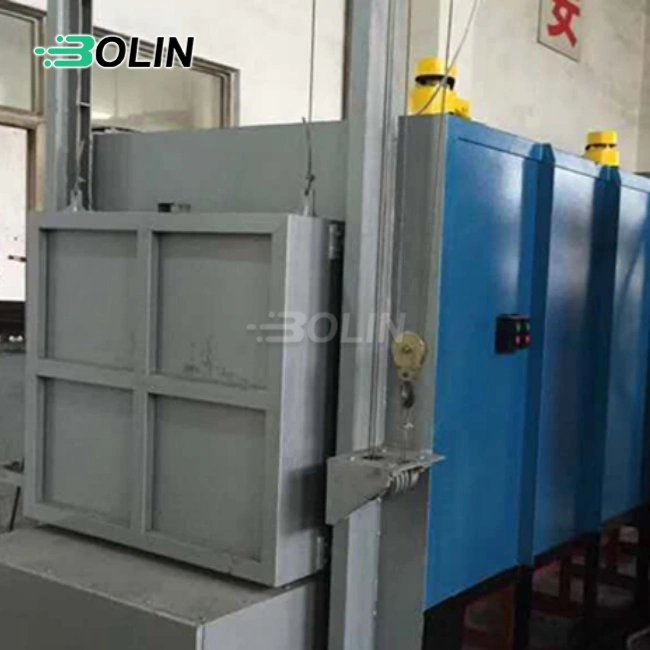
Understanding Industrial Gas Furnace Safety Risks
Gas-fired thermal processing systems offer substantial dangers that require immediate attention and control. A heater that converts natural gas, propane, or LPG into regulated high temperatures has several dangers that can quickly become dangerous.
The Real Cost of Gas Leak Incidents
Gas leaks are a major heating risk. A hidden leak can swiftly accumulate explosive concentrations, making devastating blasts possible. OSHA reports that 22% of industrial facility incidents include flammable gases. Deaths and multimillion-dollar damages are common in these accidents. Without proper monitoring systems, these dangers increase because your facility is near gasoline lines, storage tanks, and distribution systems.
Combustion Failure Scenarios
Operations are immediately threatened by unstable combustion. Raw gas enters the hot chamber when your burner system loses flame during busy cycles. The structure of the industrial gas furnace is often weakened by intense atmospheres that spontaneously catch fire. To avoid these issues, modern gas heaters with triple-layer insulation systems that employ composite fiber cotton and microsphere vacuum ball bricks must have enhanced flame monitoring.
Overheating and Thermal Runaway Risks
Too much or too little temperature variation might destroy refractory linings and degrade worker protection. Although sturdy, high-alumina bricks break down faster at temperatures over their capacity. This heat stress causes hot patches on the outer walls, which can burn and create flames in nearby combustible materials. Heat treatment procedures beyond the permitted temperature range might also affect metallurgical quality. Rejected items and dissatisfied consumers might result.
Environmental and Regulatory Consequences
Safety failures provide immediate physical threats and regulatory attention that hinder operations. EPA violations for pollution escapes, incomplete combustion products, or failed venting systems result in $37,500 per day fines. Your facility's environmental permit may be suspended, halting output until compliance is restored. In addition to cash losses, reputation damage can damage client trust and future deals.
Key Safety Guidelines and Best Practices for Industrial Gas Furnaces
Responsible industrial gas furnace operation begins with clear safety guidelines before, during, and after installation. You can't cut corners when lives and money are at risk.
Pre-Installation Safety Assessment
Before installing thermal processing equipment, check the location for gas supply infrastructure, electrical service capacity, ventilation, and emergency escape routes. You should demonstrate that the structure fulfills OSHA 1910.106 for storing hazardous liquids, NFPA 86 for furnace atmosphere safety, and any local industrial heating equipment construction codes. Danger mapping requires skilled industrial hygienists to identify ignition sources, solve confined space issues, and monitor air conditions. Examine your energy systems carefully. Natural gas service lines need pressure regulation devices to maintain manufacturer-specified flow. A backup stop valve must be installed in the heating control system at the building entry where the equipment is attached. Electrical services must power safety systems and working loads. Backup power is needed for safety equipment.
Precision Ignition and Flame Supervision Systems
Safe starting prevents harmful gas buildup. Before fueling, your furnace's control system should cleanse the combustion chamber of any remaining gases. Honeywell and Siemens controllers offer reliable ignition procedures with timing factors that may be customized for your burner configuration and chamber volume.
Flame monitoring systems constantly evaluate combustion safety using UV or infrared sensors to discover distinct flame fingerprints. Safety interlocks close gas valves within 0.5 to 1.0 seconds when sensors lose flame information. This prevents gas buildup. For high-value industrial sectors where sensor failure might cause large losses, request dual-redundant flame detection systems. These systems use PLC-based control tools and respond quickly, eliminating thermal lag issues in relay-based processors.
Monitoring temperatures involves more than timed control. To maintain the same temperature, you require multi-point thermocouple devices across the workplace. Advanced systems compare real temperature profiles to projected trends and raise alarms if variances indicate a burner, refractory, or airflow issue. This proactive surveillance prevents dangerous circumstances that might damage tools and impair product quality.
Emergency Shutdown Protocols and Training
Your employees require clear, well-practiced emergency plans. Emergency shutdown systems must be accessible from several locations, including outside regions protected from hazard. Emergency Power Off (EPO) buttons should stop all gas valves, switch off combustion air blowers, and activate building warning systems.
Regular training drills will help your team handle stress. Gas leak detection, flame failure, and overheating scenarios are modeled every three months to train muscles to recall real-life actions, saving lives. Record all training, testing, and review sessions to prove compliance and insurance coverage.
Maintenance cannot be skipped. High-duty-cycle operations have monthly burner, gas valve, flame sensor, and refractory condition inspections. You should keep detailed repair journals of all part checks, changes, and replacements. These records reflect workplace safety concerns and aid safety audits and incident reviews.
Choosing and Procuring Safe Industrial Gas Furnaces
Choosing heat processing instruments with good safety features affects long-term risk and performance. Your purchases of industrial gas furnaces affect building safety for decades.
Evaluating Supplier Safety Records and Certifications
Ask about safety engineering credentials while comparing furnace manufacturers. Trustworthy suppliers provide UL 795 and FM Global-approved gas heating equipment for property insurance. You want manufacturers to demonstrate consistent foreign standard compliance via third-party testing.
Check supplier issues and customer references. Ask similar equipment users how dependable the safety system is, how effectively the maker resolves safety issues, and how excellent the after-installation support is. Manufacturers with safety engineering teams may help you write requirements to ensure your unique solution has all the appropriate safety elements.
The manufacturer guarantees the safety system's durability in the warranty. Guarantees for combustion controls, safety interlocks, and refractory systems last 24–36 months, indicating quality building. Consider expanding the warranty coverage for critical safety items, as these systems can't break at the worst possible time.
Customization for Enhanced Safety Performance
Modern gas heaters include customizable safety features. Modern gas monitoring systems employ catalytic beads or infrared sensors to detect harmful gas levels early. These devices automatically increase exhaust rates when gas levels are high.
Changeable dimensions from 500 mm to 50,000 mm enable you to position equipment according to your facility's layout. Telling the furnace where to go keeps it away from combustible objects, allows operators easy access, and simplifies emergency response. This versatility is important when adding instruments to small production facilities.
Energy-efficient designs with microsphere vacuum ball bricks, composite fiber insulating cotton, and heavy-duty high-alumina refractory materials are excellent in two ways. The three-layer protective system decreases the exterior temperature, reducing the risk of burns. Additionally, you save up to 30% on gasoline compared to typical designs, reducing running expenses and waste.
Comparative Safety Analysis Across Technologies
Gas-fired systems have distinct safety characteristics from electric and oil-fired ones. Electric stoves offer higher-voltage electrical dangers and shorter heat response times than fuel stoves, but no explosion concerns. In oil-fired systems, liquid fuel is difficult to manage and produces larger particles that require extensive filtration.
Gas burners heat up rapidly for high-throughput manufacturing and constantly alter the combustion process to maintain temperature. If they have the proper safety features, contemporary gas stoves are as safe as previous technology. Consider safety, job demands, services, environmental regulations, and overall ownership expenses while choosing.
Installation and Operational Safety Measures
Fitting and utilizing industrial gas furnace settings correctly can prevent most issues. Your staff must follow safety protocols during launch and daily operation.
Safe Installation Practices and Code Compliance
When situating a furnace, follow NFPA 86 and manufacturer guidelines. Distance from combustible walls, structures, and tools is necessary. Clean air must enter the combustion chamber. It cannot come from process exhausts or dust-producing processes since it would reduce combustion quality.
Professionals who understand industrial fuel systems can install a gas supply. All pipelines, valves, and control devices must meet ANSI materials and pressure values. Applying 1.5 times its maximum operating pressure checks the system for soundness before adding fuel. Install pressure switches that monitor supply pressure and alert burner controls to cease operation when unsafe.
Circuits with overcurrent devices are needed for combustion controls, safety interlocks, and tracking systems. Electrical faults can't create flames due to ground fault safety. For Class I, Division 2 premises with flammable gases, all electrical work must meet NEC Article 500.
Advanced Control Technologies for Safety and Efficiency
New control technologies improve safety and efficiency. Older relay logic controllers experienced temperature lag issues that PLC-based systems don't. Better mechanical outcomes and shorter cycle times arise from tighter setpoint control and quicker temperature ramp rates. Full data logging of all operating parameters is available for accurate paperwork and troubleshooting.
Real-time monitoring systems provide key elements on simple operator interfaces and identify issues promptly. Alarm levels alert individuals to issues before they become serious. Temperature, pressure, and pollution alarms activate automated safety procedures, while low-level indications instruct the user to investigate and remedy the issue.
Advanced combustion management optimizes fuel-to-air ratios over the operating range. This optimizes combustion safety and efficiency. To maintain the proper quantity of additional air, oxygen trim devices automatically adjust combustion air supply based on flue gas composition. This precision prevents fuel-rich conditions that cause carbon monoxide and air dilution that reduces heat efficiency.
Environmental Safety and Emissions Management
Exhaust system design affects building air quality and compliance. Ventilation must have the proper size to maintain airflow without pressure loss. Variable-frequency drives on exhaust fans adjust flow rates for combustion. This prevents energy loss and guarantees enough escape.
Monitoring emissions reveals compliance with environmental laws and operational issues. Continuous emissions monitoring systems (CEMS) measure NOx, CO, and particulate matter to monitor combustion quality in real time. Automatic notifications prevent infractions and fines by fixing emissions beyond the limit immediately.
Troubleshooting and Risk Mitigation Strategies
Identifying issues and implementing changes throughout tool lifecycles maintains safety. You can't manage safety reactively and expect results. Several sorts of problems indicate rising safety hazards that must be addressed immediately. Uneven flame patterns may indicate a filthy burner, incorrect gas pressure, or slower-burning air. Changes in the flame should be investigated immediately since they precede serious combustion instability.
Identifying and Responding to Common Safety Faults
Unexpected temperature swings may indicate problems with control systems, refractory stability, or combustion regularity. Thermal scan with calibrated instruments and compare results to expected distributions. Deviations beyond ±5°C require a detailed investigation to determine the cause.
If you smell gas near a heater installation, respond immediately. Turn off the gas, evacuate, and get professionals to detect and rectify the leak. Gas concentrations grow very fast in tiny places, so don't dismiss mild scents.
Modernization Through Safety Upgrades and Retrofits
Updates and safety retrofits modernize. Fewer furnaces have enhanced safety measures than newer ones. Current flame monitoring systems, gas detection monitors, and PLC-based controllers improve outdated equipment safety. Retrofitting or replacing all tools is your choice.
A cost-benefit assessment should include how long the equipment is functional, how much it needs to be produced, how to reduce energy usage, and compliance with laws. When furnace buildings are in good condition, retrofits that make operating safer for 5–10 years are worthwhile. But worn-out refractories, obsolete burner designs, or tiny capacity generally require replacement.
Data-Driven Safety Performance Monitoring
Safety enhancements should reduce dangers immediately. Installing gas monitoring systems, contemporary combustion controls, and redundant flame supervision are inexpensive solutions to improve safety. Record all safety system updates and ensure they are tested and operator-trained.
Operating data enables predictive safety management. By monitoring the ignition trial time, flame signal strength, and temperature consistency, you can understand how the equipment is worn out before it breaks. Statistical process control finds illogical changes, requiring preventative maintenance. Regular safety checks by trained third parties provide an impartial assessment of safety management. These audits examine physical tools, operational methods, training records, and emergency readiness. Audit results aid continuing improvement, ensuring your safety measures meet industry standards.
Conclusion
Complete plans for gas-fired thermal processing system safety involve picking the proper equipment, installing it correctly, following tight procedures, and continually improving things. Flame supervision, gas leak detection, temperature tracking, and emergency shutdown should be your top industrial gas furnace equipment priorities. Choose manufacturers with a safety engineering background, good customer service, and the capacity to make modifications to ensure your work fulfills production and safety standards. Regular maintenance, operator training, and data-driven performance tracking keep your equipment safe. Your personnel are protected while complying with requirements and functioning reliably.
FAQ
What safety checks should I perform before operating a gas furnace daily?
In your pre-operational procedure, hit the emergency stop buttons to test all safety interlocks. Check apparent gas connections for damage or leakage using approved detection methods. Make that the combustion control system monitors are normal and there are no alarms. Before fire, test the exhaust system and combustion air source.
How frequently should maintenance occur for regulatory compliance?
Maintenance frequency depends on task cycle intensity and local laws. Burner checks should be done monthly, comprehensive safety system testing every three months, and third-party safety audits once a year for high-volume processes. For minimum maintenance times, consult NFPA 86 and local government regulations. Write down all repair work carefully since regulatory bodies will review them during compliance checks.
Do advanced controllers improve both safety and energy efficiency simultaneously?
Modern PLC-based flame management controllers have two benefits. Even when not functioning, these systems maintain fuel-to-air ratios. This optimizes heat and burns safely. Real-time monitoring technologies can discover issues before they become harmful or waste energy. Switching from relay-based to digital systems can save 15–25% on energy expenses and increase safety.
Partner with Bolin for Advanced Industrial Gas Furnace Solutions
Hebei Bolin Electric Furnace Manufacturing Co., Ltd. can solve your hardest heat treatment issues with its entire thermal processing choices. Our industrial gas furnaces for sale are energy-efficient and contain the latest safety features. They perform reliably at 100–1300°C. The ultra-energy-efficient construction uses microsphere vacuum ball bricks, composite fiber insulating cotton, and high-alumina refractory materials. It reduces operating expenses by 30% over typical designs.
From 500 mm to 50,000 mm, you may find alternatives that fit your production demands. Our engineering staff will assist with design, installation, and maintenance. They'll ensure your gear satisfies safety and performance requirements. Our well-known industrial gas furnaces are subject to stringent quality control and extensive after-sales service. Talk to our technical specialists at 15720259172@163.com about your heat treatment needs and how Bolin's cutting-edge furnace technology can make your operations safer and more productive.
References
1. National Fire Protection Association. (2019). NFPA 86: Standard for Ovens and Furnaces. Quincy, Massachusetts: NFPA Publications.
2. Occupational Safety and Health Administration. (2021). Industrial Furnace Safety: Compliance Guidelines for Combustible Gas Operations. Washington, DC: U.S. Department of Labor.
3. American Society for Metals International. (2018). Heat Treatment Safety and Quality Standards for Industrial Furnace Operations. Materials Park, Ohio: ASM International.
4. International Organization for Standardization. (2020). ISO 13577: Industrial Furnaces and Associated Processing Equipment - Safety Requirements. Geneva, Switzerland: ISO Central Secretariat.
5. Jenkins, R.T., & Morrison, P.L. (2020). Advanced Combustion Control Systems for Industrial Thermal Processing. Journal of Industrial Safety Engineering, 45(3), 178-204.
6. Environmental Protection Agency. (2022). Emissions Monitoring and Control for Gas-Fired Industrial Furnaces: Technical Guidance Manual. Washington, DC: EPA Office of Air Quality Planning and Standards.
Learn about our latest products and discounts through SMS or email