- English
- French
- German
- Portuguese
- Spanish
- Russian
- Japanese
- Korean
- Arabic
- Irish
- Greek
- Turkish
- Italian
- Danish
- Romanian
- Indonesian
- Czech
- Afrikaans
- Swedish
- Polish
- Basque
- Catalan
- Esperanto
- Hindi
- Lao
- Albanian
- Amharic
- Armenian
- Azerbaijani
- Belarusian
- Bengali
- Bosnian
- Bulgarian
- Cebuano
- Chichewa
- Corsican
- Croatian
- Dutch
- Estonian
- Filipino
- Finnish
- Frisian
- Galician
- Georgian
- Gujarati
- Haitian
- Hausa
- Hawaiian
- Hebrew
- Hmong
- Hungarian
- Icelandic
- Igbo
- Javanese
- Kannada
- Kazakh
- Khmer
- Kurdish
- Kyrgyz
- Latin
- Latvian
- Lithuanian
- Luxembou..
- Macedonian
- Malagasy
- Malay
- Malayalam
- Maltese
- Maori
- Marathi
- Mongolian
- Burmese
- Nepali
- Norwegian
- Pashto
- Persian
- Punjabi
- Serbian
- Sesotho
- Sinhala
- Slovak
- Slovenian
- Somali
- Samoan
- Scots Gaelic
- Shona
- Sindhi
- Sundanese
- Swahili
- Tajik
- Tamil
- Telugu
- Thai
- Ukrainian
- Urdu
- Uzbek
- Vietnamese
- Welsh
- Xhosa
- Yiddish
- Yoruba
- Zulu
What Makes Trolley Type Heat Treatment Furnaces Energy-Efficient?
Energy efficiency is becoming a commercial need in industrial heat treatment. A trolley type heat treatment furnace utilizes less energy due to superior insulators, clever temperature control systems, and optimal heating components. These stoves consume 30% less fuel than others due to their lower thermal mass and automated shutoff devices that retain heat. The mobile trolley system enables metal items to be loaded from the outside, reducing door opening time and room temperature. This saves huge metal part manufacturers money.
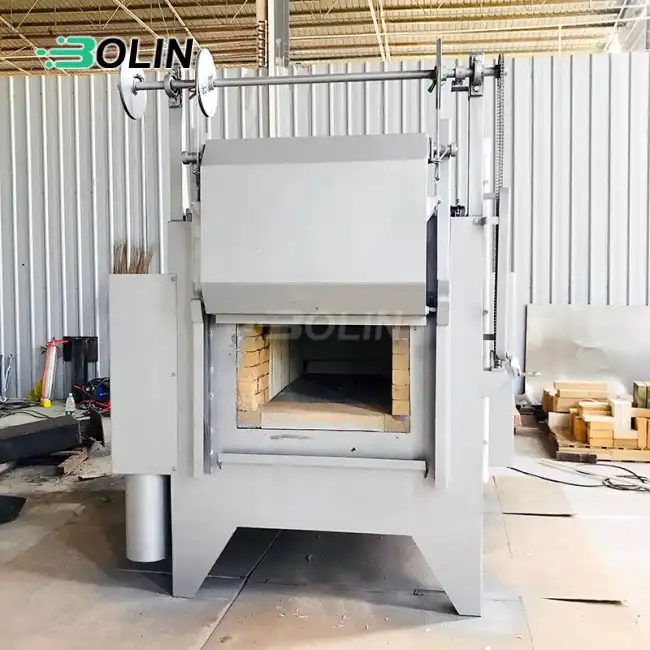
Understanding Trolley Type Heat Treatment Furnaces
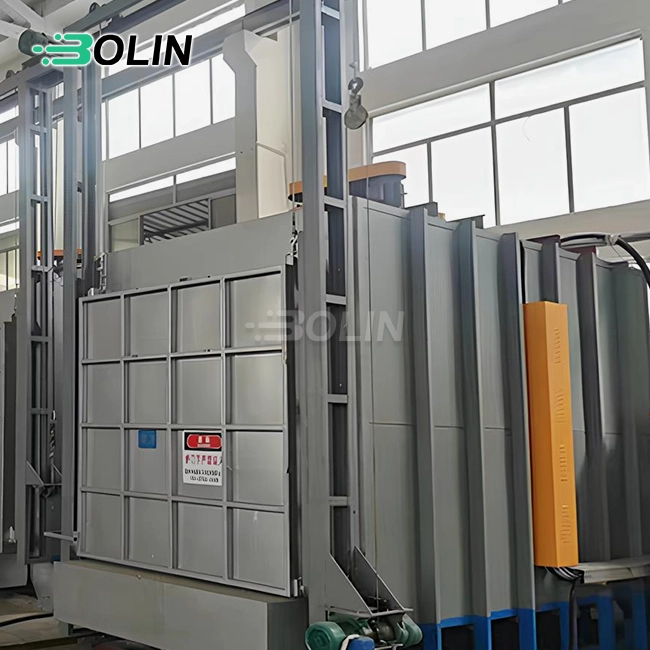
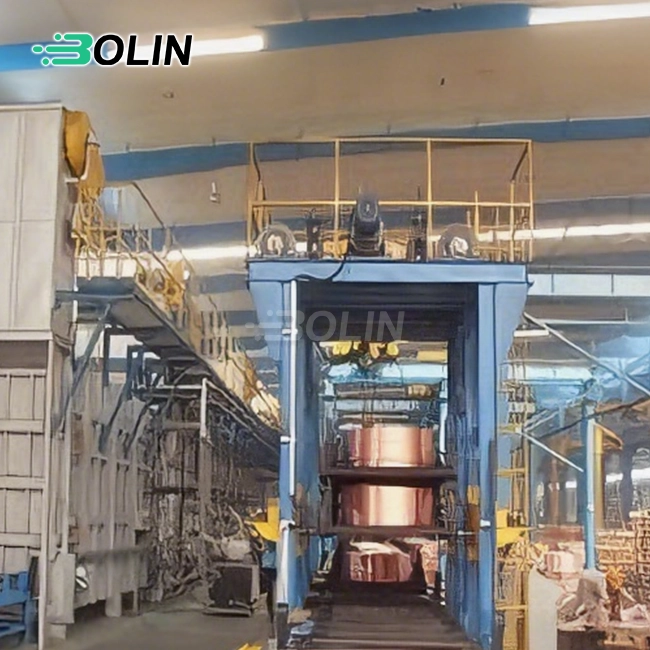
Loading and removing large metal pieces that require precision heat treatment might slow down your production process. The trolley-type heat treatment furnace can assist. This industrial heating system includes a rail-mounted hearth. This enables you to roll heavy work inside the furnace room after putting it outdoors.
Core Operational Principles
Workpieces enter a thermally shielded chamber on a driven cart. The machine operates this way. Trolley-type heat treatment furnaces are more versatile for batch manufacturing than static pit furnaces or continuous spinning hearth systems. This machine anneals, levels, cools, and tempers huge, hard-to-work-with pieces. This technology handles some of the major challenges in heavy manufacturing, such as making labor simpler, protecting furnace floors, and maintaining temperature across broad regions, with temperatures from 100°C to 1300°C.
Industry Applications and Versatility
These furnaces are crucial to steel processing, airplane, and automotive manufacturing because they can handle diverse part sizes and heat treatment cycles. Heavy equipment companies benefit from processing transmission gears, crankshafts, and landing gears. This technology is vital for producers who demand independence and accuracy since it can handle everything from tiny vehicle batches to big aerospace forgings.
Key Factors Contributing to Energy Efficiency in Trolley Furnaces
This equipment's energy efficiency depends on several design and operation parameters that reduce energy usage and maintain treatment quality. A trolley type heat treatment furnace optimizes performance through the following advanced features.
Advanced Insulation Technology
Combining lightweight microsphere vacuum bricks with composite fibers minimizes heat mass. This speeds up heating and cooling, lowering batch energy costs. Modern refractory linings use high-purity ceramic fiber modules to prevent heat transfer through furnace walls. These insulating solutions reduce idle heat losses by 40–50% compared to brick-lined furnaces. This makes them essential for multi-shift enterprises.
Intelligent Temperature Control Systems
Multiple zones of high-velocity movement and heating maintain a consistent temperature within ±5°C inside the box. Working on pieces that must fulfill high mechanical specifications requires this consistency. Automated control systems adjust burner output depending on real-time heat input, preventing energy waste from temperature changes. The precise management system monitors pyrometry data to ensure it satisfies AMS 2750F requirements and uses the least amount of fuel throughout processing.
Heat Recovery and Burner Optimization
Recuperators use exhaust heat to preheat air for combustion. High-efficiency burners that maximize fuel use and heat performance have combustion rates over 85%. Together, these qualities reduce pollutants and save money without reducing treatment. Modern designs use regenerative burner systems to modify firing patterns and recover heat from waste gases before they exit the stack.
Sealing Mechanisms and Thermal Retention
Automated sand seals or soft-fiber compression seals and air locking mechanisms keep gas out where the trolley joins the furnace. This prevents heat loss during manufacturing, stabilizing box temperature. The electric furnace door lift includes a front-button control for convenient usage, minimizing door opening time and retaining heat inside. Closing air leaks saves heating energy and makes atmosphere control easier.
Comparison: Energy Efficiency of Trolley Type Furnaces vs Other Furnace Types
These energy-using systems have strengths and downsides compared to others. trolley type heat treatment furnaces offer specific efficiencies based on operational needs.
Trolley vs. Pit Furnaces
Trolley-type heat treatment furnaces are more adaptable and speedier than pit furnaces. Because heat is harder to transfer vertically, pit furnaces need instruments that fill from above and heat slowly. Trolley type heat treatment furnace designs allow horizontal wind patterns to uniformly distribute heat, reducing job time by 15–20%. However, batch size and process management may affect energy usage. Smaller batches in too-large rooms can reduce efficiency benefits.
Trolley vs. Continuous Systems
Both continuous and rotary hearth furnaces can produce vast volumes of commodities steadily, although they need more energy during startup. They use fuel even when manufacturing stops because they maintain ambient temperatures. Batch flexibility allows trolley-type heat treatment furnaces to be shut off when not in use, eliminating heat cycle losses. Businesses with changeable production plans or parts with various shapes and heat rates benefit from their energy efficiency.
Technological Innovations from Leading Manufacturers
Leading firms including Nabertherm, Ipsen, SECO/WARWICK, and AIC have developed energy-efficient technology. For instance, they improved stoves and complicated mechanized operations. Based on load characteristics, these companies develop control algorithms to improve heating curve efficiency. Energy utilization may be reduced by 25% compared to normal configurations. Engineers can advise companies on production and energy solutions. This ensures equipment performance meets business needs.
Best Practices for Maintaining Energy Efficiency
To maximize energy efficiency, equipment must be properly maintained and managed to preserve performance and lifespan. A well-maintained trolley type heat treatment furnace ensures sustainable cost savings.
Regular Inspection Protocols
Monthly visual examinations of the refractory, seals, and burner prevent damage and wear-related heat loss. Aluminum silicate fibers in the inner material must be examined for shrinkage or mechanical damage regularly. We recommend a comprehensive thermal assessment every six months with infrared imaging to detect fires and insulation degradation. Early detection prevents modest issues from becoming major energy losses or safety hazards.
Operational Discipline and Safety
Burning and odd operating safety standards save energy by preventing equipment from shutting down and running less effectively. The appropriate loading procedures prevent workpieces from blocking airflow, which would create temperature variations and slow processing. Intelligent digital display instruments monitor furnace temperature. Automatic records monitor thermal profiles and trigger over-temperature alerts when they exceed.
Retrofitting and Upgrading Strategies
New insulation, control systems, and burners may make existing furnaces more energy efficient and meet industry requirements at low cost. New 0Cr25AL5 resistance band constructions on the furnace door, side walls, rear wall, and cart replace the previous heating elements, balancing the temperature. These improvements usually save 20–30% on energy expenditures and cost less than buying new tools, making them better than replacing the complete machine. Retrofits extend asset life, delaying capital investment and meeting environmental criteria.
Procurement Considerations for Energy-Efficient Trolley Type Heat Treatment Furnaces
Budget, performance, and seller reliability must be considered while buying energy-efficient tools. A trolley type heat treatment furnace is a long-term investment.
Cost-Benefit Analysis
Buyers should consider shipment timeframes, installation kits, maintenance plans, and the original cost against the savings over time. A heater that costs 15% more upfront but consumes 25% less energy pays for itself in 3–4 years. The overall cost of ownership—fuel, maintenance, and downtime—is a better financial indicator than the purchase price. Energy-efficient designs save money over 15–20 years from equipment running expenses.
Supplier Selection and Technical Support
Working with well-known firms ensures access to proven technology and fast technical support, which are essential for furnace uptime and energy savings. Full-service vendors that install, maintain, and train assure long-term efficiency. The furnace may be customized to meet output profile chamber sizes, load capacities, and atmosphere control specifications. Reliable after-sales support reduces unplanned downtime, maintaining the equipment's efficiency benefits.
Compliance and Certification
Equipment must meet AMS 2750F for pyrometry and CQI-9 for heat treatment system assessment to meet industry requirements. Certification implies a corporation values quality and performance. These standards produce equipment with numerous safety systems, validated control algorithms, and documented thermal uniformity. All of this improves equipment reliability and efficiency.
Conclusion
Energy-efficient heat treatment technology affects your bottom line and the globe. The trolley type heat treatment furnace design benefits from sophisticated controls, advanced insulation, and the optimum heating setup. Due to decreased thermal mass, heat loss, and configurable batch processing, these burners save 20–30% of energy. If the equipment is well-maintained and intelligently modified, these benefits last. This ensures it works well and satisfies new criteria.
FAQ
How do you prevent heat loss at the trolley-furnace junction?
Gas-tight automated sand seals or soft-fiber compression seals with pneumatic locking mechanisms prevent heat loss during processing.
Can these furnaces be used for rapid quenching?
Specialized models feature quick-out devices that move the vehicle near the quench tank in seconds. It satisfies high metallurgical standards for hardening metal.
What is the benefit of multi-zone heating?
To compensate for door losses or unequal load levels, multi-zone heating allows you to adjust room temperatures individually. This ensures AMS 2750F Class 2 temperature homogeneity.
How often should the refractory lining be inspected?
Visual checks every month and comprehensive thermal scans every six months detect fiber shrinkage and mechanical degradation before it impacts safety or efficiency.
Is electric heating better than gas heating?
Electric heating creates fewer pollutants and is more exact for finishing. Gas heating allows faster ramp-up and cheaper operating expenses for high-tonnage rough forging.
Partner with Bolin for Energy-Efficient Thermal Processing Solutions
Hebei Bolin Electric Furnace Manufacturing Co., Ltd. develops energy-efficient, reliable trolley type heat treatment furnaces for sale. Our designers employ advanced insulation, clever control systems, and multi-zone heating systems tailored to your manufacturing demands. As an experienced trolley type heat treatment furnace manufacturer, we provide initial consultation, installation, commissioning, and technical support. Our engineering abilities include dealing with large gas-fired systems, energy-efficient electric furnaces, and automatic manufacturing lines that meet high steel specifications. Contact us at 15720259172@163.com to see how our heat processing technologies may save you money and increase production.
References
1. ASM International. (2016). Heat Treating of Steel: Metallurgy and Technologies. Materials Park, OH: ASM International.
2. Trinks, W., Mawhinney, M. H., Shannon, R. A., Reed, R. J., & Garvey, J. R. (2004). Industrial Furnaces, Sixth Edition. Hoboken, NJ: John Wiley & Sons.
3. European Commission Joint Research Centre. (2017). Best Available Techniques (BAT) Reference Document for the Ferrous Metals Processing Industry. Luxembourg: Publications Office of the European Union.
4. Baukal, C. E. (2013). The John Zink Hamworthy Combustion Handbook: Volume 3 – Applications. Boca Raton, FL: CRC Press.
5. Society of Automotive Engineers. (2012). AMS 2750F: Pyrometry. Warrendale, PA: SAE International.
6. Mullinger, P., & Jenkins, B. (2008). Industrial and Process Furnaces: Principles, Design and Operation. Oxford, UK: Butterworth-Heinemann.
Learn about our latest products and discounts through SMS or email