- English
- French
- German
- Portuguese
- Spanish
- Russian
- Japanese
- Korean
- Arabic
- Irish
- Greek
- Turkish
- Italian
- Danish
- Romanian
- Indonesian
- Czech
- Afrikaans
- Swedish
- Polish
- Basque
- Catalan
- Esperanto
- Hindi
- Lao
- Albanian
- Amharic
- Armenian
- Azerbaijani
- Belarusian
- Bengali
- Bosnian
- Bulgarian
- Cebuano
- Chichewa
- Corsican
- Croatian
- Dutch
- Estonian
- Filipino
- Finnish
- Frisian
- Galician
- Georgian
- Gujarati
- Haitian
- Hausa
- Hawaiian
- Hebrew
- Hmong
- Hungarian
- Icelandic
- Igbo
- Javanese
- Kannada
- Kazakh
- Khmer
- Kurdish
- Kyrgyz
- Latin
- Latvian
- Lithuanian
- Luxembou..
- Macedonian
- Malagasy
- Malay
- Malayalam
- Maltese
- Maori
- Marathi
- Mongolian
- Burmese
- Nepali
- Norwegian
- Pashto
- Persian
- Punjabi
- Serbian
- Sesotho
- Sinhala
- Slovak
- Slovenian
- Somali
- Samoan
- Scots Gaelic
- Shona
- Sindhi
- Sundanese
- Swahili
- Tajik
- Tamil
- Telugu
- Thai
- Ukrainian
- Urdu
- Uzbek
- Vietnamese
- Welsh
- Xhosa
- Yiddish
- Yoruba
- Zulu
What Makes Gas Annealing Furnaces Essential for Heat Treatment?
Gas annealing furnaces are essential for modern heat treatment processes due to their exact temperature control, energy efficiency, and consistent metalworking results in many industries. These systems employ natural gas, LPG, or coke oven gas to heat metal parts and reduce corrosion and surface defects. They heat quicker, cost less, and can manufacture automotive fasteners and aerospace parts on a large scale compared to electric alternatives. They are suitable for manufacturers who value quality, productivity, and cost in thermal processing.
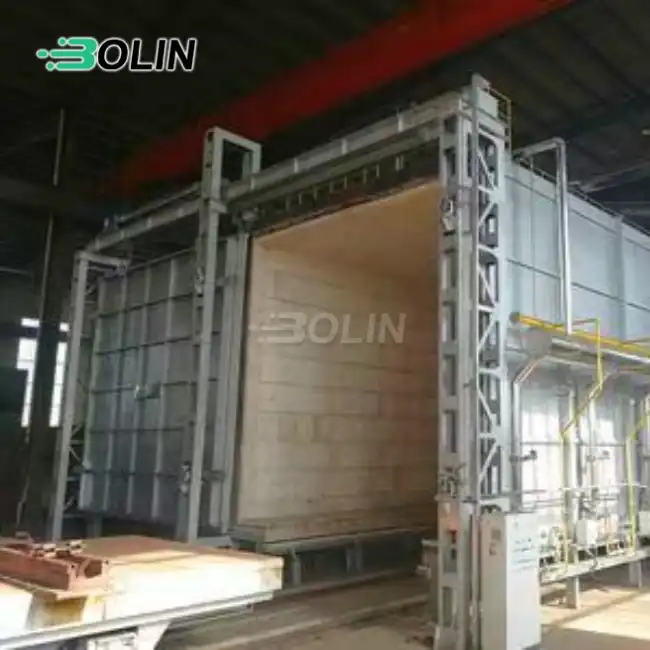
Understanding Gas Annealing Furnaces: Core Concepts and Mechanisms
What Defines a Gas Annealing Furnace?
Gas annealing furnaces heat and cool metals in regulated cycles to modify their chemical and physical properties. The equipment is heated to 100°C to 1300°C using high-calorific gaseous fuels, depending on the item and desired metallurgical result. The purpose is to make the material more flexible, less rigid within, and stress-free after cold working, casting, or welding. Normal systems have interlaced elements that operate together. Multi-zone flames in a combustion chamber generate high-velocity chaotic flow patterns that equally distribute heat over the work zone. Temperature monitoring and PID control systems maintain a 5°C temperature range for repeatable metallurgical changes. Heavy-duty high-alumina bricks, ultra-lightweight microsphere vacuum ball energy-saving bricks, and composite fiber insulating cotton make up the refractory layer. It repeatedly keeps heat in and out.
The Three-Phase Annealing Process
The material's characteristics are determined by three carefully regulated annealing processes. During heating, the burners uniformly heat the chamber. Multi-zone heating eliminates cold patches and ensures all sections get the correct temperature. This prevents uneven heating that causes production run property variations. Soaking begins when the temperature is suitable. The pieces remain at this high temperature for a defined duration to totally modify the microstructure. As atoms migrate in the crystal structure, grain boundaries change, carbides spherify, and internal tensions disappear. Duration depends on thickness, composition, and particular mechanical properties of the completed product.
Essential Safety Protocols and Maintenance
Cooling is the last crucial phase. Frequency-controlled cooling fans and automated air dampers maintain metalworking industry-specific temperatures. The kiln cools faster or slower, creating different microstructures. This helps metallurgists adjust hardness, toughness, and machinability. In this phase, the composite insulation system maintains thermal efficiency, reducing fuel usage and speeding temperature recovery between rounds.
When operating gas-fired heat processing equipment, pay attention to safety features that prevent accidents and safeguard operators. Modern systems include automated flame-out protection that cutoff gasoline in an instant. Gas flow is constantly monitored by interlocking high- and low-pressure valves to prevent fires. Pre-purging logic removes combustion chamber gases before ignition. This eliminates ignition sources when beginning.
Routine maintenance extends equipment life and reliability. Regularly evaluating refractory soundness prevents thermal inefficiencies and structural failures. Clean burner tips regularly to maintain flame patterns and efficiency. Temperature monitors must be calibrated and checked following AMS2750F recommendations to ensure accuracy. To maintain safe gas composition, atmosphere control systems like oxygen sensors and dew point monitors must be inspected.
Key Benefits of Using Gas Annealing Furnaces in Industrial Heat Treatment
Superior Material Property Enhancement
Measurable material qualities can be enhanced by gas annealing furnaces in thermal processing. This directly impacts product performance and efficiency. Controlled heating alters grain structure microscopically. This increases material flexibility by 30–50%. For later cold-working procedures like pressing, drawing, or bending, increased shapeability reduces springback and tool wear. Right annealing techniques reduce hardness, making it easier to manufacture objects that would need a lot of cutting force and tool changes. Carbides are evenly distributed during spheroidalizing annealing of steel components. This makes fastener cold-heading ideal. Stress-relief annealing prevents copper and aluminum parts from warping during final cutting or assembly.
Exceptional Energy Efficiency and Cost-Effectiveness
Soldering and casting structures benefit from internal stress elimination. Residual tensions can induce warping during cutting or failure before service loads while solidifying or connecting. Stress-relief annealing alters internal force distribution. This maintains dimension accuracy and extends the life of turbine housings and pressure tanks in harsh environments. Many purchases are based on cost, and gas-fired systems are cheaper than electric heating solutions. Resistance heating elements lose heat when they switch from electrical to mechanical energy and back again; thus, direct burning of LPG or natural gas is superior. Fuel per BTU is 40–60% cheaper than energy in most industrial settings. Multishift factories save a lot of money.
Current furnace designs utilize 30–40% less fuel due to their energy-efficient construction. Composite fiber insulation maintains thermal efficiency throughout extended production cycles, and quick temperature recovery between rounds boosts productivity. Chamber designs that fit 500 mm to 50,000 mm allow manufacturers to tailor equipment capacity to production rates. This limits installation size and efficiency.
Fuel is not the only operational expense. They also cover repair costs and device lifespan. Gas burner systems have fewer electrical parts than resistance heating grids. Fixing is easier since there are fewer places to go wrong. Because they don't have expensive heating components, they need to be updated less often, saving money because huge electric heaters may cost thousands per zone. Using unstable gas flow patterns to level out temperature reduces scrap and repair costs, hurting revenues.
Versatile Applications Across Multiple Industries
Gas annealing is used in mission-critical thermal processing by the auto and aerospace sectors. Steel mills bright-anneal cold-rolled stainless steel strips in bell-shaped configurations using hydrogen atmospheres to prevent color change. Flexible enough for deep-drawing, the end product fulfills rigorous building panel and consumer electronics appearance criteria.
Automotive fastener manufacturers sphericalize and anneal cold-heading wire rods using gas-fired equipment. High-carbon steel carbide content is balanced by this heat treatment. This helps steel withstand high deformation for bolt heads and thread profiles without breaking. The volume of work in this business requires equipment that can carry several tons every cycle and produce consistent mechanical output.
Environmental Sustainability and Emissions Control
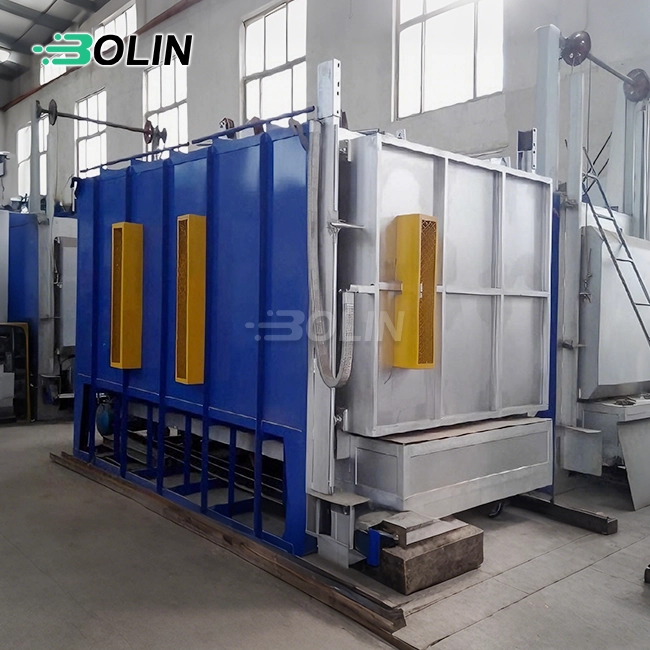
Gas Annealing Furnaces solve aerospace and energy infrastructure concerns well. Stress treatment of large welded constructions like turbine casings and generator housings requires car-bottom trolley systems that can handle over 100 tons. The motorized movable hearth helps the crane load and unload these massive items and maintains the temperature uniform, which prevents precision-machined surfaces from warping over time.
Modern manufacturers are under pressure to reduce their environmental impact while remaining cost-effective. Inherently, gas burns cleaner than coal. Carbon dioxide and water vapor dominate, not sulfur compounds or particulates. Natural gas emits 30% less CO2 per unit than coal. Companies may accomplish environmental goals and obey standards using this.
Advanced burner technology optimizes air-fuel ratios to decrease nitrogen oxides, a major contributor to smog and acid rain. Controlling extra air improves combustion efficiency and reduces NOx pollution, which is becoming tighter. Modern designs effectively employ heat, reducing fuel usage per ton of material processed. Production becomes increasingly less carbon-intensive.
Controlled atmospheres prevent rusting and decarburization, which would require energy-intensive reprocessing of waste. Bright annealing preserves surface quality, preventing cleaning or grinding. This saves time, money, and chemicals and energy for repair operations. Gas annealing saves fuel and reduces garbage, making it a sustainable production process.
How to Select and Procure the Best Gas Annealing Furnace
Critical Procurement Criteria
To pick the best thermal processing instruments, check the technical characteristics and make sure they meet corporate demands. The most critical factor for a gas annealing furnace is the temperature range. it can relieve tension at 300–400°c and heat tool steels at 1100–1200°c. Small lab experiments to big industrial manufacturing may be done using 5 kW to 3000 kW power. The correct size maximizes efficiency without wasting capacity.
The chamber must store your product line's largest pieces, and you must consider how to add and organize them. Workpieces must be spaced apart for frequent treatment so gas may pass between them, reducing their usefulness. With trolley-type configurations, cranes can load heavy items, whereas static hearth installations work better for smaller pieces on boxes or fixtures. To ensure equipment can meet production schedules, throughput estimations should account for heat, soak, and cool times.
Evaluating Suppliers and Support Services
Controlling the atmosphere influences surface quality and material choices. Basic systems have inert nitrogen to reduce oxidation, making them ideal for many metal purposes. Advanced systems employ hydrogen-nitrogen mixtures and precise dew point control for brilliant annealing of stainless steels and non-ferrous metals. When surface condition affects product function or appearance, oxygen analyzers, dew point monitors, and carbon potential controllers are more costly yet required.
Because equipment manufacturers remain involved for decades after installation, finding the correct source is as vital as knowing the technical requirements. Bolin shows they can design, build, install, and support. Their technical teams collaborate with customers to tailor room sizes, heating zones, environmental systems, and control logic for each application. This flexibility helps when catalog equipment can't match output demands.
Pricing Considerations and Investment Protection
Warranty coverage and spare parts prevent unexpected machine malfunctions that disrupt productivity. A complete one-year guarantee on all parts provides you peace of mind throughout break-in, when production faults generally appear. To reduce costly downtime, manufacturers with significant stocks of spare parts can respond rapidly to repair requests. Stoves perform well for as long as they are used thanks to on-site maintenance and improvements.
The return on investment should include fuel savings, output increases, and quality improvements. An approach that uses 35% less energy than old tools saves money over time. Better temperature stability reduces scrap rates by 2% to 3%, which is significant in high-volume production. Eliminating unnecessary finishing stages enhances surface quality and speeds up payback by saving time and money on materials and labor.
Optimizing Gas Annealing Furnace Operation for Maximum Performance
Proven Operational Best Practices
To maximize your investment, use methodical operating procedures to maintain equipment and provide consistent heat treatment outcomes. Pre-operational inspections ensure the refractory, burner, and safety system operate before production begins. Gas leaks, air damper movement, and temperature sensor readings can be checked to avoid batch quality or safety issues.
How loads are loaded affects temperature uniformity and treatment results in a gas annealing furnace. The appropriate spacing between sections allows gas passage for uniform heating. Overloading tanks to create large batches causes cold spots and longer cycle times, lowering throughput. Smartly placing thermocouples in loads ensures they all reach the proper temperature. This is crucial for qualification runs and new product ideas.
Troubleshooting Common Issues
Quality systems need traceability. Write down cycle parameters including temperatures, soak times, atmospheric makeup, and cooling rates. Keep note of when the burners ignite and how the control system reacts to find out what's wrong when outcomes don't go as anticipated. Systematic record-keeping satisfies customer heat treatment approval criteria and generates institutional knowledge of how to handle varied materials and part forms.
Even well-maintained equipment might have issues that must be addressed. Burner difficulties include blocked nozzles, worn-out mixing sections, and malfunctioning ignition systems, which cause temperature variations. A close inspection of the combustion system generally reveals the issues, and cleaning or replacing parts fixes them.
Even with protected gases flowing, atmospheric imbalances cause surface corrosion or decarburization. Similar issues like oxygen probe calibration inaccuracy, air entering through obsolete seals, and incorrect gas mixing ratios require distinct solutions. Systematic testing of atmospheric monitoring instruments and rigorous chamber seal examination usually reveal the source. Regular leak testing prevents harmful buildups in hydrogen-containing atmospheres.
Energy Management and Efficiency Optimization
Mechanical issues with cooling fans or cart systems can slow production and damage expensive items. Bearing wear generates noise and vibration before failure. Condition tracking systems help schedule preventative maintenance during planned downtime rather than crises. Regular alignment inspections ensure that all drive components are loaded equally, and following the manufacturer's maintenance guidelines prevents wear.
Using less gasoline boosts profitability and benefits the environment. Optimizing air-to-fuel ratios in the burner improves combustion, and oxygen sensors in waste streams indicate changes. Too much air wastes energy heating up gas volume, while too little air inhibits combustion and releases carbon monoxide. Regular adjustment maintains burner performance as they age.
Insulation drastically impacts heat loss and cycle times. Thermal imaging scans reveal hot locations where refractory is breaking down, or insulation is weak. Fixing these issues immediately prevents fuel waste and structural damage. Modern designs employ composite fiber insulation that retains heat efficiency after several cycles. However, loading or water ingress damage must be repaired.
Emerging Technology Trends
Energy utilization is also affected by production schedule. Batches of comparable heat treatment procedures decrease fuel-intensive temperature fluctuations. Continuous operations across numerous shifts eliminate the need to repeatedly heat cold ovens, reducing the energy needed to process one pound of material. Dropping chamber temperatures to holding levels instead of shutting down speeds up startup and consumes less fuel than warming during specified quiet intervals.
Future thermal processing will be automated and digitally merged. It will be more productive and high-quality than human methods. Programmable logic controllers manage full cycle patterns, so user errors are eliminated, and treatment is always the same. Recipe management systems store validated temperature profiles for different materials and forms. Instead of inputting parameters by hand, which might lead to errors, you can rapidly access these profiles by selecting them.
Modern data logging systems capture detail about the process every few seconds, not minutes. This extensive information enables you to undertake complex quality analysis by correlating process circumstances to material attributes examined. Statistical process control detects tendencies before they cause non-conformance. This helps make smart modifications that tighten process windows.
Predictive maintenance programs analyze equipment performance to predict part failure. Maintenance crews monitor burner firing, valve opening and closing, and temperature control response for wear and tear. These issues are resolved during breaks. This strategy eliminates unexpected breakdowns and selects the appropriate maintenance intervals based on equipment condition rather than calendar dates. Production managers may develop dynamic plans that maximize space utilization by seeing real-time heat treatment capacity data from business resource planning systems.
Conclusion
Gas annealing furnaces provide the best value for temperature precision, affordability, and application versatility. The method addresses fundamental manufacturing demands including homogeneous material quality, high production efficiency, and cheap cost and may be utilized for everything from vehicle fasteners to spaceship constructions. Composite insulation, multi-zone heating, and complicated settings maximize energy efficiency and metal uniformity in modern designs. Choose a provider carefully to get customization and support that keeps tools functioning for decades. These basic systems are more vital to current heat treatment procedures as thermal processing technology becomes more automated and computerized.
FAQ
What temperature ranges do gas annealing furnaces typically achieve?
Modern Gas Annealing Furnaces operate well from 100°C for low-temperature stress release to 1300°C for high-alloy steel and other materials' complete annealing. The range depends on the burner, refractory materials, and environment control demands. Common steel kinds undergo transformation annealing, spheroidalizing, or stress relieving between 600°C and 1100°C, where most industrial locations are. Maintaining temperature constancy within ±5-10°C ensures consistent metallurgical results throughout manufacturing runs. Control systems use PID algorithms to react to several thermocouples in the work area to maintain precise setpoints. These algorithms account for load and environment variations.
How do gas annealing furnaces compare economically to electric alternatives?
Gas-fired systems offer 40–60% lower direct operational costs than electricity in areas where natural gas prices are competitive. Compared to a gas system with the same output, a 500KW electric heater uses $40 to $50 per hour in power. The advantage is larger for large locations, because power demand charges increase fixed costs. Because gas burner systems don't need to replace expensive heating equipment as often as electric furnaces, they cost less to maintain. To calculate the cost of owning anything, add up fuel expenses, upkeep costs, lifespan, and efficiency considerations like how fast it warms up and cools down between rounds.
What maintenance schedules ensure reliable operation?
Every day before usage, the safety system, burner lights, and temperature control are tested. Weekly checks include refractory, atmosphere tracking tool calibration, and cooling system performance. Monthly maintenance involves cleaning burner nozzles, monitoring gas pressure control, and reviewing documentation for accuracy. Annual comprehensive overhauls address refractory repairs, thermocouple replacement, and control system validation according to AMS2750F standards. Predictive maintenance programs monitoring equipment performance data can optimize these intervals based on actual operating conditions rather than fixed schedules, potentially extending component life while preventing unexpected failures that disrupt production schedules.
Partner with Bolin for Advanced Thermal Processing Solutions
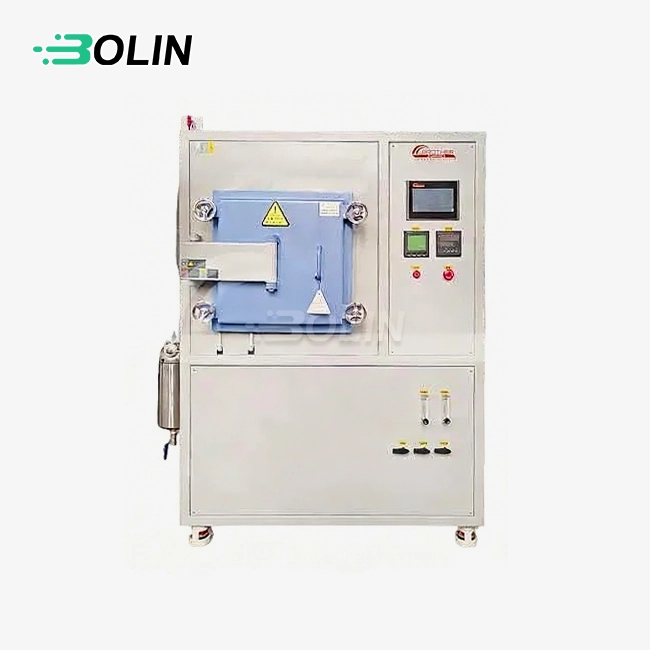
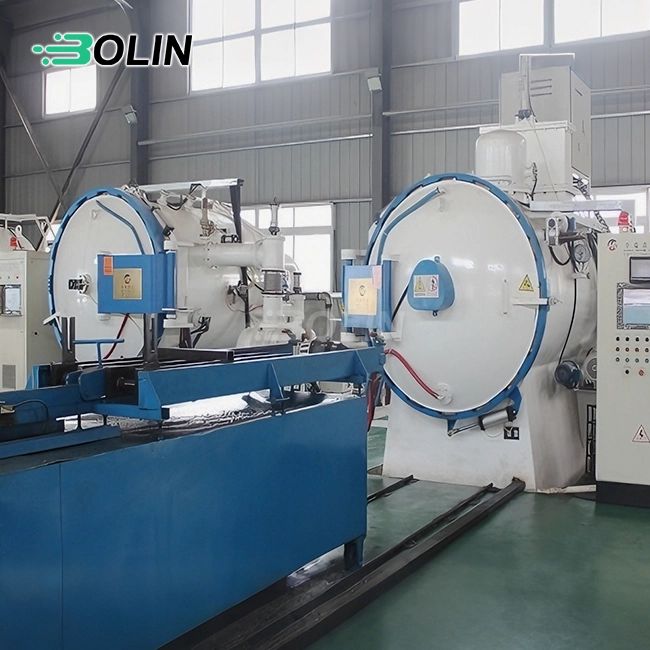
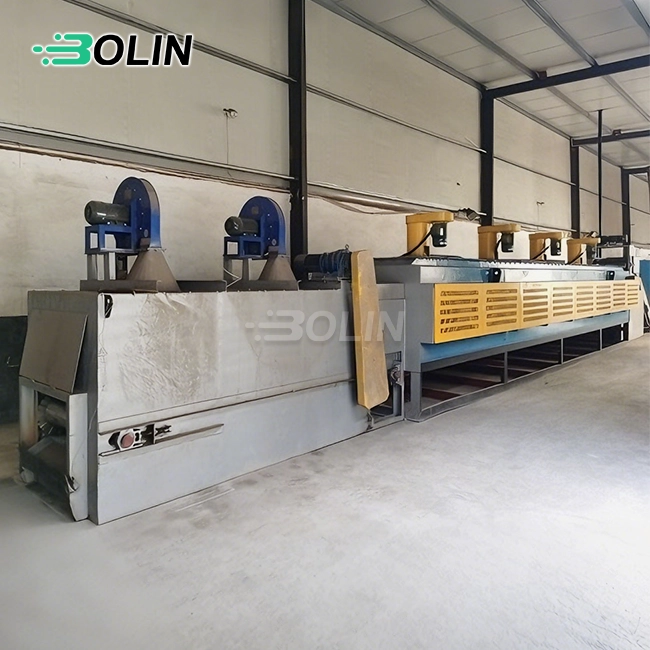
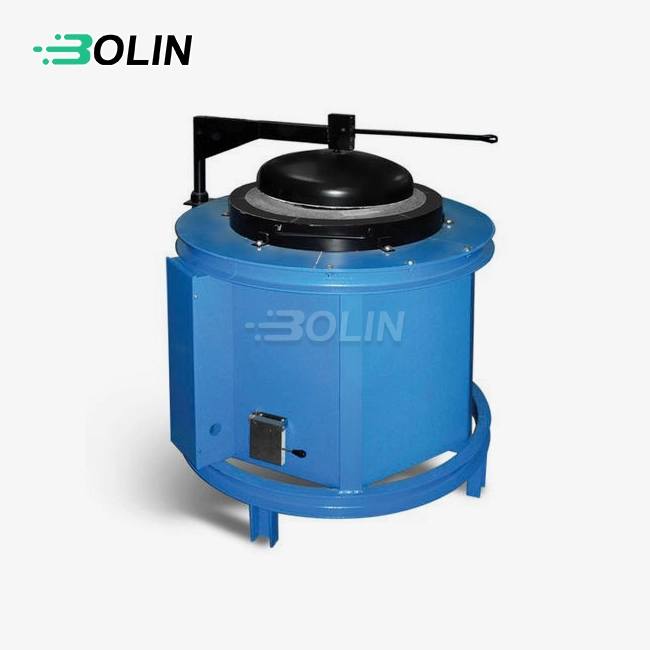
For harsh industrial environments, Hebei Bolin Electric Furnace Manufacturing makes a full gas annealing furnace for sale. Our equipment uses national energy-saving standards and proven thermal processing technology. It can operate from 100°c to 1300°c and be powered for your manufacturing size. The ultra-energy-saving construction with composite fiber insulation and specific refractory materials maintains a steady temperature for reliable mechanical performance while using 30–40% less fuel than standard designs.
Our experts can design the room size, heating zones, and climate control systems to your demands. We develop solutions that meet your manufacturing processes, whether you need batch processing or specialized trolley configurations for items too big for a typical cart. Full installation, user training, and a one-year warranty ensure the equipment performs well from the start and lasts. Contact a trusted manufacturer that wants you to succeed. Contact us at 15720259172@163.com to discuss how our heat treatment technologies might benefit you.
Reference
1. Strommer, S., Niederer, M., Steinboeck, A., & Kugi, A. (2014). A mathematical model of a direct-fired continuous strip annealing furnace. International Journal of Heat and Mass Transfer, 69, 375-389.
2. Niederer, M., Strommer, S., Steinboeck, A., & Kugi, A. (2016). Mathematical modeling of a combined direct- and indirect-fired strip annealing furnace. Mathematical and Computer Modelling of Dynamical Systems, 22(2), 145-167.
3. Glasser, M. (1995). Fluidized Bed Heat Treating: An Economic, Safe, and Efficient Alternative to Conventional Gas Furnaces. Defense Technical Information Center (DTIC) Technical Report.
4. Fein, M., Niederer, M., Steinboeck, A., & Kugi, A. (2016). Model-based control and optimization of continuous strip annealing furnaces. Heat Processing, 1, 56-62.
5. Priestner, R., & de los Reyes, R. M. (1995). Heat treatment and microstructure of steel strip during continuous gas atmosphere annealing. Materials Science and Technology, 11(10), 1045-1053.
6. Sahin, S., & Bakkaloglu, A. (2007). Effect of protective gas atmosphere on the surface quality and decarbonization of steel during industrial annealing furnace treatment. Journal of Materials Processing Technology, 189(1-3), 321-326.
Learn about our latest products and discounts through SMS or email