- English
- French
- German
- Portuguese
- Spanish
- Russian
- Japanese
- Korean
- Arabic
- Irish
- Greek
- Turkish
- Italian
- Danish
- Romanian
- Indonesian
- Czech
- Afrikaans
- Swedish
- Polish
- Basque
- Catalan
- Esperanto
- Hindi
- Lao
- Albanian
- Amharic
- Armenian
- Azerbaijani
- Belarusian
- Bengali
- Bosnian
- Bulgarian
- Cebuano
- Chichewa
- Corsican
- Croatian
- Dutch
- Estonian
- Filipino
- Finnish
- Frisian
- Galician
- Georgian
- Gujarati
- Haitian
- Hausa
- Hawaiian
- Hebrew
- Hmong
- Hungarian
- Icelandic
- Igbo
- Javanese
- Kannada
- Kazakh
- Khmer
- Kurdish
- Kyrgyz
- Latin
- Latvian
- Lithuanian
- Luxembou..
- Macedonian
- Malagasy
- Malay
- Malayalam
- Maltese
- Maori
- Marathi
- Mongolian
- Burmese
- Nepali
- Norwegian
- Pashto
- Persian
- Punjabi
- Serbian
- Sesotho
- Sinhala
- Slovak
- Slovenian
- Somali
- Samoan
- Scots Gaelic
- Shona
- Sindhi
- Sundanese
- Swahili
- Tajik
- Tamil
- Telugu
- Thai
- Ukrainian
- Urdu
- Uzbek
- Vietnamese
- Welsh
- Xhosa
- Yiddish
- Yoruba
- Zulu
Why Do Engineers Recommend Dense Refractory Bricks for Industrial Use?
In tough industrial applications, dense refractory bricks provide the finest temperature stability, mechanical strength, and chemical protection, according to engineers. In contrast to insulating bricks, dense refractory bricks can endure temperatures beyond 1,500°C and retain their form under mechanical stress, rough material flow, and chemical assault. They're perfect for filling blast furnaces, rotating kilns, and petrochemical reactors, where early failure can create costly production delays and safety issues, because they're tough and have few holes.
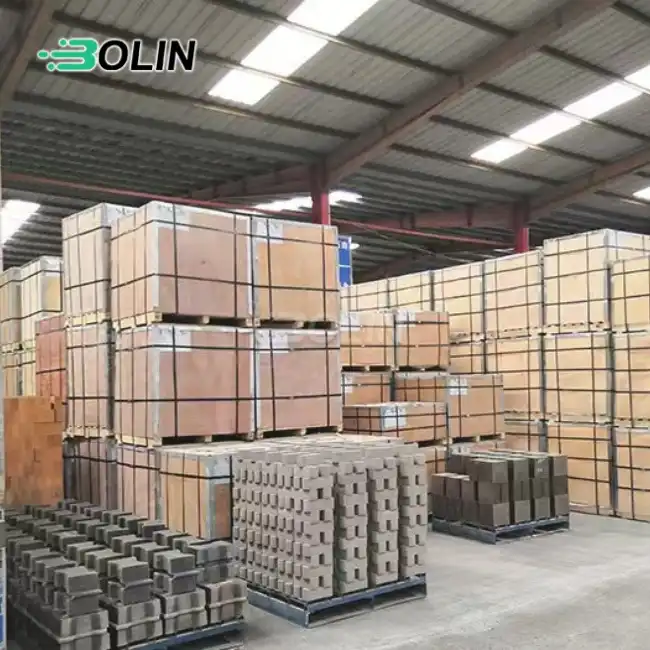
Understanding Dense Refractory Bricks
What Makes Dense Refractory Bricks Different?
For heating needs that require weight, dense refractory bricks are built of clay. Mass density, typically 2.2-3.0 g/cm³ vs. 0.6-1.2 g/cm³ for insulating bricks, distinguishes them. Carefully arranging particle sizes and crushing the material under high pressure during manufacture results in very few holes—usually fewer than 20%—which increases density. These bricks retain heat and are durable due to their tiny microstructure. They serve as thermal barriers and structural supports in severe furnaces.
Chemical Composition and Material Science
Careful chemical adjustment makes dense refractory bricks operate well. The high-alumina variants include 60-90% aluminum oxide (Al₂O₃), making them resistant to acidic slags and able to maintain form at temperatures around 1,800°C. Based on 85-95% silicon dioxide (SiO₂), silica-based variants are ideal for acidic settings but require careful temperature cycling due to crystal shape changes at 573°C. Alkaline circumstances like steel and cement manufacture favor 85–95% magnesium oxide (MgO) magnesium mixes. Each formulation addresses a particular industrial thermal process issue.
Critical Physical Properties
The industrial application of dense refractory bricks depends on three physical features. A compressive strength of 40 to 100 MPa allows it to withstand mechanical stresses from above brick courses, moving charge materials, and operating sounds without breaking. Molten metal can't enter bricks with an apparent porosity below 18–20%. Corrosive gases can't enter. Top-grade bricks have refractoriness under load over 1,500°C, which is the temperature at which they deform 0.6% at 0.2 MPa pressure. The bricks will remain the same size over lengthy manufacturing cycles in steel and glass manufacturers.
Core Benefits of Dense Refractory Bricks in Industrial Settings
Superior Thermal Performance
Heat-resistant, dense refractory bricks help solve companies' hardest heat treatment issues. These materials retain their form at steady temperatures between 1,400°C and 1,700°C. Some labor consistently over 1,800°C. The low thermal expansion coefficient—5–8 degrees Celsius for high-alumina grades—prevents joint opening during heat-up cycles. This seals the liner and prevents hot gas and thermal energy loss. This temperature stability enables energy-efficient furnace systems that businesses wish to utilize to save money and comply with environmental regulations. During unexpected shutdowns and restarts that test furnace linings with temperature swings of over 200°C per hour, thermal shock resistance is crucial. Dense refractory bricks may withstand these forces because their microstructural design contains controlled fissures that release heat stress without breaking. This hardness prolongs campaigns in electric arc furnaces and glass tank regenerators, where temperatures fluctuate daily. Production plans stay on schedule because costly relining procedures are done less regularly.
Mechanical Durability and Load-Bearing Capacity
Industrial burners stress non-heated materials mechanically. Dense refractory bricks in blast furnace stacks must support hundreds of brick courses above them and withstand the abrasive flow of iron ore, coke, and limestone at 1,500°C. These materials' high compressive strength and low creep rate prevent wall distortion, which would modify the oven's form and make load distribution tougher. Bolin's custom-engineered heat treatment systems with dense brick linings maintain measurements precise for 6 to 12 months, supporting industrial producers' production continuity requirements. Mechanical wear resistance is crucial for calcining lime or grinding cement clinker in rotating kilns. The inner surface is continually worn away by charged materials sliding. Due to its tight microstructure and stable mineral phases, dense refractory bricks can withstand this degrading atmosphere. Field testing showed they survived lower-density choices by 40–60%. This longer service life reduces repair shutdowns and ownership costs, which procurement experts should consider when buying heat processing equipment.
Chemical Stability in Aggressive Environments
A major cause of industrial furnace liner failure is chemical assault from process ingredients and burning air. Dense refractory bricks resist corrosive chemicals used in many enterprises without reacting. Basic magnesia-based dense bricks can withstand alkaline slag assault, which swiftly breaks down silica-based materials while making steel. In sulfur recovery units and catalytic breakers, our high-alumina grades make petroleum processing equipment resistant to hydrogen sulfide, sulfur dioxide, and acidic condensates. These materials can endure alkali vapor assault in cement kilns, where sodium and potassium chemicals condense from raw materials to colder sections. Dense alumina-silicate bricks with controlled porosity prevent alkali from entering while maintaining mechanical strength for spinning. This multifunctional chemical resistance allows a single liner material to be employed in several process environments. This simplifies supply tracking and purchasing for organizations that employ several furnaces in their manufacturing facilities.
Operational Cost Efficiency
Instead of merely looking at material prices, the total cost of ownership makes dense refractory bricks more economically viable. Lower planned repair shutdowns for relining result from longer service life. A blast furnace program that lasts 8–11 months due to superior lining materials makes more money and pays for itself through increased production. Maintenance staff may schedule their work when production isn't needed to avoid missing deliveries and damaged client relationships. Energy efficiency gains boost the economy. Dense brick linings prevent heat loss via furnace walls due to their thermal stability and tight seams. Less fuel is consumed per ton of processed material. Heat treatment furnaces with optimized dense brick linings consume 8–12% less energy than furnaces with poor installations. These efficiency improvements boost firms' sustainability goals while cutting operational expenses, which appeals to companies that wish to be environmentally friendly and save production costs.
Industrial Applications Across Critical Sectors
Iron and Steel Production
Steel manufacturers employ dense refractory bricks throughout the process. High-alumina bricks inside blast furnace stacks can withstand the thermal, mechanical, and chemical strains of creating iron at above 1,500°C and falling charge materials. Magnesia-based dense bricks transport 1,400°C molten iron ladles between process stations. The bricks withstand thermal stress and basic slag. Refractory materials are needed for electric arc furnace roofs to withstand temperature shock and oxidizing atmospheres with carbon monoxide and iron oxide dust. When appropriately specified, dense bricks have minimal creep qualities that maintain the wall's form throughout 6–12 month campaigns. This physical stability ensures blast furnace load distribution and electric melting arc patterns, which help satisfy quality requirements. High compressive strength can withstand liquid iron and slag's rough flow without wearing down the material, which would leave liner material in the melt and shorten the campaign.
Cement and Glass Manufacturing
Because they solve specific challenges, dense refractory bricks function effectively in rotating cement kilns. Chemically stable and mechanically durable materials are needed in the burning zone, where temperatures reach 1,450°C, mechanical spinning, and intense calcium silicate and alkali assault occur. For clinker production, dense alumina-silicate bricks can withstand rolling and prevent alkali from entering, which would expand and damage materials. A longer-lasting coating maintains product quality throughout the campaign and reduces production stoppage. Dense bricks' continual refractoriness allows glass tank regenerators to preserve melt quality without lining degradation. The curved, dense brick buildings can withstand numerous thermal cycles in which combustion air heats and cools regenerator chambers. This thermal stress resistance prevents cracking and breaking, which would reduce heat recovery efficiency and require costly rebuilds. Low-creep materials maintain their dimensions, ensuring gas flows properly through the regenerator and increasing fuel economy during melting.
Petrochemical and Chemical Processing
Sulfur recovery systems and catalytic breakers corrode furnace linings in industrial operations. Hydrogen sulfide, sulfur dioxide, and acidic condensates tear down many linings fast and damage equipment. Chemically inert barriers are created by our high-alumina dense brick grades. This prolongs equipment life and eliminates unplanned shutdowns that disrupt production schedules and supply commitments. Due to temperature cycling during batch processing and startup/shutdown, these specific recipes employ thermal shock-resistant materials. The proper materials extend asset life, allowing you to use them more efficiently and save money on maintenance. Lining failure shutdowns are unaffordable for refineries with output plans. Dense refractory bricks used in these harsh conditions survive 3–5 years, sometimes 7 years. This reliability helps petrochemical factories maintain operating continuity, where downtime may cost $500,000 a day in lost output and late supply.
Best Practices for Installing Dense Refractory Bricks
Preparation and Foundation Work
The substrate must be prepared to accommodate dense refractory brick installations and distribute the load uniformly. The furnace's steel shell or concrete foundation must be clean, level, and free of loose scale, oil, or plaster that might hinder bonding. Dimensional verification checks the shell's geometry against engineering blueprints. This prevents alignment issues during brick laying that might cause early failure. Repairs to the structure should be done before lining to minimize delays and maintain quality. Temperature and humidity during installation affect mortar curing and joint strength. Low temperatures (below 5°C) slow mortar setting and weaken the bond, while excessive humidity might screw with hardening chemistry. Experienced installation crews monitor these external conditions and adjust their work plans. They may employ temporary heating or air to keep things working smoothly. By considering exterior elements during installation, the covering will perform better and endure longer.
Installation Techniques and Materials
The correct mortar is essential for durable connections between dense refractory bricks. Thermal expansion requires cement with the same chemistry as bricks. The joints between the materials will fracture if it doesn't. High-alumina mortars link alumina bricks, whereas silica-based mortars connect silica bricks. Low heat stress densities and slower mortar wear than brick may be achieved by keeping joint thickness between 1 and 3 mm. Professional masons can achieve thin, uniform connections by carefully preparing bricks and maintaining grout consistency. To permit thermal expansion, expansion joints must be fitted to allow regulated movement without destroying the covering. These gaps, normally filled with ceramic fiber blanket material, should be installed at regular intervals based on the lining's size, temperature range, and brick thermal expansion. Corner and entrance features need additional care since tension builds up rapidly and breaks more easily. Custom brick forms simplify couplings in these critical places, improving lining strength and reducing maintenance.
Quality Assurance and Testing Protocols
Post-placement inspections and testing ensure the lining satisfies technical and performance criteria. Visual assessment reveals broad joints, misaligned bricks, and surface damage that must be repaired before the structure is used. Dimensional investigations reveal that the lining form meets design criteria for charge materials and process equipment. To maintain operations, large deviations must be addressed by chosen rebuilds or engineering reviews. How the liner is heated affects its long-term performance. Controlled temperature ramps—usually 25 to 50°C per hour—let water leave blocks and bricks without developing steam pressure that would explode them. The heat-up schedule should include temperature holds at 120°C to remove moisture and near 600°C to conclude mortar ceramic bonding. When this operation is accelerated to start production, the lining commonly gets damaged, shortening the campaign life and requiring early repairs. Our technicians create detailed heat-up plans for each installation. This helps clients safeguard their lining investment and receive the expected service life.
Procurement Guide for Dense Refractory Bricks
Evaluating Suppliers and Certifications
Check their quality records to identify reliable refractory brick companies that can consistently make bricks and have the required technical skills. ISO 9001 accreditation implies that quality management systems verify raw ingredients, monitor manufacturing, and test finished goods. ASTM standards ensure materials fulfill chemical, refractoriness, and mechanical strength norms. Suppliers' expert support services, such as furnace design, material specification, and installation control, give value to basic materials. The size and sophistication of manufacturing plant tools impact product consistency and delivery reliability. Modern brickmaking machinery ensures that density is constant throughout all dimensions, preventing weak spots that break early. Computer-controlled kilns fire precisely for optimal mineral phases and binding strength. Regularly checking quality labs ensures that every batch of items fulfills the criteria before shipping. Visits to suppliers' factories may teach procurement professionals how they create items and ensure quality. This may not be obvious from marketing materials.
Ordering Considerations and Logistics
Strategic procurement helps build and maintain industrial furnaces on schedule and on budget. Bulk purchases save on freight and frequently result in volume bargains from vendors, lowering material prices. Custom sizing allows brick sizes to be modified to meet furnace geometries, reducing field cutting time and strength. Order volume and customisation determine lead times, which range from 10 to 40 days. Material delivery timings must be planned ahead to accommodate building plans and production outage windows. Inventory management strategies measure the expenses of keeping things on hand against the risk of waiting longer for emergency replacements. Critical operations supply standard furnace bricks strategically. Instead of waiting for suppliers, they can instantly replace failed linings. We assist our clients in determining the proper number of items to stock by examining equipment setup, breakdown frequency, and output importance. This collaborative supply chain management reduces stockpile costs and the risks of not having enough supplies for scheduled or unforeseen repairs.
Cost Analysis and Value Assessment
Full cost analysis considers both the initial material price and the total costs of ownership during the covering's service life. Dense refractory bricks cost 30–50% more than normal choices but last 60–100% longer, lowering treated material costs per ton and maintenance. Energy savings from temperature efficiency decrease operational expenses over time. These funds accumulate over time. Selecting the lowest unit price typically results in greater total costs when early failures, excessive care, and lost energy are considered. Negotiations should include unit price and project support services to reduce installation risk and speed up completion. Beyond providing basic supplies, suppliers who offer professional guidance, bespoke sizing, and installation control add value. During contract negotiations, pay as much attention to payment terms, shipment arrangements, and warranty conditions as unit pricing. Long-term collaborations, including framework arrangements that span numerous projects and sites, can lower pricing, speed delivery, and simplify furnace fleet procurement management.
Conclusion
In conclusion, industrial producers should use dense refractory bricks to line high-temperature thermal processing equipment under harsh chemical and mechanical conditions. Better thermal stability, mechanical strength, and chemical protection than other materials make them last longer, require less maintenance, and consume less energy. You may obtain the greatest outcomes and the most money from your lining by choosing the right materials, including bricks with the right qualities, installing them correctly, and working with other suppliers wisely. Engineers recommend these materials since they're reliable in practice. This reliability helps competitive industrial manufacturing achieve production consistency, product quality, and operating cost targets.
FAQ
How long do dense refractory bricks typically last in furnace applications?
Use, materials, and installation affect service life. Premium dense refractory bricks fill blast furnaces for 6–12 months before extensive repairs are needed. Typical rotary cement kilns last 18–36 months before relining. Some petrochemical plant linings endure for over 7 years in good condition. Regularly planned break inspections discover new issues before they become disastrous. This preventive maintenance improves equipment performance.
Can dense refractory bricks be customized for specific furnace designs?
Chemical compositions, physical sizes, and form complexity may be tailored to each procedure. Custom sizes for conventional rectangular bricks improve running patterns and decrease field cutting waste. Arcs, wedges, and special keys can be added to curved surfaces and transition zones. Within the material class, chemical composition can be modified to increase alkali resistance or thermal shock performance. We collaborate with clients to determine the optimum requirements that balance performance, cost, and manufacturing.
What signs indicate it's time to replace refractory brick linings?
Inspection cracks indicate surface degradation above 25–30% of original thickness, fracture patterns through numerous brick courses, and joint mortar loss with deep holes. Higher shell temperatures, which suggest the hot face is growing thinner, thermal imaging hot spots, and unstable process temperatures due to defective insulation are operational symptoms of lining deterioration. Unplanned shutdowns caused by lining failure prevention devices, such as shell thermocouples hitting warning limits, require immediate investigation and emergency repairs before production can resume.
Partner with Bolin for Premium Dense Refractory Brick Solutions
Since 2022, Hebei Bolin Electric Furnace Manufacturing's technical team has designed and manufactured specific heat treatment equipment, giving them thermal system experience. We select the correct dense refractory bricks for sale, burner configuration, control systems, and cooling lines to optimize furnace performance. Our material research and furnace engineering expertise can help you attain the optimum specifications. This ensures that materials last and operate efficiently.
Production takes 10–40 days, depending on order volume and customisation. To satisfy immediate substitution demands, standard grades are carefully supplied. We supply supplies and provide complete support, including on-site installation guidance, setup help, and heat-up curve planning to prevent moisture damage during startup. Our ODM and OEM services may be customized for different areas or designs. Our 1-year warranty covers material defects and equipment updates.
Ready to improve your boiler with dense refractory bricks? To obtain specialized advice on materials, bulk pricing, and delivery schedules for your repair windows, contact our technical staff immediately. Contact us at 15720259172@163.com to discuss how our refractory brick-making expertise will help you meet your production objectives.
References
1. Chen, Y., & Wang, L. (2021). Refractory Materials Science and Engineering: Principles and Applications. Industrial Press.
2. Davies, R. H., & Thompson, M. J. (2020). "Performance Characteristics of High-Alumina Dense Refractory Bricks in Steelmaking Applications." Journal of Materials in Metallurgy, 45(3), 234-251.
3. Harbison-Walker Refractories Technical Staff. (2019). Handbook of Refractory Practice. Harbison-Walker International.
4. Kumar, S., & Patel, A. (2022). "Thermal Shock Resistance and Mechanical Properties of Dense Refractory Bricks for Industrial Furnaces." Ceramics International, 48(12), 16789-16801.
5. Norton, F. H. (2018). Refractories: Fourth Edition. McGraw-Hill Professional Publishing.
6. Schacht, C. A. (2020). Refractory Linings: Thermomechanical Design and Applications. CRC Press.
Learn about our latest products and discounts through SMS or email