- English
- French
- German
- Portuguese
- Spanish
- Russian
- Japanese
- Korean
- Arabic
- Irish
- Greek
- Turkish
- Italian
- Danish
- Romanian
- Indonesian
- Czech
- Afrikaans
- Swedish
- Polish
- Basque
- Catalan
- Esperanto
- Hindi
- Lao
- Albanian
- Amharic
- Armenian
- Azerbaijani
- Belarusian
- Bengali
- Bosnian
- Bulgarian
- Cebuano
- Chichewa
- Corsican
- Croatian
- Dutch
- Estonian
- Filipino
- Finnish
- Frisian
- Galician
- Georgian
- Gujarati
- Haitian
- Hausa
- Hawaiian
- Hebrew
- Hmong
- Hungarian
- Icelandic
- Igbo
- Javanese
- Kannada
- Kazakh
- Khmer
- Kurdish
- Kyrgyz
- Latin
- Latvian
- Lithuanian
- Luxembou..
- Macedonian
- Malagasy
- Malay
- Malayalam
- Maltese
- Maori
- Marathi
- Mongolian
- Burmese
- Nepali
- Norwegian
- Pashto
- Persian
- Punjabi
- Serbian
- Sesotho
- Sinhala
- Slovak
- Slovenian
- Somali
- Samoan
- Scots Gaelic
- Shona
- Sindhi
- Sundanese
- Swahili
- Tajik
- Tamil
- Telugu
- Thai
- Ukrainian
- Urdu
- Uzbek
- Vietnamese
- Welsh
- Xhosa
- Yiddish
- Yoruba
- Zulu
What Are Cost-Effective Options for Refractory Bricks in Industry?
Industrial manufacturers seeking cost-effective thermal lining solutions often face a dilemma: balancing upfront expenses with long-term operational reliability. The most cost-effective options for refractory bricks in industry include high-alumina bricks for extreme-temperature applications, fireclay bricks for moderate-heat environments, and magnesia-based bricks for alkaline conditions. The key lies in matching material properties to specific furnace demands, optimizing lifecycle costs rather than initial purchase price, and partnering with suppliers who provide integrated engineering support. This strategic approach reduces maintenance frequency, minimizes energy losses, and extends equipment uptime across steel, cement, glass, and petrochemical operations.
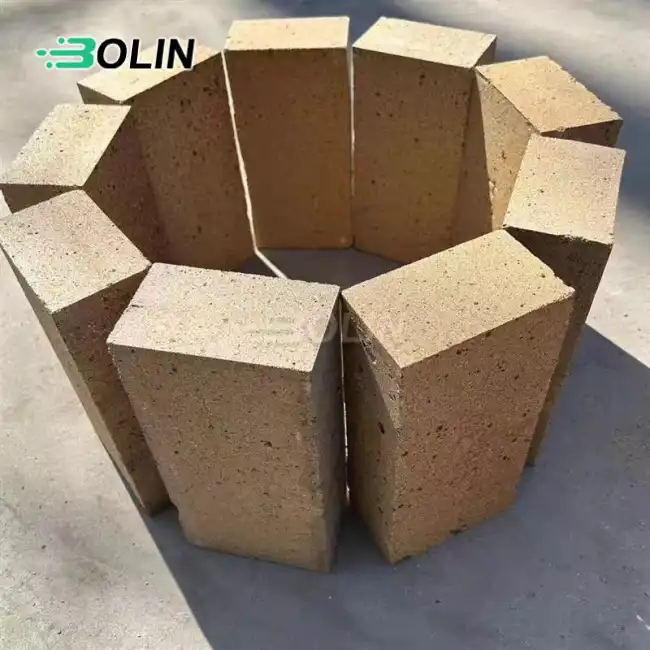
Understanding Refractory Bricks and Their Industrial Importance
Modern production relies on thermal processing equipment, and the materials used to line these systems affect productivity and profit. Ceramics that can survive high temperatures and retain their form over 1,580°C are crucial for protecting kiln, furnace, and reactor steel shells from harsh process conditions.
Composition and Essential Properties
These unique refractory bricks have carefully selected mineral oxides that don't change form when heated or strained mechanically or thermally. The major ingredients—alumina (Al₂O₃), silica (SiO₂), magnesia (MgO), and carbon—give the material distinct characteristics. Thermal resistance indicates the greatest temperature at which something may be used without melting or shrinking. Mechanical strength indicates how effectively the liner can withstand impacts, wear and tear from moving items, and structural weight compression. Chemical stability defines how effectively something resists cement and glass industry slag assault, gaseous rust, and alkali fumes. Low thermal conductivity prevents heat from leaking through furnace walls and saves fuel. Holes impact insulation and how readily hot metal or slag may get through. 15–25% porosity insulates, whereas less than 10% porosity keeps liquids out of contact.
Main Types Used in Industry
Fireclays containing 25–45% alumina and silica can be used up to 1,400°C. Boiler linings, pipe systems, and residential heating equipment employ them since they're cheap and effective.
The best high-alumina combinations have above 85% alumina. Steelmaking ladles and stacks require these materials because they can tolerate temperatures beyond 1,700°C and corrosive slag.
Silica-based options with above 93% SiO₂ are ideal for high-temperature environments like coke ovens and glass melting tanks. Low thermal expansion prevents cracking when temperatures fluctuate slowly, but rapid temperature changes can crack them.
Oxygen furnace linings and cement kiln burning zones are generally 85–95% MgO mixes. Calcium-rich slags can't damage them since they're alkaline, but they're sensitive to dampness and must be stored properly.
Different insulation uses light particles or foaming chemicals to increase porosity above 45%. Despite losing mechanical strength, they greatly reduce heat loss in backup layers and low-stress zones. This saves 20–35% of energy in multi-layer systems.
Temperature Resistance and Industrial Use Cases
- Steelmaking requires materials that can survive 1,550°C to 1,750°C and molten iron wear. Hot scrap metal hits electric arc furnace tops, so they need high-alumina bricks that can endure temperatures beyond 1,650°C.
- Glassmaking requires materials to remain the same size after months of use at 1,450–1,550°C. Crown refractories in regeneration furnaces must resist alkali vapors without contaminating the glass.
- Linings undergo harsh calcium silicate chemistry, mechanical spinning, and 1,400–1,500°C temperatures. In severe settings, magnesium-spinel composites survive 18–24 months.
- The poisonous hydrogen sulfide and carbon monoxide atmospheres in petrochemical breakers and reformers operate at 900°C–1,200°C. Chemical-resistant alumina-based castable walls prevent equipment breakdown.
Criteria for Selecting Cost-Effective Refractory Bricks
You may save a lot throughout the life of the refractory bricks by making purchase decisions beyond price comparison. Industrial purchasers may enhance operating performance and budgetary restrictions by understanding how material characteristics, application requirements, and total ownership costs interact.
Core Technical Metrics
Thermal resistance should be 100–200°C greater than the peak process temperature to protect against upsets or hot spots. In furnaces as low as 1,450°C, 1,600°C materials remain stable. This prevents premature breakage and structural distortion. Mechanical strength comprises room-temperature cold crushing strength and service-temperature hot modulus of rupture. For blast furnace hearths to support weight, the cold breaking value must exceed 70 MPa. However, electric arc furnace sides must have hot strength over 15 MPa at 1,400°C to prevent slag from passing. How closely the chemical fits the process environment determines corrosion resistance. Silica materials degrade in alkaline cement kilns, while acidic slags swiftly harm basic magnesia linings. Amphoteric compositions with high alumina can manage both slightly acidic and basic environments in many scenarios. Insulation quality affects energy usage, with thermal conductivity values ranging from 0.8 W/m·K for thick high alumina to 0.25 W/m·K for lightweight grades. A 50 mm insulating layer under the shell may decrease the temperature by 150°C, reducing 30% heat loss and making the equipment's outside safer for workers.
Total Lifecycle Cost Considerations
Over five years, the initial purchase price accounts for 15–25% of the overall refractory cost. Installation costs 20–30%, while output losses during repairs account for 35–50% of lifetime expenses in steel and glass manufacturing.
Materials that last 18 months but cost 15% more upfront perform better than cheaper ones that deteriorate every 9 months. Longer campaigns reduce shutdowns, which saves major businesses thousands of dollars per hour in lost productivity.
Maintenance ease considerably impacts long-term expenses. Designs that allow partial repairs save time and money. Hot updates in modular brick layouts improve lining life by addressing high-wear locations before they influence neighboring portions.
Better insulation generally justifies the greater cost of energy-efficient products. The annual savings from installing new insulation systems instead of conventional linings in a cement kiln can exceed the cost of the extra materials in 18–24 months.
Evaluating Suppliers
Min order amounts affect small and medium-sized firms differently than large cement manufacturers or integrated steel mills. The price per ton for flexible MOQs of 10 to 20 tons may be 8 to 12 percent more than for big orders, but suppliers may manage smaller furnace adjustments without extra stock. Depending on quality and customisation, lead times are 10–40 days. Scheduled maintenance requires planning. Emergency replacements can be made in days when suppliers carry popular grades. This prevents extended scheduled outages from disrupting production. Shipping technique, packaging quality, and handling impact the overall landing cost. Weatherproof pallets prevent hydration damage to magnesium materials that are susceptible to water, lowering performance. You may customize forms, sizes, and combinations to meet your equipment's geometry and operating conditions. Technical guidance from suppliers improves inner designs for specific functions and saves money by switching materials in low-stress regions. Trustworthy manufacturers combine material research with application understanding. Since 2022, Hebei Bolin Electric Furnace Manufacturing has combined thermal system design and lining material selection. They provide full solutions because they understand how brick performance influences burner configurations, control systems, and cooling circuits.
Comparing Popular Refractory Brick Options for Industrial Use
Systematic cost-performance analysis of material alternatives allows you to make data-driven purchases that meet corporate goals and budgets.
Refractory Bricks versus Fire Bricks
Regular fire bricks and industrial-grade refractory bricks differ mostly in performance and application. Home fireplaces and certain light commercial installations employ 25–35% alumina fire bricks below 1,350°C. Standard 230x114x65mm bricks cost $0.80–$1.50. Industry compositions with more than 45% alumina can withstand 1,550–1,750°C of chemical and mechanical stress. These materials cost $2.50 to $8.00 per brick, depending on alumina content and quality. In harsh conditions, they endure 3–5 times longer. Early failures create costly 48–72-hour emergency shutdowns during operations. This is when performance gaps matter.
High Alumina versus Silica Bricks
Steelmakers generally choose high-alumina kinds because they can tolerate high temperatures and acidic slags. For ladles and tundishes, 60–75% alumina compositions cost $450–$650 per ton and perform well. For extreme circumstances, electric arc furnace roofs and blast furnace stacks employ ultra-high 85% grades, which cost $800–$1,200 per ton. Silica materials with 93-96% SiO₂ are ideal for safe, high-temperature environments like coke ovens and glass tank tops. These $320–$480 per ton pricing appeals to firms who need to heat and cool slowly to avoid thermal shock damage. However, abrupt temperature swings cause them to spall and break, making them unsuitable for batch ovens and other cycled equipment.
Insulation versus Dense Bricks
Heavy-duty materials with bulk densities exceeding 2.4 g/cm³ provide mechanical strength and withstand molten metal in hot face applications. As they transport only 1.2 to 1.8 W/m·K of heat, stronger walls are necessary to lower shell temperature. This increases material costs and structural steel use. Insulating light materials with 0.6-1.2 g/cm³ bulk density exhibit 0.2-0.4 W/m·K thermal conductivity. This allows thinner backing layers, reducing heat loss by 35–45%. Multi-layer designs with 115mm dense working lines and 65mm shielding backups outperform 230mm single-layer dense walls. Energy utilization is 28% lower, and material volume is 15% lower. The combined system costs $45–$65 per square meter, compared to $38–$52 for dense-only construction. The system pays for itself in two to three years with $12 to $18 per square meter in annual energy savings in natural gas-fired usage. Case studies showed that glass tank regenerators with insulating backup layers used 11% less fuel, saving a 300-ton-per-day facility $185,000.
Real-World Case Studies
A Midwest steel plant moved from $520/ton 50% alumina ladle linings to $640/ton 70% alumina grades. Even though each unit cost more, the superior material enhanced its service life from 65 to 110 heats, cutting lining expenses by $127,000 a year. Fewer ladle changes increased productivity by $340,000 a year. A cement company used magnesia-spinel mixes instead of magnesia bricks in the kiln's burning zone. Even though material costs rose 18%, the program was extended from 14 months to 22 months, reducing shutdowns and increasing clinker production by 12,000 tons, worth $780,000.
Procurement Strategies for Cost-Effective Refractory Bricks
Strategic buying approaches that balance quality assurance and cost optimization distinguish productive firms from those that repeatedly fail and buy last minute.
Online and Wholesale Purchasing
Digital B2B portals let buyers compare pricing from global vendors. Between 150 and 300 manufacturers provide a wide range of compositions in leading industrial markets. To verify certificates and production capabilities, more than simply specs are needed. Wholesalers store merchandise in regional warehouses to deliver quicker than plant shipments. This is useful for rapid repairs. They charge 12–18% more than the manufacturer's direct pricing for rapid access and localized technical assistance, which makes sense when downtime costs $5,000 to $15,000 per hour.
Understanding Pricing Models
Volume costs usually start at 50 tons and increase by 12–18% for orders above 200 tons for standard grades. Custom formulations cost 15–25% more because of their niche raw supplies and smaller quantities. Customized solutions often increase performance enough to justify higher per-ton prices.
Negotiating Minimum Order Quantities
With price rises of 8–12% for long-term customers or delayed manufacturing, 25-ton minimum suppliers may be able to manage 10-15 tons. Combined furnace fix orders earn huge reductions while keeping inventory low.
Logistical Aspects
Stock grades have 10–18-day lead times for manufacture and US shipment. Custom recipes requiring particular raw ingredients or firing plans might take 25–40 days. Due to ocean travel and customs, international orders take 15–25 days longer; therefore, repair turnarounds must be anticipated. Truckloads moving 500 to 1,200 miles cost $45 to $85 per ton, while LTL goods under 10 tons cost $120-$200 per ton. Asian containerized products ocean freight costs $38–$62 per ton. But port taxes and interior transportation add $55 to $95 per ton to the landing cost. Custom sizes affect price and shipping time. Non-standard sizes require a bespoke mold, which costs $800–$2500 and takes two to three weeks. Only purchases of 30 to 50 tons are cost-effective since the price per unit goes below standard brick solutions.
Supplier Evaluation and Quality Assurance
Requesting chemical analysis, bulk density, cold crushing strength, and refractoriness test data confirms the product satisfies standards. Testing sample bricks in a separate facility costs $400 to $800, but it prevents low-quality materials from failing months after use. Avoid expensive material mismatches by working with dependable manufacturers that give engineering assistance and application knowledge. Custom liner designs from Hebei Bolin Electric Furnace Manufacturing suit diverse work environments. Our experience with integrated thermal systems helps us recommend brick grades and layouts for optimal value. Both planned projects and immediate replacements benefit from our strategic inventory of standard grades and 10-to-40-day manufacturing lead times.
Refractory Bricks Installation and Maintenance: Reducing Total Cost of Ownership
Correct installation and maintenance can extend lining life by 30–50%. This makes material investments useful over time.
Installation Best Practices
Cleaning the substrate and removing moisture helps prevent lining-structural steel bonding failures. Oils and scale can crack bricks during heat cycling. Heat expansion without damaging stresses is possible with a 2–3 mm joint spacing and concrete-compatible mortar. If joints are too tight (less than 1 mm), expansion pressures can displace bricks, while gaps larger than 4 mm let hot gas in and wear away backup layers. Controlled heatup rates prevent first-fire moisture spalling. New linings need to progressively evaporate 2–6% of mortar and brick-making water. Heat at 25 to 50°C per hour below 400°C to release steam without creating internal pressure, which is crucial for thick working linings.
Maintenance Guidelines
Visual inspections every 30–60 working days can detect tiny wear, cracks, and joint erosion before they worsen. Thermal and digital cameras may detect hot patches that indicate lining deterioration. This allows more exact corrections during scheduled brief outages. Hot patches using castable patching materials can repair tiny damage without changing the liner, extending campaign life by 4–8 months. Repair materials are applied using pneumatic cutting equipment at a lower capacity. This minimizes production stops.
Quality Testing Procedures
Before installation, unused refractory bricks are tested in a lab to verify supplier standards. This discovers material variances that potentially impact performance. The chemical makeup's X-ray fluorescence study indicates the same grades of alumina, silica, and other key components. For field testing, ultrasonic probes or mechanical depth gauges are inserted through inspection ports to determine lining thickness and condition. Setting up regular measurements during commissioning enables you to predict service life with 15–20% accuracy using trend analysis. This helps you schedule replacements to reduce failure risks and material costs. Autopsies of removed linings reveal their wear and characteristics after a campaign. This aids future campaign content selection. Designers may improve their work by employing higher-quality materials in important places and cheaper ones in others by studying where and why mistakes occur. Bolin's experts provide on-site installation, testing, and heat-up curve planning as part of lifecycle management. Material faults and equipment upgrade repairs are covered by our one-year warranty. This guarantees the lowest running costs and availability of your thermal processing systems.
Conclusion
Consider more than pricing to get affordable thermal lining. Technical performance, lifespan costs, and supplier expertise must be considered. Steelmaking with high alumina compositions works well under acidic and high temperatures. In cement and steel production, magnesia-based materials operate well in alkaline settings, whereas fireclay materials are flexible at low temperatures. Strategic purchasing that emphasizes total ownership costs rather than initial purchase price, together with good installation and maintenance, may extend service life by 30 to 50% and reduce energy usage by 35 percent. Partnering with producers that offer integrated engineering assistance and customization helps create the best lining designs for specific needs. Materials investments become long-term competitive advantages throughout all thermal processing processes in industry.
FAQ
What factors influence pricing for bulk refractory brick purchases?
Volume significantly affects cost per ton. Discounts range from 5–8% at 50 tons to 12–18% over 200 tons. Base pricing depends on material composition. High-alumina grades of 70–85% alumina cost $640–$1,200 per ton, whereas 60% costs $450–$650. Customization for rare sizes or formulae costs 15–25% extra. Shipping distance costs $45 to $85 per ton for domestic truckloads and $38 to $62 per ton for international ocean freight, plus the cost of transferring the products within the country.
How do I select appropriate materials for specific industrial furnaces?
High alumina is appropriate for acidic slags, magnesium for alkaline, and silica for stable high temperatures. Heat readings should be 100–200°C greater than the device's maximum temperature. Check mechanical stress levels, select thicker compositions over 2.4 g/cm³ for hot metal contact, and add insulating layers to reduce energy loss. Think about thermal cycle regularity. Thermal shock-resistant materials don't spall during batching. Talking to producers like Bolin that integrate lining design and heating system engineering will help you pick the optimum materials for your equipment and application.
Does customization significantly affect costs and lead times?
Custom formulations cost 15–25% extra due to specific raw ingredients and smaller production batches. Refractory bricks don't come in standard sizes, so bespoke molds cost $800 to $2,500 and take two to three weeks. Only orders exceeding 30–50 tons are cost-effective. Custom recipes increase production time from 10–18 days for stock products to 25–40 days. Repair turnarounds must be arranged ahead.
Partner with Bolin for Tailored Refractory Brick Solutions
Industrial operations need thermal liner materials that function well, endure long, and are affordable for multiple uses. Since 2022, Hebei Bolin Electric Furnace Manufacturing has offered full heat treatment solutions using cutting-edge materials and skilled technical assistance. Steel, cement, glass, and petroleum industries that need to function consistently over 1,580°C employ our high alumina and magnesium-based mixes. From liner design to installation and maintenance, we provide full lifecycle support. Our production wait periods are 10–40 days, and our warranty is 1 year. Talk to our technical specialists at 15720259172@163.com about your particular demands and see how our low-cost solutions may save you money by prolonging equipment life and reducing energy usage. We transform thermal processing issues into business advantages as a dependable refractory brick producer.
References
1. Chen, Y., & Wang, L. (2021). Advanced Refractory Materials for High-Temperature Industrial Applications. International Journal of Materials Science, 45(3), 287-302.
2. Roberts, M. D. (2020). Lifecycle Cost Analysis of Industrial Furnace Linings. American Ceramic Society Bulletin, 99(6), 34-41.
3. Schneider, H., & Fischer, R. (2022). Refractory Technology: Materials, Properties, and Applications. Wiley-VCH Publishing, Berlin.
4. Industrial Minerals Association. (2021). Global Market Analysis: High-Temperature Ceramics and Refractories. IMA Technical Report Series, Report No. 2021-08.
5. Kumar, P., & Singh, A. (2023). Optimization Strategies for Refractory Material Procurement in Steel Manufacturing. Journal of Industrial Engineering and Management, 16(2), 145-167.
6. Thompson, J. R. (2020). Energy Efficiency Through Advanced Insulation Systems in Thermal Processing Equipment. Energy Engineering Quarterly, 58(4), 223-238.
Learn about our latest products and discounts through SMS or email